Most of India's night sky is lost to light pollution before you even notice it's gone — cities glow bright enough that a genuinely dark sky, with the Milky Way visible to the naked eye, has become something you have to travel for rather than something you simply look up and see. The good news is that India has some genuinely world-class stargazing destinations, concentrated in its highest, driest and most remote corners — and a few of them are places we already take travellers to for entirely different reasons.
This guide covers India's best stargazing destinations, honestly grounded in what's actually accessible and what isn't, plus the practical side — best season, what to pack, and how to actually prepare for a night under a proper dark sky.
India's First Dark Sky Reserve: Hanle, Ladakh
Hanle, a remote village in eastern Ladakh, was officially declared India's first Dark Sky Reserve in 2022 — a protected zone where artificial lighting is restricted specifically to preserve night-sky visibility for astronomical research. It's home to the Indian Astronomical Observatory, operated by the Indian Institute of Astrophysics, one of the highest-altitude optical telescope sites in the world. Hanle's remoteness and permit requirements put it beyond most standard travel itineraries, including ours, but it's worth knowing as the single clearest proof that Ladakh's night skies aren't just scenic — they're internationally recognised as some of the best on the planet for astronomical visibility.
Pangong Lake and Tso Moriri: Ladakh's Accessible Stargazing
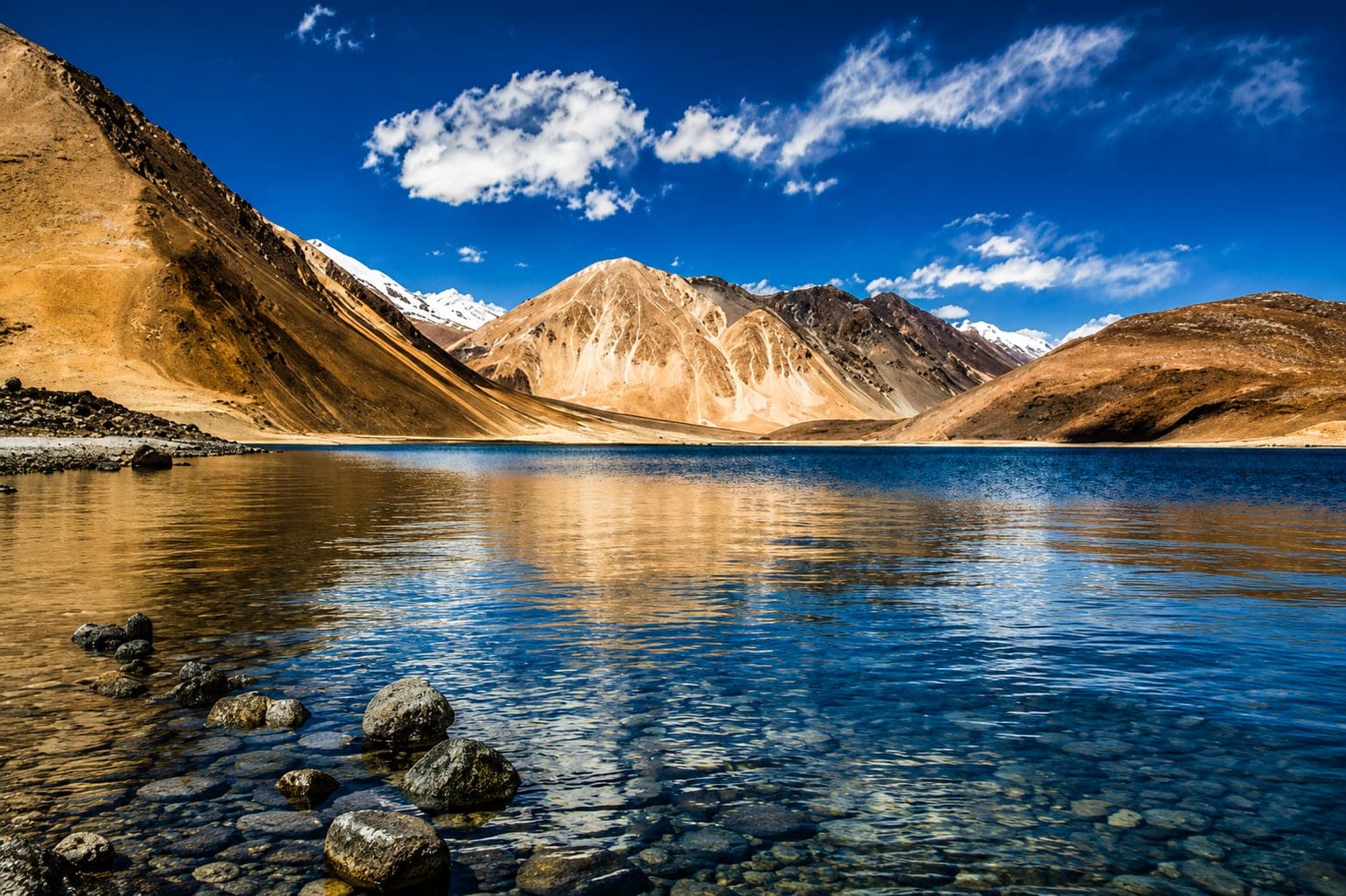
You don't need to reach Hanle specifically to get a genuinely exceptional Ladakh night sky. Pangong Lake and Tso Moriri — both high-altitude, both far from any significant light pollution, and both part of a standard Ladakh circuit — deliver a comparably spectacular stargazing experience for most travellers, without Hanle's remote access and permit requirements. The extreme dryness and altitude across this whole region do the real work: thin, clear air with minimal atmospheric interference is exactly what makes for sharp, bright night skies. Our Ladakh — Cuisine and Culture circuit covers both Pangong Lake and Tso Moriri over its 11-day route; see our complete Ladakh travel guide for the full regional picture.
Jaisalmer's Desert Camps: Stargazing Without the Altitude
For travellers who want a genuinely dark sky without Ladakh's altitude or acclimatization demands, Jaisalmer's desert camps are the easiest, most accessible option in this guide. The Thar Desert's open horizon and distance from major urban light pollution make for consistently good stargazing, and unlike most destinations here, it's already built into a standard overnight desert-camp experience — bonfire, folk music, and a properly dark sky overhead, with no special planning required beyond booking the overnight stay itself. Our Jaisalmer package includes exactly this as part of its standard itinerary.
Spiti Valley: The Cold Desert's Clear Skies
Spiti Valley, Himachal's high-altitude cold desert bordering Ladakh's own terrain and climate, carries a similarly strong stargazing reputation — thin air, minimal humidity, and genuine remoteness from light pollution. It isn't currently on our fixed package list, but if a Spiti-focused trip with dedicated stargazing time is what you're after, get in touch and we can build a custom itinerary around it.
Kalpa and Sangla Valley: Kinnaur's High-Altitude Skies
Himachal's Kinnaur region, anchored by Kalpa's sunset views of the Kinner Kailash range and the Baspa valley around Sangla, sits high enough and far enough from major towns to offer a genuinely strong night sky — a good middle-ground option if Ladakh's altitude or distance feels like too much for your trip. Our Kalpa and Sangla Valley packages both put you in this region, though stargazing here is more a byproduct of the location than a curated evening activity — pack accordingly and ask your driver or hotel about the clearest nearby viewing spot.
Kasar Devi and Binsar: Kumaon's Curated Stargazing Experience
This is the one destination in this guide where stargazing isn't just a geographic byproduct — it's a planned part of the itinerary. Kasar Devi and Binsar, in Uttarakhand's Kumaon hills, combine genuinely clear high-altitude skies with a long-standing reputation as a quiet, contemplative retreat area, and our The Kumaon Self-Discovery package builds a curated stargazing evening directly into its itinerary, alongside yoga, sound healing and a trek to Binsar's Zero Point. Our Kasar Devi & Jageshwar package covers the same region in a more conventional sightseeing format.
Rann of Kutch: The White Desert's Night Sky
Gujarat's Rann of Kutch — the vast salt desert best known for the Rann Utsav festival season — is one of India's most celebrated stargazing destinations in its own right, thanks to its completely flat, unobstructed horizon and genuine distance from light pollution. It's worth knowing about even though it isn't currently part of our Gujarat itinerary, which covers Dwarka, Somnath and Gir rather than Kutch — if the Rann specifically is your priority, it's worth researching as a separate trip for now.
Stargazing Destinations at a Glance
| Destination | What Makes It Work | Package |
|---|
| Pangong Lake & Tso Moriri (Ladakh) | Extreme altitude, minimal atmospheric interference | Ladakh circuit |
| Jaisalmer desert camps | Open desert horizon, zero planning required, easy access | Jaisalmer |
| Kalpa & Sangla Valley (Kinnaur) | High altitude, distance from towns | Kalpa / Sangla Valley |
| Kasar Devi & Binsar (Kumaon) | Curated stargazing built into the itinerary | The Kumaon Self-Discovery |
| Hanle (Ladakh) | India's only official Dark Sky Reserve | Not on our standard circuit — remote, permit-based |
| Spiti Valley | Cold desert, thin air, genuine remoteness | Custom itinerary on request |
| Rann of Kutch | Flat, unobstructed horizon | Not currently part of our Gujarat itinerary |
Best Time of Year for Stargazing in India
Timing depends on which kind of destination you're choosing. For Ladakh and Spiti, the practical window is summer (roughly May to September), since winter snow closes the high-altitude roads that get you there in the first place — meaning the "best" stargazing season at these two destinations is really whichever months you can actually reach them, not a weather-driven choice. For Rajasthan's deserts and Kumaon's hills, winter (November to February) generally offers the clearest, driest skies, with less atmospheric dust and haze than the warmer months. Across every destination in this guide, a moonless night — ideally within a few days of the new moon — makes a genuinely noticeable difference to how much you can actually see, far more than most first-time stargazers expect.
How to Prepare for a Stargazing Trip
Pack proper warm layers regardless of destination — deserts and high-altitude regions both drop sharply in temperature after dark, even when daytime conditions felt warm. A torch or headlamp with a red-light mode (or red cellophane over a regular torch) preserves your night vision far better than a standard white beam. Give your eyes roughly 20 minutes in darkness before expecting to see fainter detail — this adjustment period is real, not a myth, and checking your phone screen during it resets the process. A basic star-chart app on your phone (used with the screen brightness turned right down) makes it far easier to actually identify what you're looking at rather than just admiring an unlabelled sky.
Frequently Asked Questions
What is the best place for stargazing in India? Hanle in Ladakh, India's only official Dark Sky Reserve, is the single best-credentialed destination, though it's remote and permit-based. For a more accessible trip, Pangong Lake and Tso Moriri on a standard Ladakh circuit offer a comparably excellent night sky.
Is Jaisalmer good for stargazing? Yes — its desert camps offer a genuinely dark sky with minimal light pollution, and unlike most destinations in this guide, it requires no special planning beyond booking an overnight desert-camp stay.
What is India's only Dark Sky Reserve? Hanle, in eastern Ladakh, officially declared in 2022 and home to the Indian Astronomical Observatory, one of the world's highest-altitude optical telescope sites.
Do I need to go to Ladakh for good stargazing in India? No — Jaisalmer's desert camps, Kumaon's Kasar Devi and Binsar, and Himachal's Kalpa and Sangla Valley all offer genuinely strong stargazing without Ladakh's altitude or travel demands.
Which of your packages includes a curated stargazing experience? The Kumaon Self-Discovery package, which builds a dedicated stargazing evening into its itinerary at Kasar Devi and Binsar, alongside yoga and sound healing.
What is the best time of year for stargazing in Ladakh? Summer (May to September), since that's the only window the high-altitude roads are actually open — winter snow closes access well before weather conditions become the deciding factor.
Does the moon affect stargazing? Yes, significantly — a moonless night, ideally close to the new moon, lets you see far more stars and detail than a night with a bright moon in the sky, regardless of which destination you're at.
What should I pack for a stargazing trip? Proper warm layers (temperatures drop sharply after dark even in deserts), a torch or headlamp with a red-light mode to preserve night vision, and a star-chart app for your phone.
Get in touch and tell us which kind of stargazing trip you want — an easy desert-camp evening, a high-altitude Ladakh circuit, or a curated Kumaon experience — and we'll help you plan around it.