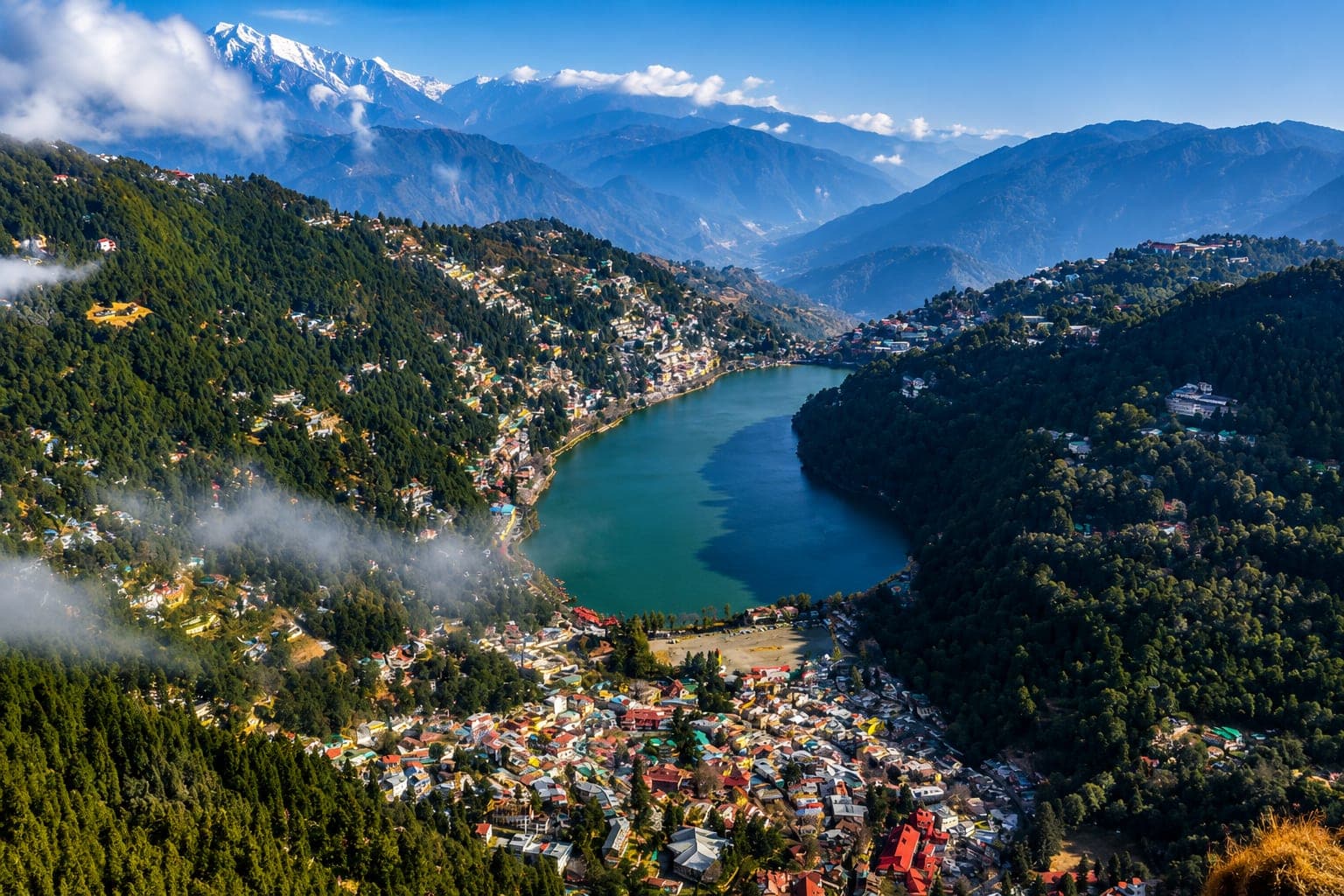
Kumaon is the eastern of Uttarakhand's two Himalayan regions, stretching from the Nainital foothills up through Almora and Bageshwar to Pithoragarh near the Nepal and Tibet borders. Its identity is built around old market towns, temple clusters set in deodar forest, orchard villages, and hill stations the British developed as summer retreats — a different character from the state's better-known pilgrimage routes.
That character is exactly why more Delhi and NCR travellers now consider Kumaon for a longer Himalayan escape. It doesn't compress into a single weekend the way a closer hill station does, but the pace is the point — a Kumaon trip rewards travellers willing to spend four, five or more days moving between a handful of towns rather than rushing to tick off sightseeing. If you're planning a first trip, this guide covers the best places to visit in Kumaon, how they differ from each other, and how to structure a realistic itinerary around them.
What Makes Kumaon Different?
Kumaon's landscape shifts more than most single-region itineraries suggest. Around Nainital and Bhimtal, it's lakes set into forested valleys; further north around Almora and Binsar, it's oak and rhododendron forest opening onto wide Himalayan views; and by Munsiyari and Pithoragarh, you're in genuinely remote, thinly populated hill country close to the Tibet border.
Much of the region's character comes from its towns rather than single attractions. Almora, the old capital of the Chand dynasty, still runs on its narrow bazaar. Ranikhet and Nainital were built as British-era hill retreats and carry that colonial layout — a Mall Road, a lake or a parade ground at the centre. Jageshwar's cluster of stone temples sits inside a working deodar forest rather than a manicured pilgrimage complex. For the wider state's pilgrimage circuits and mountain packages, see our Uttarakhand tour packages.
What ties it together is a slower travel rhythm than more heavily visited Himalayan routes. Kumaon rewards basing yourself in one or two towns and taking day trips out, rather than changing hotels every night — and its quieter stops, from Chaukori to Pangot, hold up because they haven't been built up around a single headline attraction.
15 Best Places to Visit in Kumaon
Almora
The old Kumaoni market town and former Chand-dynasty capital, known for its narrow bazaar lanes, wood-fronted buildings and locally made bal mithai. Kasar Devi and Chitai Golu temples sit a short distance out of town. Two days covers it well. Suits travellers who want a working town and some culture alongside scenery. Pleasant most of the year outside peak monsoon. Base here rather than shift hotels — Binsar and Jageshwar both work as day trips.
Binsar
A wildlife sanctuary of dense oak and rhododendron forest, known for the Zero Point viewpoint's wide Himalayan panorama and its walking trails. A day covers the viewpoint and a short trail; an overnight suits travellers wanting more of the forest itself. Suits nature-focused, quieter travel. Clear-sky months — broadly autumn and winter — give the best chance at the mountain view. Go early morning, before cloud typically builds up.
Jageshwar
An ancient cluster of stone temples dedicated to Shiva, set inside a working deodar forest rather than a built-up pilgrimage town — one of Kumaon's most significant heritage sites. Half a day is enough. Suits pilgrimage and heritage-focused travellers, and pairs naturally with Almora rather than standing alone. Visit as a day trip from Almora — standalone accommodation near the temple itself is limited.
Mukteshwar
Orchard country built around the cliffside Mukteshwar Dham temple and the Chauli ki Jaali viewpoint, with local operators running rock climbing and rappelling on the surrounding cliffs. Two days suits it well. Strongly suits couples and travellers wanting activity alongside the views. Spring and autumn give the clearest visibility. Our Corbett and Mukteshwar itinerary covers this combination well.
Kausani
A ridge-top town known for one of Kumaon's widest panoramas of the Trishul and Nanda Devi range, alongside tea gardens and the Anasakti Ashram, associated with a stay by Gandhi. One to two days. A popular first-timer pick that's genuinely scenic. Clearest views come on autumn and winter mornings. Viewpoints get busy in peak season — go at sunrise for a quieter view.
Chaukori
A quieter tea-garden town with Himalayan views comparable to Kausani's but a fraction of the visitor numbers. One to two days. Suits travellers who want Kausani's scenery without the crowd. Best on clear autumn and winter days. Accommodation is limited here, so book ahead in peak season.
Munsiyari
A remote base town below the Panchachuli peaks and gateway to high-altitude treks like the Milam Glacier route. Genuinely the least accessible stop on this list — plan two to three days minimum once travel time is accounted for. Suits serious trekkers wanting remoteness over convenience. Best through late spring and post-monsoon autumn; winter access can be affected by snow. Build in a buffer day either side.
Ranikhet
A quiet cantonment town of pine forest, a golf course and the Kumaon Regiment's base, noticeably calmer than Nainital. One to two days. Suits travellers wanting low-key surroundings over a packed sightseeing list. Pleasant most of the year. Works well as a stop between Nainital or Almora and Kausani rather than a dedicated detour.
Nainital
Kumaon's best-known hill station, built around Naini Lake, with boating, the Mall Road and the Naina Devi temple at its centre. One to two days. Suits families and first-time visitors most directly, though it's also the most crowded stop on this list, especially on weekends. If crowds are a concern, visit on weekdays.
Bhimtal
A quieter lake town close to Nainital, with an island aquarium at the centre of the lake and noticeably less commercial development. A day, easily combined with a longer trip. Suits travellers wanting a calmer lake stop. Works naturally as a stop between Nainital and Almora or Kausani rather than a dedicated base.
Sattal
A cluster of interconnected freshwater lakes set inside forest, known for birdwatching and kayaking rather than a single sightseeing draw. A day trip, or an overnight for serious birders. Suits nature-focused couples and families. Winter brings migratory species; spring and autumn are pleasant otherwise. Early morning gives both the best birding and the quietest lake views.
Pangot
A small birdwatching village near Nainital with minimal built-up infrastructure, popular among birders for its range of Himalayan species. Two days for serious birdwatching, or a half-day trip from Nainital otherwise. Winter and spring bring the widest range of sightings. A local birding guide makes a real difference here.
Lohaghat
A small, little-visited town with a noticeably cooler climate, near the Mayawati Ashram associated with Swami Vivekananda. A day is enough. Suits travellers wanting genuine quiet over a sightseeing itinerary. Infrastructure here is limited, so treat it as a stop within a longer Pithoragarh-district itinerary rather than a standalone base.
Pithoragarh
A valley town and district headquarters, historically a gateway on trade routes toward the Tibet border, with a quieter character than Kumaon's more western towns. One to two days. Suits travellers wanting a genuinely offbeat stop within a longer itinerary. Best used as a base for exploring further into the district — Munsiyari included — rather than a standalone stop.
Dhanachuli
A quiet, forested viewpoint town near Mukteshwar, with pine and oak cover and homestays outnumbering hotels. One to two days, usually paired with Mukteshwar rather than visited separately. Suits couples wanting a quieter version of the Mukteshwar experience. Combine the two rather than treating them as separate stops, since they share the same access road.
Best Offbeat Places in Kumaon
Binsar and Jageshwar work as an offbeat pair — a wildlife sanctuary and a forest temple cluster, both a short trip from Almora and neither built up for mass tourism. Chaukori offers Kausani's views with a fraction of its footfall, and Munsiyari goes further still, genuinely remote and best suited to travellers with time to spend getting there.
Pangot's appeal is specific — it's built around birdwatching rather than general sightseeing, so it suits a narrower kind of traveller than the rest of this list. Lohaghat and Pithoragarh are the least-visited towns here, better treated as stops within a longer district-level itinerary than standalone destinations. Dhanachuli, meanwhile, is essentially a quieter version of Mukteshwar just down the same road. For more genuinely offbeat picks closer to Delhi itself, see our offbeat places near Delhi guide.
Best Places in Kumaon for Couples
Mukteshwar and Dhanachuli are the strongest picks — orchard views, cliffside stays and a genuinely slower pace than Kumaon's busier towns. Binsar suits couples who'd rather spend a day walking forest trails than sightseeing. Kausani's ridge-top views make for a scenic overnight, particularly outside peak season when the viewpoints are quieter.
Best Places in Kumaon for Families
Nainital remains the most straightforward choice — boating, a walkable Mall Road and enough infrastructure to make travelling with children or older relatives easy. Bhimtal and Sattal both work as calmer, less crowded extensions of a Nainital stay, well suited to a slower day with children. Ranikhet's open spaces and quiet pace suit families wanting fewer crowds without giving up comfortable stays.
Best Places in Kumaon for Nature & Wildlife
Binsar's forest and viewpoint trails, and Sattal and Pangot's birdwatching, are the clearest nature-first picks on this list — genuinely built around the outdoors rather than sightseeing with a nature label attached. Travellers wanting wildlife specifically often extend a Kumaon trip to Jim Corbett National Park, roughly on the way back toward Delhi from Nainital.
Best Places in Kumaon for Spiritual & Cultural Travel
Jageshwar's temple cluster and Almora's Chitai Golu and Kasar Devi temples are Kumaon's clearest cultural and spiritual stops, both reachable within a short trip of each other. Kausani's Anasakti Ashram adds a quieter, more contemplative stop for travellers interested in Gandhi's connection to the town. Almora's old bazaar itself is worth treating as a cultural stop rather than only a shopping stop — it's one of the few places on this list where everyday Kumaoni town life is genuinely visible.
Best Time to Visit Kumaon
Spring (March–April)
Rhododendrons bloom across the forested stretches around Binsar and Mukteshwar, and days are generally pleasant. A solid season for travel that doesn't depend on the clearest possible mountain views.
Summer (May–June)
Kumaon's peak season, and for good reason — daytime temperatures stay well below the plains, and mountain visibility is generally good before monsoon cloud sets in. Expect more crowds and higher demand for stays at Nainital and Kausani specifically.
Monsoon (July–September)
Hill roads across Kumaon can be affected by landslides and delays during heavy rain, and mountain views largely disappear behind cloud. The forests turn genuinely lush, but this isn't the season to plan around clear Himalayan views or a tight schedule.
Autumn (October–November)
Widely considered Kumaon's clearest season for mountain visibility, with cooler days and settled weather following the monsoon. Kausani, Chaukori and Binsar are all at their best for views during this window.
Winter (December–February)
Cold across the region, with snowfall possible at higher points like Munsiyari, Chaukori and parts of Kausani in some years — though it isn't guaranteed every winter. Lower towns like Nainital and Bhimtal stay cold but generally accessible.
How Many Days Do You Need for Kumaon?
3 days: Enough for one base — Nainital with Bhimtal and Sattal as day trips, or Mukteshwar on its own — without much driving between towns.
4–5 days: Room for two connected destinations, such as Almora with Binsar and Jageshwar as day trips, or Mukteshwar paired with Dhanachuli.
6–7 days: A realistic window to cover three towns properly — Nainital, Almora and Kausani, for instance — without changing hotels every single night.
8+ days: Enough to include Munsiyari or Pithoragarh, both of which need real travel time to reach, alongside two or three closer towns on the way there or back.
Best Kumaon Itineraries
Option 1: Almora + Binsar + Jageshwar
A compact heritage-and-nature loop — base in Almora, day-trip to Binsar's forest and viewpoint, and to Jageshwar's temples, without changing accommodation. Suits a 4–5 day trip well.
Option 2: Mukteshwar + Almora + Binsar
Orchards and adventure activity at Mukteshwar, then Almora's old town and Binsar's forest sanctuary. A natural 5–6 day combination that mixes activity, culture and nature.
Option 3: Kausani + Chaukori
A views-focused route pairing Kausani's well-known ridge-top panorama with Chaukori's quieter, comparable scenery. Works well as a 4–5 day trip built almost entirely around the Himalayan skyline.
Option 4: A longer Munsiyari-focused journey
For travellers with more time, a route that includes Kausani or Chaukori on the way to Munsiyari, spends two to three days there, and returns via a different town rather than backtracking. Best suited to 8 or more days, given the distances involved.
Kumaon Trip from Delhi
A Kumaon trip from Delhi generally starts with a road journey toward the Kathgodam–Haldwani belt, the usual gateway into the region's hill towns, before continuing further into the hills by road. Because that first stretch already takes a meaningful part of a day, Kumaon works better as a multi-day trip than a rushed weekend — a single overnight rarely leaves enough time at the destination once travel is accounted for. If a genuine weekend is all you have, our weekend getaways from Delhi and hill stations near Delhi guides cover closer options better suited to that timeframe.
Departure timing matters more here than on shorter trips: leaving Delhi early, or the evening before, avoids losing daylight hours to the city's own exit traffic. Private travel gives more control over pacing and stops, which matters on hill roads where conditions vary; group travel can work well for fixed, well-planned itineraries but suits travellers less bothered about setting their own pace. Whichever way you travel, resist packing too many towns into the itinerary — Kumaon's distances are Himalayan road distances, not highway ones, and pacing the trip around two or three bases rather than a new hotel every night makes a genuine difference to how much you actually see.
How Much Does a Kumaon Trip Cost?
Costs vary with season, group size, choice of stays and whether you're travelling privately or as part of a group, so there's no single reliable figure to quote. Transport is a bigger factor here than on shorter trips near Delhi, given the distances involved. Accommodation ranges widely — from simple guesthouses to heritage and boutique stays in towns like Mukteshwar and Kausani — and is usually the biggest lever on overall cost. Activities like trekking or birdwatching guides add a smaller but real amount. For an actual quote based on your dates and preferred towns, share your details through our customised holidays enquiry form.
What to Pack for a Kumaon Trip
Sturdy, closed footwear matters more than in most plains destinations, given the walking involved at Binsar, Jageshwar and most viewpoints. Pack in layers — mornings and evenings stay cool even in summer — and carry rain protection in monsoon months. Bring any personal medication you need, since pharmacy access thins out past the larger towns. A power bank is genuinely useful, as charging points can be limited in smaller villages, along with sun protection and a reusable water bottle rather than single-use plastic.
Common Mistakes to Avoid When Planning Kumaon
Trying to cover too many towns in one trip is the most common mistake — Kumaon rewards basing yourself in two or three places, not visiting ten. Underestimating mountain travel time is a close second; hill roads take longer than the same distance on a highway, and treating them the same way leads to rushed, tiring days.
Changing hotels every single night costs real time in packing and reorienting at each new stop. Ignoring seasonality — arriving in peak monsoon expecting clear mountain views — is an avoidable disappointment. Choosing accommodation purely by price, without checking its location, often means extra unplanned travel once you arrive.
Planning too many activities into each day leaves no room for delays, which are common on hill routes. Leaving Delhi too late pushes the first day's arrival into the evening. And not keeping buffer time — especially before a flight after the trip — turns a minor hill-road delay into a genuine problem.
Frequently Asked Questions
What are the best places to visit in Kumaon?
Nainital, Almora, Binsar, Mukteshwar and Kausani are Kumaon's most established destinations, while Chaukori, Munsiyari, Pangot and Dhanachuli are strong picks for a quieter trip.
What is Kumaon famous for?
Himalayan hill stations and lake towns, forested wildlife sanctuaries like Binsar, heritage sites such as the Jageshwar temple cluster, and old towns like Almora that carry genuine Kumaoni history.
How many days are enough for a Kumaon trip?
A single base works in 3 days; two connected towns need 4–5; covering three towns properly takes 6–7; reaching Munsiyari or Pithoragarh realistically needs 8 or more.
Which is better for an offbeat trip, Kumaon or crowded hill stations?
Kumaon contains both — Nainital gets genuinely crowded in peak season, while Binsar, Chaukori, Pangot and Munsiyari are considerably quieter, depending on which towns you choose.
What are the best places in Kumaon for couples?
Mukteshwar and Dhanachuli for a slower, scenic stay, and Binsar for couples who'd rather spend a day on forest trails than sightseeing.
What are the best places in Kumaon for families?
Nainital for straightforward accessibility, with Bhimtal and Sattal as calmer extensions, and Ranikhet for families wanting a quieter pace.
What is the best time to visit Kumaon?
Summer and autumn are the most reliable seasons — summer for pleasant temperatures, autumn for the clearest mountain views. Monsoon is best avoided if clear views matter.
Can I plan a Kumaon trip from Delhi?
Yes — most Kumaon trips from Delhi/NCR start with a road journey toward the Kathgodam–Haldwani belt, and work better as a multi-day trip than a rushed weekend.
Which are the best offbeat destinations in Kumaon?
Binsar, Jageshwar, Chaukori, Munsiyari, Pangot, Lohaghat, Pithoragarh and Dhanachuli are all genuinely quieter alternatives to Kumaon's more visited towns.
Can I customise a Kumaon itinerary?
Yes — an itinerary built around your dates, preferred towns and pace fits Kumaon better than a fixed template, given how much the region rewards slower, base-based travel.
Plan a Kumaon Journey with Shubh Mangaal Yatra
Kumaon is genuinely difficult to plan well from a template, since the right combination of towns depends on how much time you have and what kind of trip you want — heritage and temples, forest and birdwatching, or a mix of both. Our Kumaon tour packages collect the current bookable itineraries, including The Kumaon Self-Discovery, Nainital, Almora, Kausani & Corbett, Corbett, Kausani & Munsiyari and the Bhimtal–Almora trip, covering several of the combinations discussed in this guide, alongside private and small-group formats for travellers who'd rather have a custom route built around their own dates.
As a Delhi-based travel agency, our team plans Kumaon journeys with pickup from Delhi/NCR, curated stays, and multi-destination routes rather than single-town packages. Plan My Kumaon Trip — share your dates and preferred towns through our customised holidays enquiry form, or reach us directly on WhatsApp using the button in the site header, and we'll help you build the route.