Shimla stays genuinely pleasant across most of the year, which is exactly why picking the right time comes down to what specific experience you want — snow, quiet weather, festival energy or budget pricing — rather than avoiding a bad-weather window the way you might for, say, Kerala's monsoon or Rajasthan's peak summer.
That said, "pleasant most of the year" hides real differences between months. July brings landslide-prone roads. January brings snow that isn't actually guaranteed despite what some blogs imply. May brings hotel prices that roughly double overnight the moment Delhi's schools break for summer. This guide works through what each season actually delivers, month by month, so you can match your dates to what you're genuinely after rather than a generic "anytime is good" answer.
Shimla by Season: Quick Overview
| Season | Months | Weather | Crowds & Pricing | Best For |
|---|
| Summer | April–June | 15–28°C, warm days, cool evenings | Peak season — highest hotel rates, heaviest Mall Road crowds | Heat-escape from the plains, families, first-time visitors |
| Monsoon | July–September | 15–24°C, regular rain, landslide risk on approach roads | Lowest footfall, cheapest hotel rates | Budget travellers comfortable with trip-disruption risk |
| Autumn | October–November | 8–20°C, clear skies, cool evenings | Crowds thin out, prices moderate | Clear mountain views, photography, quiet sightseeing |
| Winter | December–February | -2–12°C, possible snowfall late Dec–Feb | New Year peak, then quieter; snow-chasers drive demand | Snow (not guaranteed), Christmas–New Year atmosphere |
Summer in Shimla (April to June)
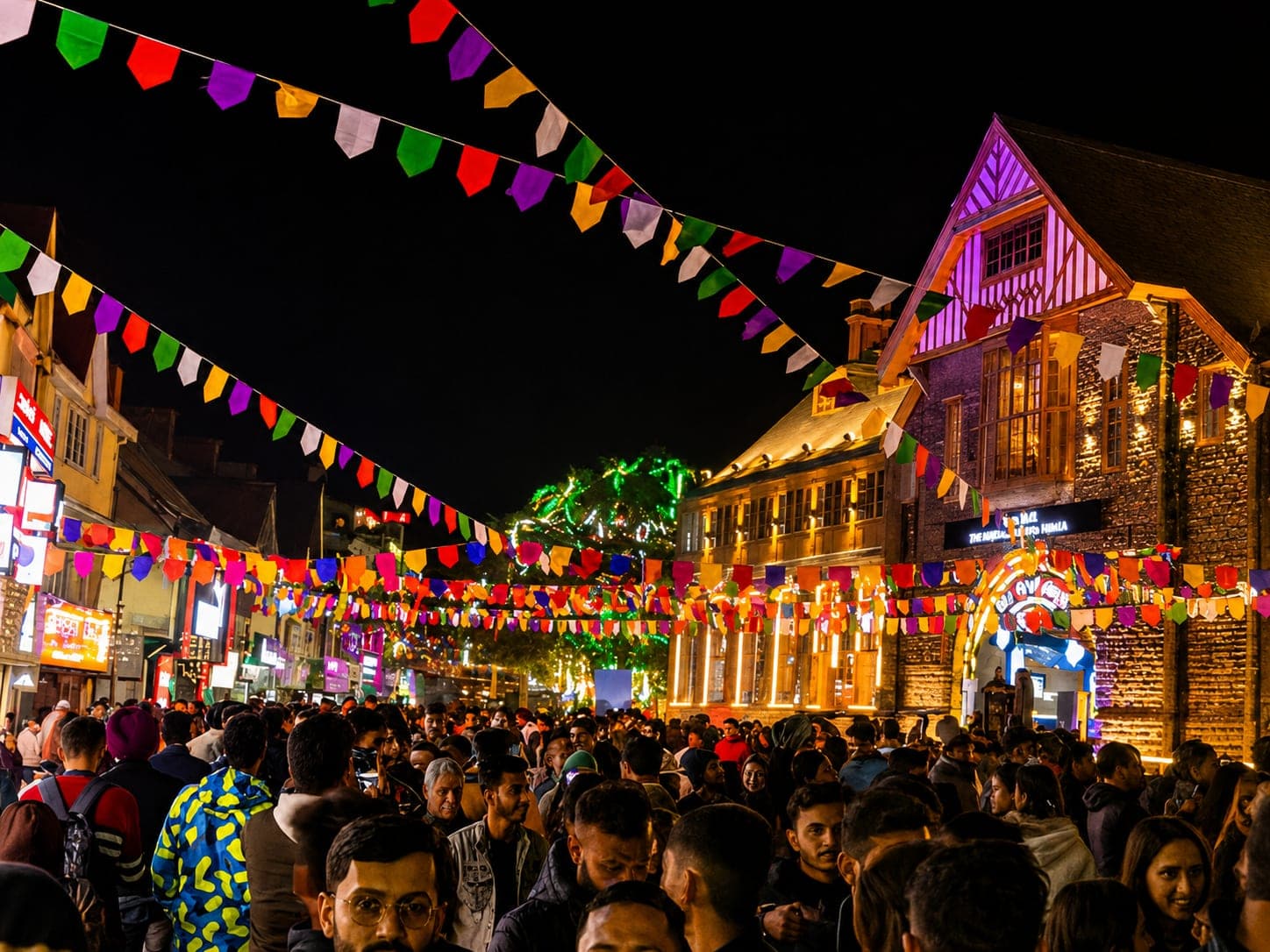
This is Shimla's busiest season, and for a straightforward reason — daytime temperatures rarely climb past the mid-20s°C even in peak summer, making it a genuine heat-escape for travellers from Delhi and the plains, where the same months routinely cross 40°C. Mall Road and The Ridge are at their liveliest, with street food stalls, horse rides for kids and a steady evening crowd well into May and June.
The trade-off is exactly what you'd expect from any popular hill-station peak season: hotel rates climb sharply from mid-April once school summer holidays begin, Mall Road gets genuinely crowded by late afternoon, and weekend traffic on the Kalka–Shimla road can add real time to your journey. If you're travelling with children specifically for the cooler weather, this remains the most reliable window — June does get a little warmer and more humid than April or May as pre-monsoon conditions build, so the April–May stretch is usually the better pick within summer if your dates are flexible.
Monsoon in Shimla (July to September)
Shimla gets meaningfully wetter in these months, and this is the one season where we'd actively ask you to reconsider your dates unless the lower prices specifically outweigh the risk. Heavy rain spells can trigger landslides and road closures on the Kalka–Shimla and Chandigarh–Shimla routes, occasionally stretching a normal 6–7 hour drive from Delhi considerably longer, or forcing a last-minute reroute.
Views between showers can be genuinely spectacular — mist rolling through the deodar forests has its own appeal — but this isn't the season to plan around if clear mountain photography or a fixed, unmovable itinerary is the priority. If you do travel in this window, build in buffer time around your travel dates rather than a tight same-day connection, and keep an eye on regional weather advisories in the days before departure.
Autumn in Shimla (October to November)
A genuinely underrated window, and usually our first recommendation for travellers without a specific snow or festival goal. Crowds thin out noticeably after the summer rush, weather stays crisp and mostly clear with minimal rain, and Mall Road's evening chill starts adding real hill-station atmosphere without any of winter's snow-related travel disruptions. Hotel rates sit meaningfully below summer peak pricing while the weather is arguably just as comfortable, if not more so, given the clearer skies.
Late October into early November is also a strong window for day trips to Kufri and Chail, since both sit at higher elevation than Shimla itself and get genuinely cold earlier in the season — the air is crisp without yet being disruptive to travel.
Winter in Shimla (December to February)
Shimla's light snowfall, usually arriving anywhere from late December into January, is the main draw of this season, alongside the New Year crowd around Mall Road and The Ridge. This is also the season that generates the most overstated claims online — snow in Shimla town itself is real but genuinely not guaranteed on any specific date, and several winters see only light, short-lived snowfall or none at all in the town centre (Kufri, at higher elevation, sees snow more reliably than Shimla town in most years).
December is split into two distinct experiences: the run-up to Christmas and New Year is crowded and priced at a premium, while the back half of January through February is colder, quieter and cheaper, with a realistically better — though still not certain — chance of snow having already fallen or falling during your stay. If snow is genuinely your priority, read the next section before booking non-refundable dates.
Does It Snow in Shimla? What to Actually Expect
Treat "guaranteed snow in Shimla" claims with real skepticism. Snowfall in Shimla town is weather-dependent and varies meaningfully year to year — some winters bring multiple good snowfalls through January, others bring very little in the town itself. What's more consistent: Kufri and higher points around Shimla tend to hold snow for longer once it falls, and even in a light-snow winter, Kufri is more likely to have visible snow than Mall Road itself.
Our honest recommendation for snow-focused trips: aim for the first half of January, build at least 2–3 flexible days into your plan rather than a rigid 2-day weekend, and check recent snowfall reports for Shimla and Kufri in the days immediately before you travel — conditions can and do change quickly at this elevation.
Shimla vs Manali: Which Should You Pick
Both are classic North Indian hill stations and the comparison comes up constantly — we've covered it in detail in our Shimla vs Manali guide. As a quick seasonal note specific to this guide: Manali sits higher and colder than Shimla, so it holds snow more reliably in winter and stays cooler in peak summer, while Shimla is the easier, shorter trip from Delhi NCR and suits travellers with just a weekend to spare.
Shimla with Kufri and Chail: Best Season for the Full Circuit
If you're combining Shimla with Kufri and Chail — the classic short circuit, and the one our own Shimla • Kufri • Chail package runs — season matters a little differently than for Shimla alone. Kufri sits noticeably higher than Shimla and gets both colder and snow-covered earlier and more reliably in winter, making a December–February visit worthwhile specifically for the Kufri leg even in a light-snow year for Shimla town. Chail, with its forested palace grounds, is at its best in the clearer autumn months (October–November) or in summer when the walk around the palace grounds is most comfortable.
For a single trip covering all three in 1 night (our package's format), April–June and October–November are the two windows we'd recommend first — summer for guaranteed pleasant weather, autumn for the same weather with smaller crowds and lower prices.
Shimla Weekend Trip: Best Time for a 2-Day Visit
If you only have a Saturday–Sunday window, weather matters less than crowd management — a 2-day Shimla trip in peak summer or New Year week means spending real time in Mall Road traffic and hotel check-in queues rather than actually seeing the hill station. September, October and the back half of January through February are the strongest picks for a short weekend specifically because the sightseeing itself moves faster with thinner crowds, which matters more on a tight timeline than on a longer, unhurried trip.
What to Pack for Shimla by Season
Summer (April–June): Light layers for the day, one warm layer for cool evenings, comfortable walking shoes for Mall Road's slopes and stairs, sunscreen for the clear-sky days.
Monsoon (July–September): A proper rain layer or poncho, waterproof or quick-dry footwear, a dry bag for electronics, and a flexible itinerary in case of road delays.
Autumn (October–November): A medium jacket for mornings and evenings, light layers for midday sun, and a light scarf — temperatures swing more across the day in this season than in summer.
Winter (December–February): Heavy woollens, a proper insulated jacket, thermal base layers, waterproof boots with grip for icy patches on Mall Road and around Kufri, gloves and a warm cap.
Final Recommendation by Traveller Type
First-time visitors wanting reliable pleasant weather: April to June, accepting higher prices and crowds as the trade-off.
Travellers chasing snow: First half of January, with flexible dates and a recent-conditions check before departure — and consider prioritising Kufri over Shimla town if snow itself is the goal.
Budget-conscious or crowd-averse travellers: October and November — close to summer's weather quality at a noticeably lower price and crowd level.
Weekend-only travellers: September–October or late January–February, when sightseeing moves fastest with the thinnest crowds.
Travellers combining Shimla, Kufri and Chail: Summer or autumn for comfortable conditions across all three stops; winter specifically if Kufri's snow is the priority, accepting that Shimla town itself may or may not see snow on your dates.
Our Shimla • Kufri • Chail package runs as a 2-day/1-night weekend format across these seasons — see the package page for the current itinerary, or share your preferred dates through our enquiry form if you'd rather have a longer or more customised version built around your dates.