Bhutan works differently from almost any other international trip you'll plan — tourism is deliberately structured around licensed operators and a daily Sustainable Development Fee, and understanding that system before you dive into sightseeing details will save real confusion later. This guide covers the whole trip in one place, and links to our shorter, topic-specific guides wherever you want more depth on a single question.
How tourist travel in Bhutan actually works
Bhutan follows a "high value, low volume" tourism policy — most foreign tourists must book through a licensed Bhutanese tour operator (or an agent working with one, like us), and pay a Sustainable Development Fee per day of the visit, which funds the country's free healthcare, education and environmental conservation programmes. Indian, Bangladeshi and Maldivian nationals have separate, simpler entry arrangements. In practice, this means your operator handles permits, routing and the SDF as part of your package — you aren't navigating Bhutanese bureaucracy independently the way you might for a self-planned Southeast Asia trip.
Understanding Bhutan's regions
Western Bhutan — Paro, Thimphu and Punakha — is where the vast majority of first-time visitors go, and where our own Bhutan — Phuentsholing, Thimphu & Paro package operates. Central Bhutan (Bumthang, Phobjikha Valley) and further-flung regions require additional days and are typically added only on longer, second-time trips.
Entering Bhutan via Phuentsholing
For overland travellers entering by road from India, Phuentsholing is the border town gateway — a practical, if unglamorous, first stop before the drive up into Bhutan's mountain towns proper.
Thimphu — the capital
Bhutan's capital and largest town, Thimphu has a noticeably different pace from what "Bhutan" conjures in most people's minds — genuine city infrastructure alongside distinctly Bhutanese architecture, the Buddha Dordenma statue (Buddha Point) overlooking the valley, and Thimphu's memorial chorten, in continuous use by local worshippers rather than existing purely as a monument.
Dochula Pass and Punakha
En route from Thimphu to Punakha, Dochula Pass's 108 memorial chortens and (on a clear day) Himalayan views make for one of Bhutan's most photographed stops — see our dedicated Dochula Pass guide for more detail. Punakha Dzong itself, set at the confluence of two rivers, is widely considered one of Bhutan's most beautiful fortress-monasteries.
Paro and Tiger's Nest
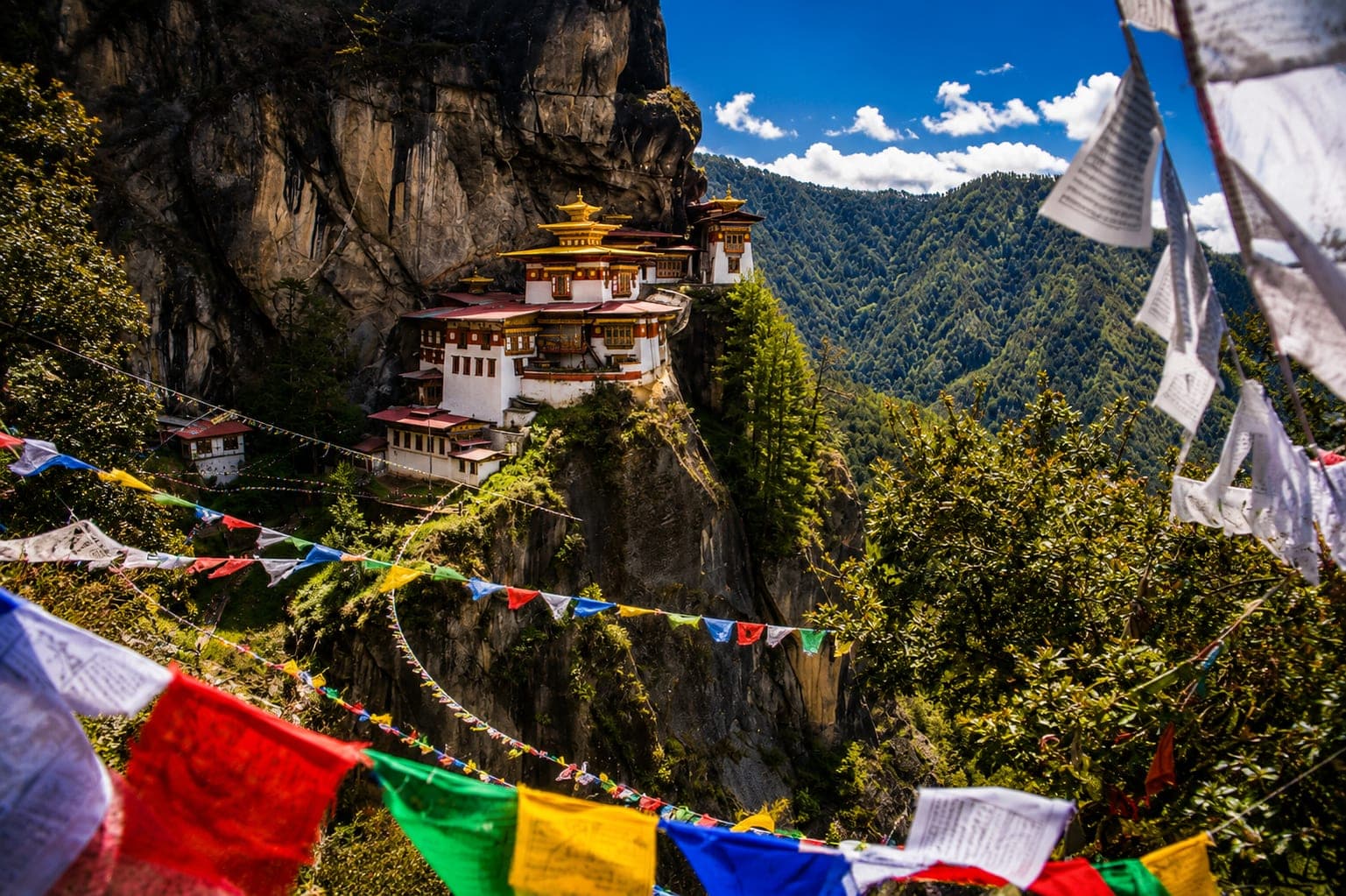
Paro is most famous for Taktsang Monastery (Tiger's Nest), perched dramatically on a cliffside and reached by a steep, genuinely demanding half-day hike — one of the most-anticipated single experiences on almost any Bhutan trip, even for travellers who don't otherwise trek. Kichu Lhakhang, one of Bhutan's oldest temples, is a calmer counterpart nearby.
Beyond the western circuit
Phobjikha Valley (famous for its wintering black-necked cranes), Bhutan's natural hot springs in Gasa, Punakha and Bumthang, and Bhutan's serious trekking and biking routes are all real options for travellers with more time — see our guides to Phobjikha Valley, Bhutan's hot springs, biking in Bhutan and trekking in Bhutan for each in depth.
Bhutanese food and culture
Ema datshi — chillies in a cheese sauce — is Bhutan's de facto national dish and worth trying properly spiced rather than a toned-down tourist version. Red rice, a Bhutanese staple, and momos (reflecting the same Himalayan-Tibetan food influence found in Ladakh and Nepal) round out most meals. Bhutan's Buddhist culture is visible everywhere, from prayer wheels and flags to the national dress (gho for men, kira for women) still commonly worn, including by many officials and students as everyday attire rather than only for ceremonial occasions.
Best time to visit
March–May and September–November offer the most reliable weather across the western circuit, avoiding both winter's cold at altitude and the monsoon's heaviest rains — our own package runs across the year given the milder conditions in Phuentsholing, Thimphu and Paro specifically.
Budgeting for a Bhutan trip
Because Bhutan's tourism model bundles the Sustainable Development Fee, permits and (typically) accommodation and meals into your operator's package, a Bhutan trip is more predictably priced upfront than many international destinations — the main variables are trip length, season and whether you extend beyond the standard western circuit into central Bhutan.
A sample 7-day itinerary
Days 1–2: Enter via Phuentsholing, drive up to Thimphu — Buddha Dordenma, memorial chorten, local sightseeing. Day 3: Dochula Pass en route to Punakha, Punakha Dzong. Days 4–6: Paro — Kichu Lhakhang, the Tiger's Nest hike, local sightseeing. Day 7: Departure via Phuentsholing.
Frequently asked questions
Do I need a visa for Bhutan? Indian nationals don't need a visa in the conventional sense but do need a permit, which your operator arranges as part of your trip. Other nationalities require a visa, also arranged through a licensed operator.
What is the Sustainable Development Fee? A per-day fee charged to most foreign tourists (with separate arrangements for Indian, Bangladeshi and Maldivian nationals), funding Bhutan's free healthcare, education and conservation programmes — it's built into your package cost rather than something you pay separately on arrival.
Is the Tiger's Nest hike difficult? It's a genuinely steep half-day climb, doable by most reasonably fit travellers at a slow pace with rest stops, and ponies are available for part of the ascent for those who prefer not to hike the whole way.
How many days do you need for a first Bhutan trip? 6–7 days lets you properly cover Thimphu, Punakha and Paro without rushing — our own package runs 7 days, 6 nights for this reason.
Can I travel independently in Bhutan without a tour operator? For most nationalities, no — Bhutan's tourism policy requires travel through a licensed operator; Indian nationals have somewhat more flexibility but still benefit from an operator handling permits and logistics.
Planning your trip
Our Bhutan — Phuentsholing, Thimphu & Paro package covers everything in this guide's core western circuit as a complete 7-day, 6-night trip, including Dochula Pass, Punakha Dzong, Thimphu sightseeing and the Tiger's Nest viewpoint in Paro. See the package page for the current itinerary and inclusions, or share your dates through our Custom Quote form for a tailored price.