Rajasthan is India's largest state by area, and that scale is exactly why so many first-time visitors either try to cram in too much or don't realise how much genuine variety — desert, lakes, wildlife, hill station — sits within one state. This guide ties the whole trip together, and links out to our shorter, topic-specific guides wherever you want more depth on a single question.
Understanding Rajasthan's regions
Most itineraries work with three broad clusters: the Jaipur–Jodhpur–Udaipur "classic circuit" in the state's centre and south, Jaisalmer and the Thar Desert further west, and Mount Abu, Rajasthan's only hill station, in the south near the Gujarat border. Very few trips attempt all of Rajasthan in one go — deciding which cluster (or which two) fits your available days is the real first planning decision, and our 7-day Jaipur–Jodhpur–Udaipur itinerary guide covers the classic circuit in full day-by-day detail.
Jaipur — the Pink City
Amber Fort's hilltop setting and Sheesh Mahal (Mirror Palace), City Palace, Hawa Mahal's honeycomb facade, and Nahargarh Fort's sunset viewpoint anchor most first visits, alongside an evening in the old city's bazaars for jewellery, textiles and street food.
Jodhpur — the Blue City
Mehrangarh Fort, towering over Jodhpur's blue-painted old town, is widely considered one of India's best-preserved forts, with extensive museum galleries on Rajput history, arms and textiles.
Udaipur — the City of Lakes
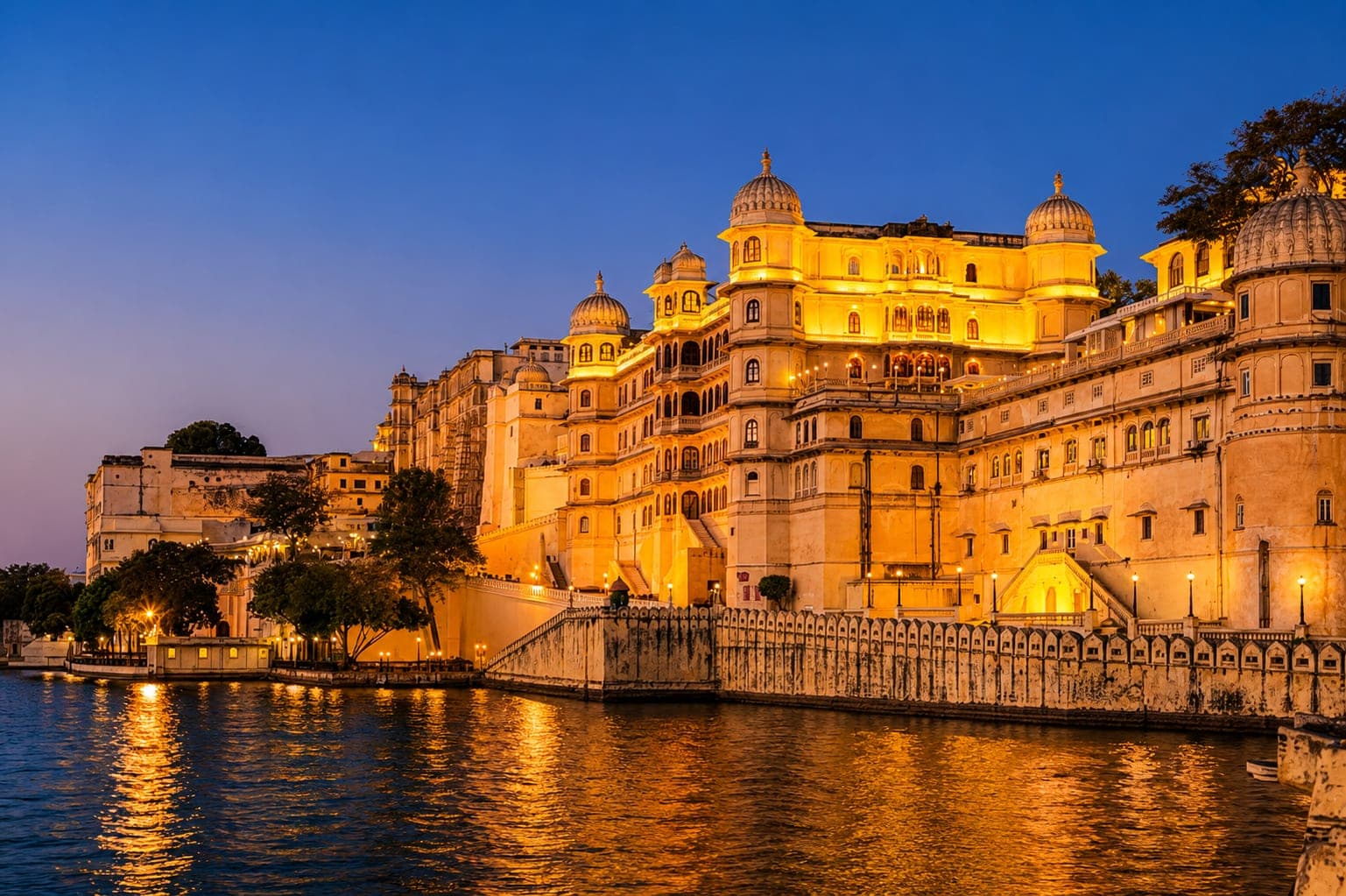
Lake Pichola, ringed by City Palace and the lake-island Lake Palace (now a heritage hotel, visible by boat), gives Udaipur a genuinely different character from Rajasthan's desert towns — our Udaipur & Kumbhalgarh and Udaipur & Mount Abu packages both use Udaipur as their base.
Jaisalmer and the Thar Desert
Jaisalmer Fort is unusual among Rajasthan's forts for still being inhabited, with homes, shops and havelis operating inside its walls. Most Jaisalmer trips build in an overnight desert camp near the Sam dunes, with a bonfire and folk-music evening — a genuinely different experience from the rest of the state's city-based sightseeing. Our Jaisalmer — The Golden City Experience package is built around exactly this combination.
Kumbhalgarh — the great wall
A UNESCO World Heritage Site known for its massive perimeter wall, often cited among the longest continuous walls in the world, Kumbhalgarh is a natural day-trip addition from Udaipur rather than a standalone stay.
Mount Abu — Rajasthan's only hill station
Nakki Lake's sunset boat rides and the Dilwara Jain Temples' intricately carved marble interiors give Mount Abu a cooler, calmer contrast to the rest of Rajasthan's desert heat — a natural pairing with Udaipur given the short drive between them.
Wildlife — Ranthambore and Sariska
Rajasthan isn't only heritage sightseeing — Ranthambore and Sariska give the state two of India's better-known tiger reserves. See our Rajasthan wildlife guide for safari-booking specifics and best season.
Food — what to actually eat
Dal baati churma, gatte ki sabzi, laal maas (for meat eaters) and ghewar are the essentials — our full food guide goes dish-by-dish with where to find the best versions.
Festivals worth timing a trip around
The Pushkar Camel Fair, Teej, Gangaur, the Marwar Festival in Jodhpur and Jaisalmer's Desert Festival are Rajasthan's most vivid celebrations — see our full festivals guide for dates and what to expect at each.
Best time to visit
October through March offers comfortable daytime sightseeing temperatures across the state; April onward gets genuinely hot, particularly in Jodhpur and Jaisalmer, which is why our own Rajasthan packages run in the winter season.
Budgeting for a Rajasthan trip
Season, stay category and group size drive the cost more than anything else — shoulder-season travel (October–November, February–March) typically offers better hotel value than the December–January peak. See our dedicated Rajasthan budget guide for a fuller breakdown of where to save and where not to cut corners.
Beyond the classic circuit
If you've already done Jaipur, Jodhpur and Udaipur, Bundi, the painted havelis of Shekhawati, and the Ranakpur Jain temples are all genuinely rewarding, far less crowded additions — our offbeat Rajasthan guide covers these in depth.
A sample itinerary — Udaipur and Kumbhalgarh (3 days)
Day 0: Overnight departure to Udaipur. Day 1: Sajjangarh (Monsoon Palace), Saheliyon Ki Bari, Fateh Sagar Lake. Day 2: Lake Pichola boat ride, City Palace, Jagdish Temple, Karni Mata Ropeway, Bagore Ki Haveli. Day 3: Kumbhalgarh Fort excursion, return journey.
Frequently asked questions
How many days do you need for Rajasthan? A single cluster (Udaipur and its surroundings, or Jaisalmer) works well as a 3-day weekend trip; the full Jaipur–Jodhpur–Udaipur classic circuit needs 6–7 days done properly.
Is Rajasthan a good trip for couples? Yes — Udaipur's lakes and Jaisalmer's desert camps are both genuinely well-suited to couples; see our Rajasthan for couples guide for specifics.
What's the single best month to visit if I can only pick one? November or February both offer a strong balance of comfortable weather and manageable crowds, sitting just outside the busiest December–January window.
Is Rajasthan safe for solo and family travellers? Yes — Rajasthan is one of India's most-visited states specifically because its tourism infrastructure (hotels, guides, transport) is well established across all the major circuits.
Do I need a special permit to visit any part of Rajasthan? No special permits are needed for Indian nationals visiting Rajasthan's standard tourist circuit, unlike some border-adjacent regions elsewhere in the country.
Planning your trip
Our Jaisalmer, Udaipur & Kumbhalgarh and Udaipur & Mount Abu packages each cover a different slice of this guide as a complete 3-day, 2-night trip from Delhi — see any package page for the current itinerary and inclusions, or share your dates through our Custom Quote form for a tailored, multi-city Rajasthan circuit.