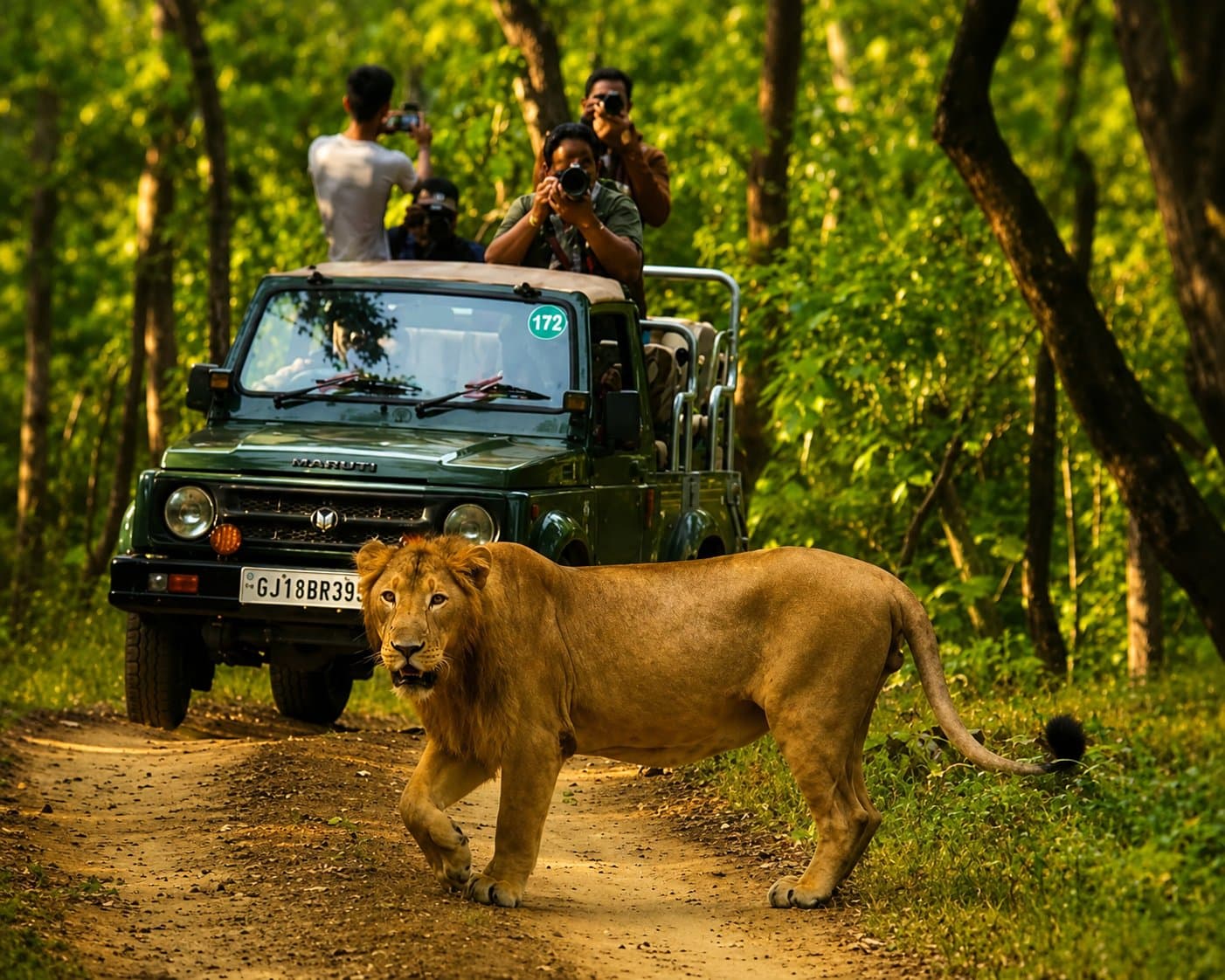
Gir National Park, in Gujarat's Saurashtra region, holds a distinction no other park on the planet can claim: it's the only place where the Asiatic lion survives in the wild. Once ranging across the Middle East and northern India, hunting and habitat loss pushed the subspecies to the brink of extinction by the early 20th century — the entire wild population today is descended from a small group protected within Gir, and conservation efforts here are considered one of the genuine success stories of Indian wildlife protection.
How Gir Saved the Asiatic Lion
By the early 1900s, the Asiatic lion population had collapsed to a handful of individuals, confined to the Gir forest. The Nawab of Junagadh, who controlled the region at the time, banned lion hunting in the early 20th century — a decision widely credited with preventing the subspecies' extinction. After independence, Gir was formally protected, first as a sanctuary and then as a national park, and the population has grown steadily since, with the most recent counts putting the wild Asiatic lion population at several hundred, almost entirely within and around the Gir landscape in Gujarat.
This is also why Gir matters beyond India: it's the sole wild breeding population of a subspecies otherwise found only in zoos and conservation breeding programmes worldwide.
Safari Zones and How They Work
Gir National Park's core area is divided into multiple safari zones — Devaliya (also called Gir Interpretation Zone, a smaller, fenced area with more reliable sightings, popular for a shorter visit), and the main forest zones reached by permit-based jeep safari, which cover larger, wilder stretches of the park. Safari permits are allocated by the forest department and are typically booked in advance, especially during peak winter season when demand is highest.
Morning safaris (starting around sunrise) and afternoon safaris are both offered, and most lodges and tour operators can help arrange permits, though availability isn't guaranteed and is ultimately subject to forest department allocation on the day.
Will You See a Lion?
This is the honest answer most travel guides skip: a jungle safari is a wildlife experience, not a guaranteed sighting, and that holds for Gir's lions just as it does for tiger safaris elsewhere in India. Gir's lion density is relatively high compared to many tiger reserves, and sighting odds are generally considered favourable, especially in the drier months when animals concentrate near water sources — but no safari operator can promise a sighting, and it's worth going in with realistic expectations and enjoying the broader forest and birdlife even if the lion doesn't appear on a given drive.
Beyond Lions: Other Wildlife in Gir
Gir isn't a single-species park. The forest supports leopards (in healthy numbers, through sightings are less commonly prioritised given the lion's draw), spotted deer, sambar, nilgai, and over 300 recorded bird species, making it a genuinely rewarding stop for birdwatchers as well as those chasing the lion sighting.
Best Time to Visit
Gir is open from mid-October to mid-June and closed through the monsoon months (roughly mid-June to mid-October) when the park is shut for the breeding season and heavy rain makes safari tracks impassable. Within the open season, winter (November to February) offers the most comfortable weather for safaris, while the hotter pre-monsoon months (March to mid-June) can actually improve sighting odds, since animals cluster more predictably around shrinking water sources — a trade-off worth knowing about if sighting probability matters more to you than comfort.
Planning Your Visit
Our Dwarka, Somnath & Gir package includes a Gir jungle jeep safari as part of a 5-day Gujarat circuit from Rajkot, alongside the Dwarka and Somnath temple visits — see the package page for the full itinerary and current pricing.
Frequently Asked Questions
Is Gir National Park the only place to see Asiatic lions in the wild? Yes — Gir and its surrounding protected landscape hold the entire global wild population of the Asiatic lion; it isn't found wild anywhere else on Earth.
Is a lion sighting guaranteed on a Gir safari? No — like any wildlife safari, sightings depend on the animals' movement on the day. Gir's sighting odds are generally considered favourable given the relatively high lion density, but no safari can guarantee it.
When is Gir National Park closed? The park is closed roughly from mid-June to mid-October for the monsoon season and the lions' breeding period, reopening around mid-October.
What's the best time to visit Gir for comfortable weather vs. better sightings? Winter (November-February) offers the most comfortable safari weather; the hotter months just before the park closes (March to mid-June) can improve sighting odds as animals concentrate near remaining water sources.
What other wildlife can be seen in Gir besides lions? Leopards, spotted deer, sambar, nilgai and over 300 recorded bird species — Gir is a genuinely rewarding stop for birdwatchers as well as lion-spotters.
Get in touch to plan your Gir safari, or see our Dwarka, Somnath & Gir package for the full circuit.