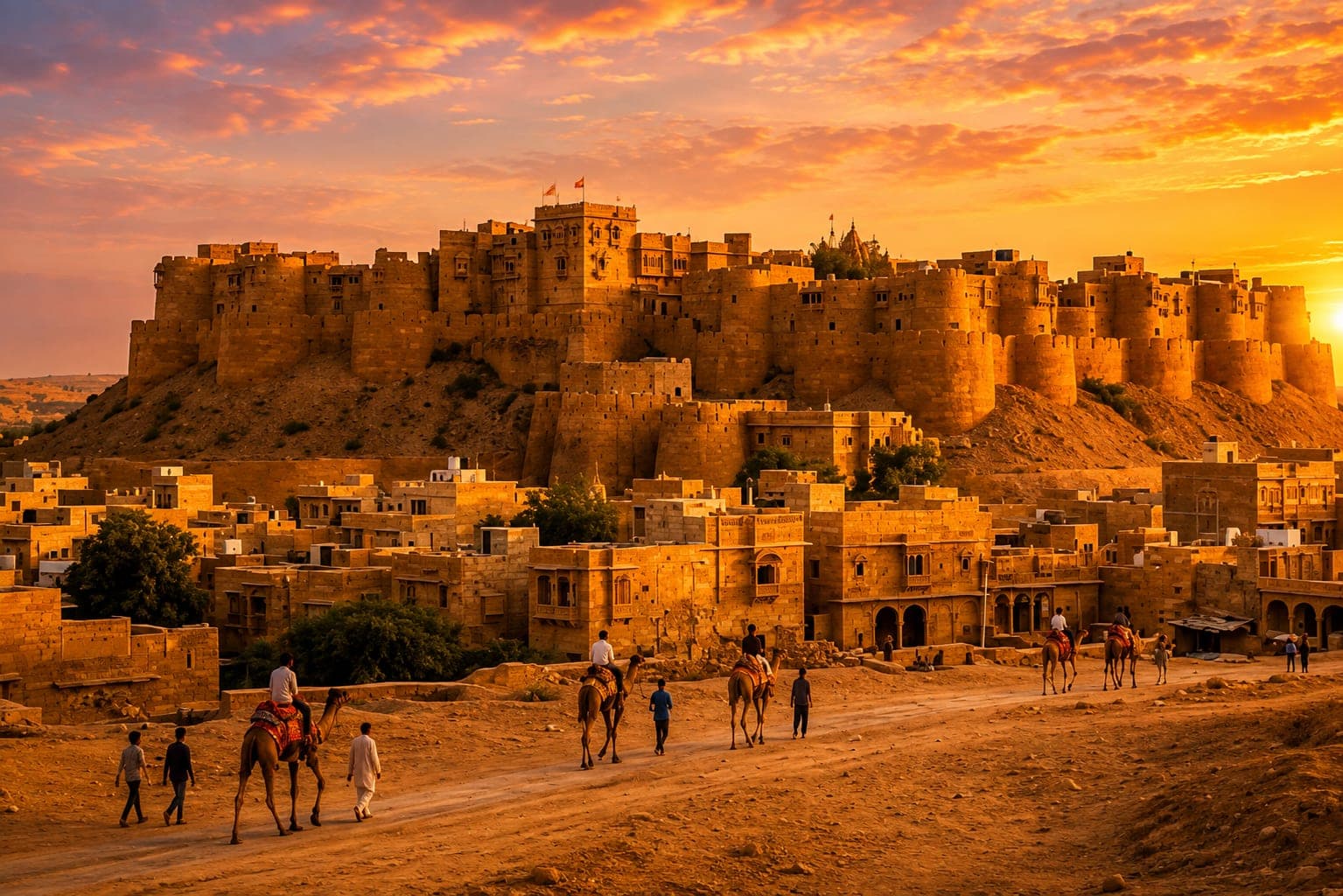
Jaisalmer sells itself on one image: golden dunes at sunset, camel silhouettes against an orange sky. But once you're actually booking a Thar Desert trip, the real question isn't whether to go — it's how. Camel safari or jeep safari, Sam Dunes or Khuri, one night in a desert camp or a day trip back to the city? Here's what actually matters.
Camel Safari vs Jeep Safari
Camel safari is the slower, more traditional option — typically a 1 to 2 hour ride out to the deeper dunes, timed around sunset. It's uncomfortable if you've never ridden one (expect a sore back the next day), but it's the experience people actually come for, and it's the only way to reach some of the quieter dune stretches away from the crowds near the main entry points.
Jeep safari (often called dune bashing) is faster, covers more ground, and is the better fit if you have limited time, are travelling with older family members or young kids, or simply don't want the camel ride. Many operators now combine both — a short jeep transfer followed by a shorter camel ride for the sunset stretch — which is worth asking for specifically if neither option alone appeals.
For a first-time visitor with two days in Jaisalmer, we'd usually recommend the combined version over committing fully to one or the other.
Sam Dunes vs Khuri Dunes
Sam Sand Dunes, about 40 km from Jaisalmer city, is the default choice and the most set up for tourists — more camps, more safari operators, cultural evening shows with folk music and fire dance. It's also the most crowded, especially around sunset in peak season.
Khuri, a little further out, is quieter and feels more like an actual village experience. If you've already seen Sam-style dunes elsewhere or you're specifically looking to avoid crowds, Khuri is worth the extra travel time.
Best Time to Visit Jaisalmer
October to March is the window that works. December and January bring genuinely cold desert nights (single digits after dark), so a desert camp stay needs proper layering, not just a light jacket. October–November and February–March give milder nights with the same clear skies, and are our usual recommendation for anyone doing an overnight camp stay.
Avoid April through September entirely unless you have a specific reason to be there — daytime temperatures regularly cross 45°C, and the desert experience stops being enjoyable.
Should You Stay Overnight in a Desert Camp?
If your schedule allows it, yes. A day-trip safari gets you the sunset and the dunes, but an overnight stay adds the stargazing (Jaisalmer's low light pollution makes for genuinely good night skies), the folk performance after dinner, and a sunrise view over the dunes before the day-trippers arrive. Camps range from basic tented setups to swiss-tent luxury camps with attached bathrooms — worth deciding your comfort level before booking, since photos online don't always match reality.
Getting to Jaisalmer
The nearest airport is Jaisalmer itself, though flight frequency is limited and often seasonal — check connections before locking in dates. The more reliable route is by train from Delhi or Jodhpur, or a road trip via Jodhpur, which also lets you combine Jaisalmer with the Blue City and Mehrangarh Fort en route.
How Long Do You Need?
Two full days is the practical minimum — one for Jaisalmer Fort, Patwon ki Haveli and the city, one for the desert safari and camp. Three days lets you add Khuri or a slower pace without feeling rushed.
If you're planning a Rajasthan trip that includes Jaisalmer alongside Jodhpur and Udaipur, we can put together a route and camp option that fits your dates — get in touch and we'll work out the logistics.