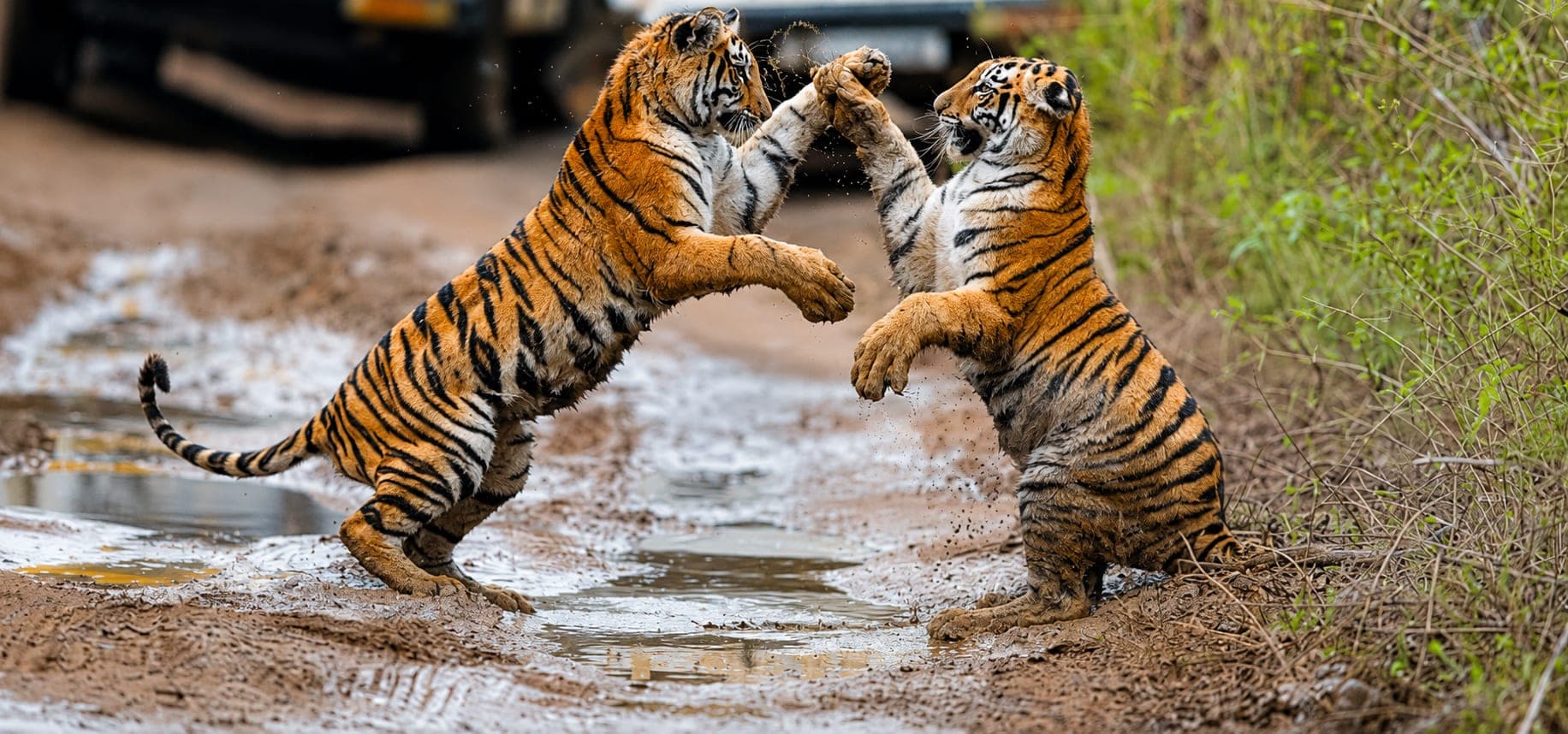
Jim Corbett National Park is India's oldest national park, and arguably its most storied — a dense belt of Sal forest, riverine grassland and Himalayan foothill terrain in Uttarakhand's Kumaon region, built around the Ramganga river, and home to one of the country's highest tiger densities. It's also one of the few Indian national parks whose name carries a genuine story rather than just a location — and that story, along with a proper understanding of its zones and wildlife, is what most visitors never get before they go.
This guide covers all of it in depth: why the park is actually named Jim Corbett, the full history behind that, every major safari zone and what makes each one distinct, and the flora and fauna — tigers, leopards, elephants and the rest — that make this one of India's genuinely great wildlife destinations.
Why Is It Called Jim Corbett National Park?
The short answer: it's named after Jim Corbett, the British-Indian hunter-tracker turned conservationist who played a central role in the park's founding and in India's early wildlife conservation movement. The fuller story is worth knowing, because the park's name has actually changed twice.
Hailey National Park (1936). When the park was established in 1936 — making it India's oldest national park and one of the first in Asia — it was named Hailey National Park, after Sir Malcolm Hailey, then Governor of the United Provinces, who supported its creation.
Ramganga National Park (1954–55). The park was renamed Ramganga National Park in the mid-1950s, after the river that runs through it and anchors much of its ecosystem.
Corbett National Park (1957). In 1957, the park was renamed a final time — to Corbett National Park — in honour of Edward James "Jim" Corbett, who had died the previous year. This wasn't a naming formality; Corbett had been directly involved in the park's establishment two decades earlier and was, by the time of his death, one of the most influential voices in Indian wildlife conservation.
Who Was Jim Corbett?
Jim Corbett (1875–1955) was born in Nainital, in the same Kumaon hills the park now sits in, and spent much of his early life as a hunter-tracker called upon by British and local authorities to track and kill man-eating tigers and leopards that had killed villagers across the Kumaon and Garhwal regions — most famously the Champawat Tiger, credited with over 400 human deaths before Corbett tracked and killed it, and the Leopard of Rudraprayag, responsible for over 100 deaths over nearly a decade.
What makes Corbett's story more than just hunting history is the turn it took afterward. Having spent years studying these animals at extremely close range, Corbett became one of the earliest and most effective advocates for tiger and wildlife conservation in India, arguing — well ahead of his time — that habitat loss and human encroachment, not tigers themselves, were the real long-term threat to both wildlife and people. He wrote several books about his tracking years, most famously *Man-Eaters of Kumaon* (1944), which remains widely read today and did more than perhaps any other single work to shape popular understanding of the Indian tiger. His conservation advocacy directly influenced the creation of the park that would later bear his name.
From Project Tiger's First Reserve to Today
Jim Corbett's significance didn't end with its naming. In 1973, it became the first reserve declared under Project Tiger, India's flagship tiger conservation programme launched in response to a sharp, alarming decline in the country's wild tiger population. That makes Corbett not just India's oldest national park, but the literal starting point of the country's modern tiger conservation effort — a distinction that still shapes how seriously the park's core zones are protected today.
Geography and Layout
Jim Corbett National Park sits in Uttarakhand's Kumaon foothills, built around the Ramganga river and its reservoir, with terrain ranging from valley floor to forested ridgeline. The core national park covers roughly 520 sq km, but the wider Corbett Tiger Reserve — which includes substantial buffer forest, including the Sonanadi Wildlife Sanctuary — extends to roughly 1,300 sq km in total, making it one of the largest protected tiger landscapes in North India.
The Zones of Jim Corbett: A Complete Breakdown
Jim Corbett isn't visited as one undifferentiated forest — it's divided into distinct safari zones, each with its own character, access rules and reputation. Picking the right zone (or zones) for your safari matters more here than at most Indian wildlife parks.
Dhikala Zone. The largest and most celebrated zone, set around the Ramganga reservoir's wide grasslands (locally called *chaurs*). Dhikala is the park's single best zone for elephant herds and consistently strong for tiger sightings too, thanks to its mix of open grassland and forest edge. It's also the most tightly controlled — entry is usually via authorised canter safaris or permitted vehicles rather than casual private-jeep access, with daily entries capped and an overnight Forest Rest House stay inside the zone itself for those who book it. If you only do one zone properly, this is the one most repeat visitors rate highest.
Bijrani Zone. Close to Ramnagar and easy to reach, Bijrani is one of the most consistently tiger-dense zones in the park and a favourite for day-safaris that don't require Dhikala's advance planning. Its mix of Sal forest and smaller grasslands makes for varied, reliable sightings across a half-day safari.
Jhirna Zone. One of the few zones that stays open through the monsoon, when Dhikala and several others close for the breeding season and flood risk. Jhirna is known particularly for good leopard sightings, and its year-round access makes it the default choice for a Corbett trip outside the main November–June window.
Dhela Zone. A newer zone, developed to ease visitor pressure on Bijrani and Jhirna and typically open through most of the year as well. Dhela works well for first-time visitors and families, with a gentler, less rushed safari experience than the busier core zones.
Durga Devi Zone. Set at the confluence of the Ramganga and Sonanadi rivers, Durga Devi is Corbett's standout zone for serious birdwatchers, alongside solid general wildlife sightings in a noticeably quieter, less-touristed setting than Bijrani or Dhikala. It can close during heavy monsoon flow given its riverside location.
Sitabani (Buffer Zone). Named for its association with Sita from the Ramayana in local legend, Sitabani sits in the buffer forest outside the core reserve and offers a more relaxed, less tightly regulated safari experience, combined with temple visits and a genuinely different, more cultural character than the core zones.
Sonanadi Wildlife Sanctuary. Originally a separate protected sanctuary, Sonanadi is now folded into the wider Corbett Tiger Reserve's buffer landscape — quieter and far less visited than the main zones, appealing if solitude matters more to you than guaranteed sightings.
Jim Corbett Zones at a Glance
| Zone | Known For | Best Suited To |
|---|
| Dhikala | Elephant herds, grassland tiger sightings, overnight stays | Serious wildlife-watchers, repeat visitors |
| Bijrani | High tiger density, easy access from Ramnagar | First full-day safari, reliable sightings |
| Jhirna | Open through monsoon, strong leopard sightings | Off-season visits (July–October) |
| Dhela | Newer, gentler pace, open most of the year | Families, first-time safari-goers |
| Durga Devi | River-confluence birdlife, quiet setting | Birdwatchers, photography-focused trips |
| Sitabani | Buffer-zone access, temple and cultural sites | A relaxed, less regulated half-day |
| Sonanadi | Quiet, low visitor numbers | Travellers prioritising solitude over density |
Flora of Jim Corbett
Sal (*Shorea robusta*) forest dominates Jim Corbett, covering the majority of the park's area and forming the dense canopy that defines much of its character — tall, straight trunks with a relatively open understorey that makes wildlife spotting genuinely feasible compared to denser jungle elsewhere in India. Along the Ramganga and its tributaries, a riverine belt of khair and sissoo trees takes over, while the open grasslands (chaurs) around Dhikala and the reservoir support an entirely different plant community adapted to seasonal flooding — these grasslands are exactly what draws elephant herds and grazing deer species in such numbers. Across its different elevations and habitats, Corbett supports several hundred recorded plant species, making it one of the more botanically diverse protected areas in the Himalayan foothills, even though most visitors come for the animals rather than the trees.
Fauna of Jim Corbett: Tigers, Leopards and Beyond
Bengal Tigers. Corbett's flagship species and the reason most visitors come — the park holds one of India's highest tiger densities, a direct result of its status as Project Tiger's founding reserve and decades of sustained protection. Sightings are never guaranteed on any single safari, but Corbett's combination of habitat diversity and population density gives genuinely strong odds compared to most other Indian tiger reserves.
Leopards. Present throughout the park but more elusive than tigers, with Jhirna in particular carrying a strong leopard-sighting reputation. Leopards favour denser cover and rockier terrain than tigers typically do, which is part of why sightings tend to be more opportunistic.
Asian Elephants. Corbett supports a genuinely large resident and seasonally migrating elephant population, with Dhikala's grasslands the single best place to see sizeable herds, especially in the cooler months when they move down from higher ground.
Deer Species. Four deer species anchor the park's prey base: chital (spotted deer), the largest sambar, the smaller hog deer found mainly in grassland areas, and the shy, solitary barking deer found more often in forest cover. These populations are also what sustains Corbett's tiger and leopard density in the first place.
Sloth Bears and Wild Boar. Sloth bears are present but genuinely elusive and rarely seen on a standard safari, favouring dense forest over open grassland. Wild boar are considerably more commonly sighted, often in family groups along forest edges.
Gharial and Mugger Crocodiles. The Ramganga river and reservoir support both gharial (the long, narrow-snouted fish-eating crocodile) and mugger crocodiles — a genuinely distinctive sighting for visitors who extend their trip to the riverside areas rather than sticking purely to jeep tracks.
Birdlife. Corbett is one of India's richest birding destinations, with over 600 recorded species across its forest, grassland and riverine habitats — a major draw in its own right for serious birders, and the specific reason Durga Devi zone has built its reputation.
Best Time to Visit Jim Corbett
Jim Corbett's core zones — including Dhikala, Bijrani and Durga Devi — close during the monsoon, broadly mid-June to mid-November, both for visitor safety given flood risk and to protect the park during its breeding season. Jhirna and Dhela stay open through most of the year, making them the default choice if your dates fall in that window. The main season, November through June, offers the best overall safari experience, with winter (November–February) giving comfortable daytime safari temperatures and summer (April–June) often producing the most concentrated sightings, as animals gather more predictably around shrinking water sources in the heat.
Safari Types
Jeep safaris are the standard way to explore most zones — small open vehicles with a naturalist guide, running in morning and afternoon slots. Dhikala is the exception, typically accessed via larger, authorised canter safaris or specially permitted vehicles given its size and the daily cap on entries. Across all zones, permits are limited and zone-specific, so booking ahead — especially for Dhikala and Bijrani in peak season — matters more here than a casual same-day decision.
Planning Your Jim Corbett Trip
We run several Corbett itineraries depending on how much time you have and what you want to pair it with. Jim Corbett Wildlife Experience (3 days/2 nights) is a compact, standalone safari trip. Jim Corbett National Park Weekend is our weekend-format version with a 4-star resort stay. Jim Corbett & Nainital pairs the park with Nainital's lake-town sightseeing, while Healing Trip to Corbett & Mukteshwar combines it with Mukteshwar's Shiva temple and viewpoints for a more wellness-oriented trip. For a longer Kumaon circuit, Corbett, Chaukori & Patal Bhuvaneshwar and the 8-day Corbett, Kausani & Munsiyari extend well beyond the park itself. Winter specifically is one of the best windows to visit — see our Best Places to Visit in Winter in India guide for how Corbett's season fits into a wider winter trip plan.
Frequently Asked Questions
Why is Jim Corbett National Park named that? It's named after Jim Corbett, the hunter-tracker turned conservationist who played a central role in the park's founding and in India's early wildlife conservation movement. The park was originally called Hailey National Park (1936), then Ramganga National Park (1954–55), before being renamed Corbett National Park in 1957, a year after Corbett's death.
Who was Jim Corbett? A British-Indian hunter-tracker born in Nainital, famous for tracking and killing man-eating tigers and leopards in the Kumaon and Garhwal regions in the early 20th century, including the Champawat Tiger. He later became one of India's earliest and most influential wildlife conservation advocates, and wrote the widely-read book *Man-Eaters of Kumaon*.
What are the zones of Jim Corbett National Park? The main zones are Dhikala, Bijrani, Jhirna, Dhela, Durga Devi, the Sitabani buffer zone, and the wider Sonanadi Wildlife Sanctuary — each with a different character, access rules and wildlife reputation.
Which zone in Jim Corbett has the best tiger sightings? Bijrani and Dhikala are generally considered the strongest for tiger sightings, thanks to their mix of grassland and forest-edge habitat, though sightings are never guaranteed on any single safari.
Which zone is best for leopards in Jim Corbett? Jhirna carries the strongest leopard-sighting reputation, given its denser cover and rockier terrain, which leopards favour over the open grasslands tigers and elephants prefer.
Is Jim Corbett open all year? No — core zones like Dhikala, Bijrani and Durga Devi close during the monsoon (roughly mid-June to mid-November). Jhirna and Dhela stay open through most of the year, making them the default choice outside the main season.
What animals can I see in Jim Corbett besides tigers? Leopards, Asian elephants, four deer species (chital, sambar, hog deer and barking deer), sloth bears, wild boar, gharial and mugger crocodiles in the Ramganga river, and over 600 recorded bird species.
What is the best time to visit Jim Corbett for tiger sightings? Summer (April–June), when shrinking water sources concentrate animals more predictably around remaining waterholes and the Ramganga reservoir, tends to produce the most reliable sightings, though winter offers a more comfortable safari experience overall.
How many days do I need for a Jim Corbett trip? 2–3 days is enough for a focused safari trip covering one or two zones properly; longer circuits combining Corbett with Nainital, Mukteshwar or wider Kumaon destinations typically run 5–8 days.
Is Jim Corbett the oldest national park in India? Yes — established in 1936 as Hailey National Park, it's India's oldest national park and one of the first in Asia, later becoming the first reserve declared under Project Tiger in 1973.
Get in touch with your dates and which zones interest you most, and we'll help plan a Jim Corbett safari trip — standalone or as part of a wider Kumaon circuit.