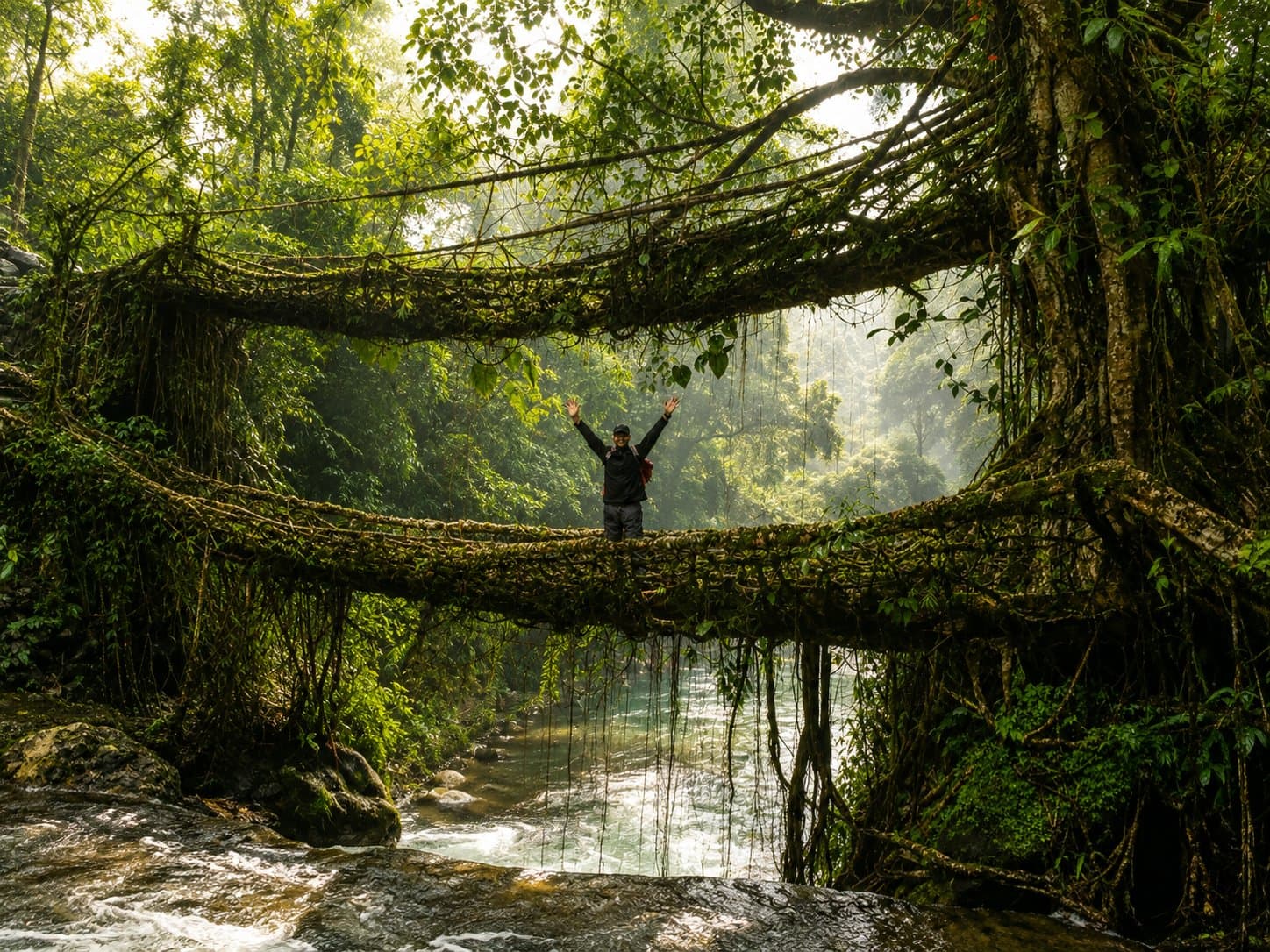
Meghalaya doesn't fit the usual hill-station template. The main draw isn't a viewpoint or a mall road, it's a set of living root bridges grown from rubber fig tree roots over generations, tucked into valleys you have to walk down to reach. That changes how the trip should be planned.
Shillong vs Cherrapunji: What Each Actually Offers
Shillong is Meghalaya's capital and the usual arrival point — it has the infrastructure, cafés, Ward's Lake, Police Bazar, and a genuinely pleasant hill-town feel, but it isn't where the root bridges or the big waterfalls are. Treat it as your base and transit point, not the main event.
Cherrapunji (Sohra), about 1.5-2 hours from Shillong, is where the real Meghalaya experience is — Nohkalikai Falls, Mawsmai Caves, and the trailheads for the living root bridges, including the famous Double Decker bridge near Nongriat village.
Most itineraries make the mistake of spending too long in Shillong and rushing Cherrapunji. We'd flip that ratio — one night in Shillong on arrival, two to three nights based near Cherrapunji or Sohra for the treks and waterfalls.
The Living Root Bridge Trek: What to Expect
The trek to the Double Decker root bridge near Nongriat involves roughly 3,000+ steep steps down (and the same back up), typically taking 2-3 hours each way. This is not a casual walk — it's physically demanding, especially the climb back out, and needs reasonable fitness. Starting early (by 7-8 AM) avoids both the afternoon heat and the risk of trekking back in fading light.
Simpler, shorter root bridge treks exist near Mawlynnong and Riwai for those who want the experience without the full Nongriat climb — worth choosing if you're travelling with kids or older family members.
Mawlynnong: Asia's Cleanest Village
Mawlynnong, roughly 90 km from Shillong, is worth the detour for its spotless village lanes, a living root bridge, and a bamboo skywalk with valley views into Bangladesh on a clear day. It pairs well as a day trip from Cherrapunji or on the way back toward Shillong.
Best Time to Visit Meghalaya
October to April is the reliable window — clear skies, comfortable temperatures, and driveable roads. Meghalaya is one of the wettest places on Earth, and June to September brings intense, near-constant monsoon rain that can make root bridge treks genuinely unsafe (slippery steps, swollen streams) and disrupt road travel. If you want to see the region at its most dramatic and don't mind the rain, the monsoon has its own appeal — but it's not the trip for a first-timer on a tight schedule.
How Many Days Do You Need?
5-6 days covers Shillong, Cherrapunji's waterfalls and caves, one root bridge trek, and Mawlynnong without feeling rushed. Add Dawki (for the Umngot River's clear-water boat rides) if you have an extra day and want to cross toward the Bangladesh border area.
Getting There
Guwahati is the nearest major airport, roughly 3-4 hours by road to Shillong. Shillong itself has a small airport with limited connectivity, so most trips route through Guwahati regardless.
If you'd like a Meghalaya itinerary that balances the root bridge trek with realistic rest days, get in touch and we'll plan it around your fitness level and dates.