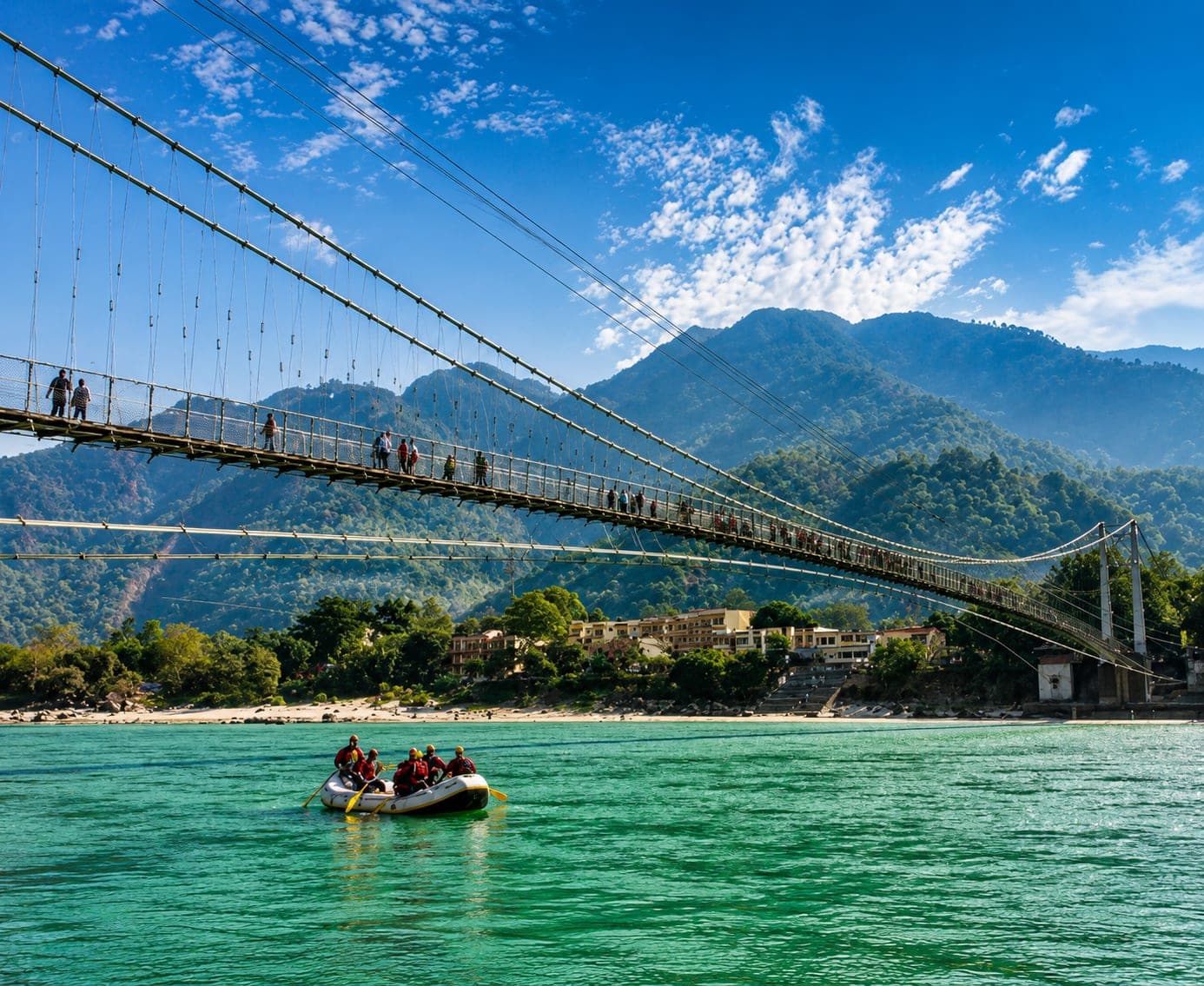
Rishikesh works as a genuine two-day weekend trip from Delhi, but only if you plan around what's actually worth doing rather than trying to fit everything in. Here's how to structure it.
River Rafting: Which Stretch and Grade
Rafting in Rishikesh runs on stretches of the Ganga classified by rapid grade, from Grade I-II (gentle, family-friendly) to Grade III-IV (genuinely exciting, needs basic fitness and swimming comfort). The common starting points are Shivpuri (16 km stretch, mostly Grade II-III) and Marine Drive (shorter, gentler). Brahmpuri to Rishikesh is the shortest and calmest option, suited to families with young children or anyone nervous about white water.
If this is your first rafting experience, the Shivpuri to Rishikesh stretch is the standard recommendation — enough rapids to be memorable without requiring prior experience.
Best Time for Rafting
Rafting typically runs from mid-September through June, with a break during peak monsoon (roughly mid-June to mid-September) when water levels and currents make it unsafe, and operations are officially suspended by local authorities during this window. October to March offers the most reliable combination of water levels and pleasant weather; April-May adds warmer days, which some prefer for post-raft swimming stops.
Yoga and Wellness: What's Actually on Offer
Rishikesh's reputation as the "Yoga Capital of the World" isn't just marketing — it has a genuine concentration of ashrams and yoga schools, from single-session drop-in classes to multi-day retreats and full teacher-training certifications. For a weekend trip, a single morning or evening yoga session at an ashram (many welcome walk-ins for a nominal donation) is realistic; a proper retreat needs at least 3-5 days to be worthwhile and shouldn't be squeezed into a two-day trip.
Ganga Aarti: Where and When
The evening Ganga Aarti at Triveni Ghat and at Parmarth Niketan Ashram are the two main options, held daily around sunset (timing shifts seasonally, roughly 6-7 PM). Parmarth Niketan's version is larger and more elaborate, with rows of oil lamps and structured chanting; Triveni Ghat's is more local and less crowded. Arrive 30-40 minutes early during peak season to get a decent spot — both draw large crowds on weekends.
Laxman Jhula and Ram Jhula
These two suspension bridges are Rishikesh's most photographed spots and connect the town's two banks, lined with cafés, shops and ashrams. They're free, walkable, and worth an unhurried evening rather than a rushed ten-minute stop — the café scene along both bridges is part of the experience, not just a photo opportunity.
A Realistic Two-Day Itinerary
Day 1: Leave Delhi early morning (roughly 5-6 hour drive), arrive by early afternoon, check in, evening at Laxman Jhula/Ram Jhula followed by Ganga Aarti. Day 2: Morning rafting session (Shivpuri to Rishikesh stretch), lunch by the river, optional evening yoga session, drive back to Delhi by evening.
Getting There
Rishikesh is roughly 240 km from Delhi by road (5-6 hours depending on traffic), or a slightly longer train journey to Haridwar followed by a short taxi ride. A self-drive or private cab weekend trip is the most common approach given the manageable distance.
If you'd like help booking a Rishikesh weekend with rafting and stay sorted in advance, get in touch and we'll handle the logistics.