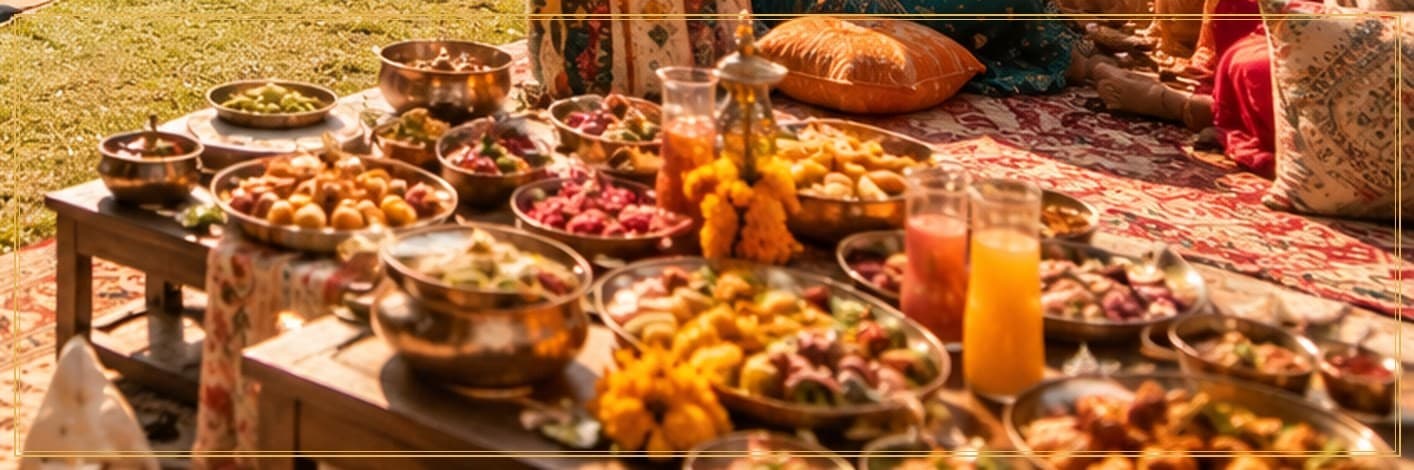
If you're attending a satvik event in the hills for the first time, the phrase "no onion, no garlic" can sound like a significant restriction — but Uttarakhand's Pahadi cuisine, built around millets, lentils and mountain greens, adapts to satvik principles more naturally than most regional Indian food. Here's what satvik actually means, and what ends up on the plate.
What Does "Satvik" Actually Mean?
Satvik food is pure, fresh vegetarian food prepared without onion or garlic, and typically with minimal spice. The principle comes from Ayurvedic and yogic tradition, which classifies food (and more broadly, all experience) into three gunas — sattva (purity, clarity), rajas (activity, stimulation) and tamas (heaviness, dullness). Onion and garlic are traditionally classified as rajasic/tamasic — believed to stimulate the senses or induce lethargy — and are excluded from a strict satvik diet for that reason, alongside an emphasis on freshness and simplicity over heavy spicing or elaborate preparation.
Does Pahadi Food Normally Use Onion and Garlic?
Often, yes — this is worth being upfront about. Several classic Uttarakhand dishes traditionally include garlic specifically: chainsoo (a thick black-gram dal) is typically made with ginger and garlic, and bhatt ki churkani is traditionally slow-cooked with mustard oil and garlic. A genuinely satvik version of Pahadi cuisine is, in that sense, a deliberate adaptation — dropping onion and garlic from dishes that would traditionally include them — rather than Pahadi food being naturally onion-and-garlic-free across the board. The good news is that Pahadi cooking's broader style (avoiding heavy cream and excessive oil, leaning on simple, fresh preparation) already aligns well with satvik principles, which makes the adaptation genuinely workable rather than a complete rebuild of the cuisine.
The Dishes That Fit Naturally
Several Uttarakhand staples are satvik-friendly with little or no adaptation needed:
| Dish | What It Is |
|---|
| Mandua ki Roti | A dense, earthy flatbread made from finger-millet (mandua) flour |
| Jhangora ki Kheer | A creamy pudding made from barnyard millet (jhangora), milk and sugar |
| Kafuli | Hill greens (spinach and fenugreek) simmered with gentle spices |
| Gahat ki Dal | Horse-gram lentils, warming and hearty |
| Aloo ke Gutke | Spiced hill-style potatoes |
| Arsa | A jaggery-and-rice sweet from the Garhwal region |
| Bal Mithai | Almora's famous fudge, rolled in sugar pearls |
| Burans Sharbat | A cooling drink made from rhododendron flowers, a genuinely distinctive Himalayan ingredient |
Kumaoni raita — made from curd, cucumber and mustard seeds — is another naturally satvik-compatible staple, with no onion or garlic in its usual preparation.
Dishes That Need Real Adaptation
If a menu claims to be fully satvik, it's worth knowing which dishes needed deliberate change: chainsoo and bhatt ki churkani, as noted above, traditionally include garlic, so a satvik version specifically omits it. This isn't a flaw — it's exactly what "satvik" means in practice — but it's worth knowing the difference between a dish that's naturally satvik and one that's been adapted to be.
Why This Matters for Shiv Parvati Vivah 2027
Our Shiv Parvati Vivah 2027 celebration in Rishikesh (12-15 March 2027) serves pure satvik food throughout all four days — every meal cooked without onion or garlic, built around GI-tagged Uttarakhand produce including mandua, jhangora and Burans sharbat. If you're used to a spicier, onion-and-garlic-forward version of Indian food, expect a genuinely different, lighter eating experience across the event — not a compromise, but a deliberate part of the celebration's devotional character.
Frequently Asked Questions
What does satvik food mean? Pure, fresh vegetarian food prepared without onion or garlic, with minimal spice, rooted in Ayurvedic and yogic principles around food's effect on the mind and body.
Is all Uttarakhand Pahadi food naturally satvik? No — several classic dishes like chainsoo and bhatt ki churkani traditionally include garlic. A genuinely satvik menu deliberately adapts these, rather than Pahadi cuisine being onion-and-garlic-free by default.
What are some naturally satvik Uttarakhand dishes? Mandua ki Roti, Jhangora ki Kheer, Kafuli, Gahat ki Dal, Aloo ke Gutke and Kumaoni raita are all satvik-compatible with little to no adaptation.
What is Burans Sharbat? A cooling drink made from rhododendron flowers, a distinctive Himalayan ingredient used in Uttarakhand's hill cuisine.
Why do satvik diets exclude onion and garlic? In Ayurvedic and yogic tradition, onion and garlic are classified as rajasic/tamasic, believed to stimulate the senses or induce lethargy, which satvik principles aim to avoid in favour of purity and clarity.
Will the food at Shiv Parvati Vivah 2027 be satvik? Yes — every meal across all four days is pure satvik, cooked without onion or garlic, featuring GI-tagged Uttarakhand produce.
Curious what you'll eat at Shiv Parvati Vivah 2027? See the full itinerary, or WhatsApp us at +91 95990 67086 to ask about registration.