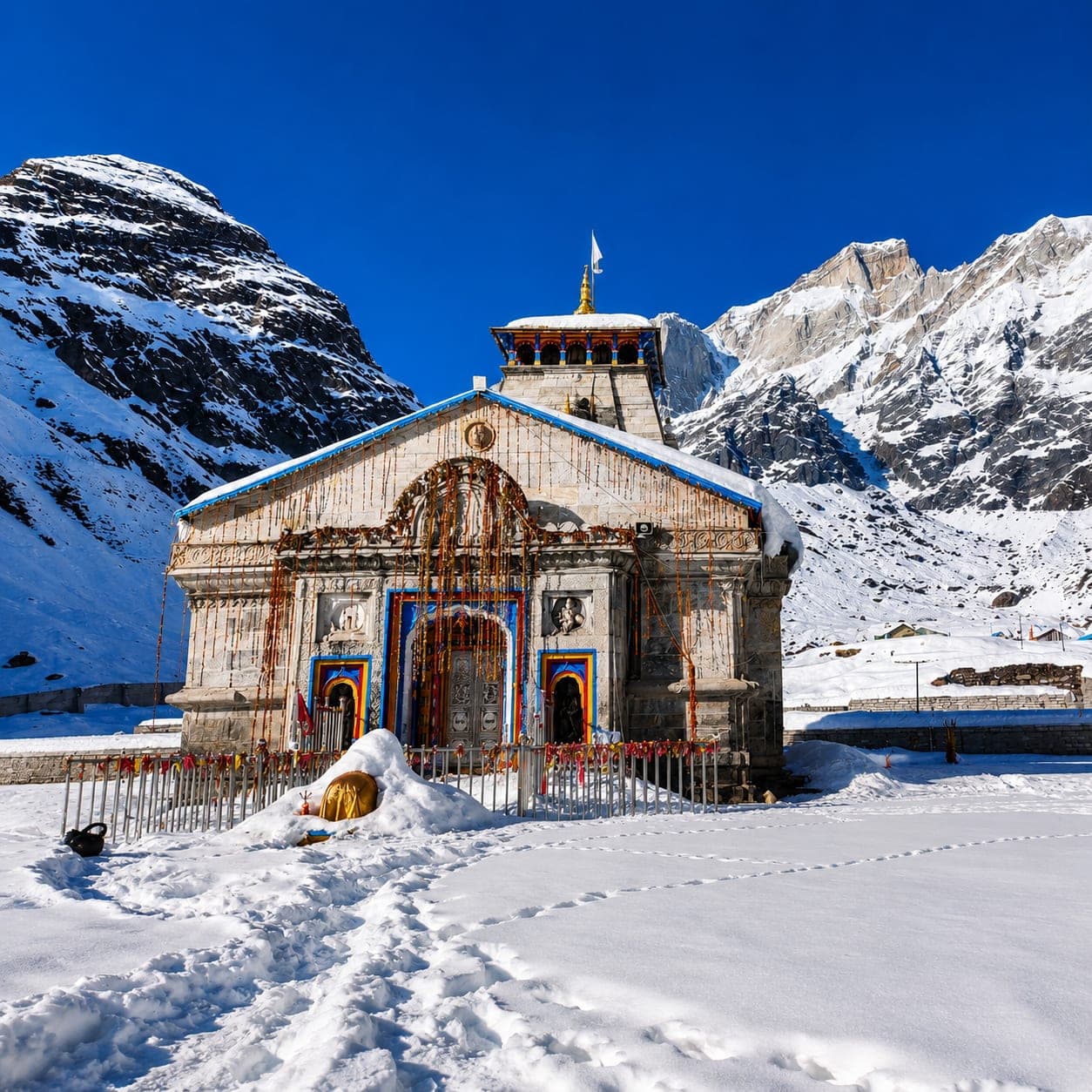
Every year, as winter approaches, the four Char Dham shrines — Yamunotri, Gangotri, Kedarnath and Badrinath — close their doors (kapat band) for the season, and the temple committees' closing dates become one of the most-searched pieces of information in Indian pilgrimage travel. Here's what's expected for 2026, and what the closing actually means for your trip.
What "Kapat Band" Means
Kapat band literally means "doors closed" — the ceremonial closing of each shrine's sanctum for the winter months, when Himalayan snow makes the high-altitude temple sites inaccessible and unsafe to keep open. Each closing is marked by its own ritual, and in several cases the temple's deity (or a symbolic representation) is ceremonially moved down to a winter seat at lower altitude, where worship continues through the winter months before the summer reopening.
Expected 2026 Closing Dates
Important caveat upfront: official closing dates are announced by each temple's dedicated committee shortly before the event — the Kedarnath date, in particular, is traditionally announced on Vijayadashami each year. The dates below are based on the most recent publicly available estimates at the time of writing and should be treated as provisional — always confirm directly with the temple committee or current news closer to your travel dates before finalising a last-darshan trip.
Based on current estimates:
- Yamunotri and Gangotri: around November 10, 2026
- Kedarnath: around November 11, 2026
- Badrinath: around November 13, 2026 (Badrinath traditionally closes last among the four, a few days after the others)
Where the Deities Go for Winter
Each shrine has a traditional winter seat where worship continues after the main temple closes:
- Kedarnath's deity is traditionally moved to Ukhimath, where a symbolic image (Omkareshwar) receives winter worship.
- Yamunotri's deity moves to Kharsali, near Yamunotri.
- Gangotri's deity moves to Mukhba village.
- Badrinath is treated somewhat differently — while Lord Badrinarayan's worship there continues through priests associated with Joshimath/Pandukeshwar in winter tradition, practices here vary by source and are worth confirming locally if this detail matters to your trip.
Planning a Last-Darshan Trip
If you're aiming to visit just before closing, a few practical points worth knowing:
- Crowds spike sharply in the final days before each shrine closes, as devotees rush to get a last darshan of the season — expect significantly longer queues and book accommodation well in advance.
- Weather turns cold and unpredictable at this altitude in early-to-mid November, with a real possibility of early snowfall affecting roads — build buffer days into your itinerary rather than cutting it close to the closing date itself.
- Roads can close with little notice if snow arrives early, so treat any November yatra plan as weather-dependent, not guaranteed.
Already Missed This Season? Plan for 2027
If the 2026 season has already closed by the time you're reading this, the Char Dham Yatra typically reopens in late April, based on recent years' patterns (final 2027 opening dates are usually confirmed in winter/early spring). Booking early — well before the April rush — generally means better accommodation availability and more flexibility in your itinerary dates.
Planning Your Trip
Our Char Dham Yatra package covers all four shrines in a 10-day Haridwar-to-Haridwar circuit starting from ₹41,000 per person, and our Kedarnath–Badrinath Yatra package covers the two most-visited shrines in a shorter 6-day trip from ₹24,000 per person — see our Char Dham planning guide for route and packing details, or trek vs helicopter guide for the Kedarnath leg specifically.
Frequently Asked Questions
When do the Char Dham temples close in 2026? Based on current estimates: Yamunotri and Gangotri around November 10, Kedarnath around November 11, and Badrinath around November 13 — these are provisional and subject to official confirmation by each temple committee.
Why do the Char Dham temples close for winter? Himalayan snowfall makes the high-altitude temple sites inaccessible and unsafe to keep open through the winter months, so each shrine closes and reopens on a seasonal cycle tied to weather.
Where does worship continue after the temples close? Each shrine has a traditional winter seat at lower altitude — Kedarnath's deity moves to Ukhimath, Yamunotri's to Kharsali, and Gangotri's to Mukhba village — where worship continues through winter.
Is it worth visiting right before the Char Dham temples close? It's possible, but expect significantly heavier crowds, colder and less predictable weather, and a real risk of early snowfall affecting roads — build in buffer days if you're planning a last-darshan trip.
When does the Char Dham Yatra reopen each year? Typically in late April, based on recent years' patterns, though exact 2027 opening dates are usually confirmed closer to the season.
Get in touch to plan your Char Dham trip, whether for a last-darshan visit this season or to book early for next year's yatra.