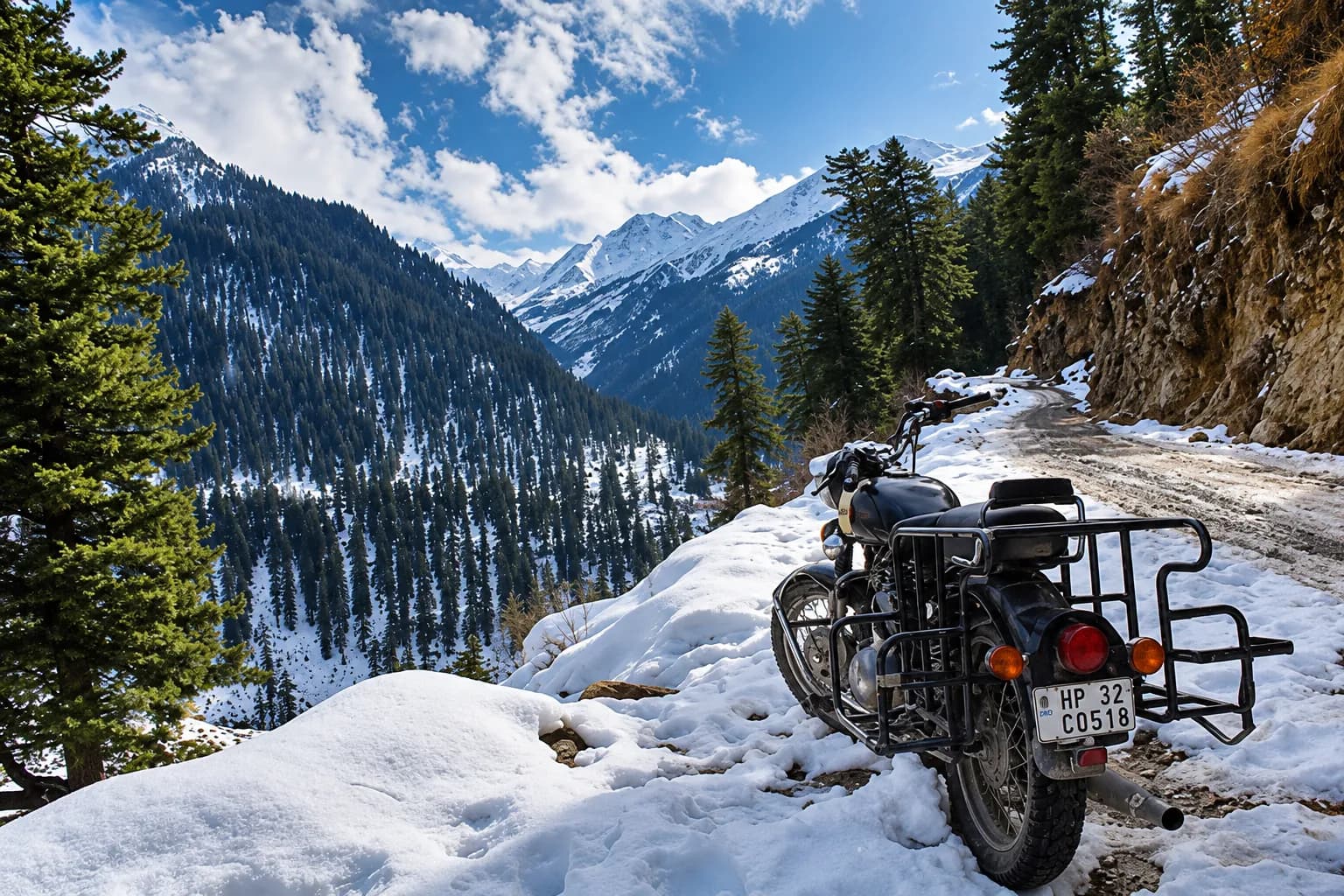
Kasol is usually talked about as a spring-to-autumn backpacker destination, and for good reason — that's when its riverside cafes and guesthouses are busiest. Winter is a genuinely different trip: quieter, colder, with real snow reliably showing up not in Kasol itself but a short distance further up the Parvati Valley at Tosh and Pulga. If you're deciding whether a winter visit is worth it, the honest answer is yes — just not for the same reasons the valley is famous for in peak season.
This guide covers Kasol and the three places most worth building a winter trip around: Tosh, Pulga and Malana, plus Manikaran's hot springs, which are arguably at their best specifically in cold weather. For the valley's famous cafe scene, see our best cafes in Himachal Pradesh guide, which covers Kasol's Evergreen Cafe and Jim Morrison Cafe in more depth. For the valley's trekking side, our Sar Pass trek guide covers the main trekking season — which, importantly, is not winter; more on that below.
Why Visit Kasol in Winter
Kasol's peak season runs through spring and autumn, when its backpacker-era cafe scene is at its busiest. Winter is noticeably quieter — fewer travellers, a slower pace along the Parvati River, and genuinely cold weather rather than the pleasant hill-station cool of September or May. If a bustling cafe scene is what you're after, peak season suits that better. If you want a quieter valley, real snow a short drive away, and don't mind the cold, winter is a strong, underrated choice.
Kasol Itself: Cold, But Snow Isn't Guaranteed
Kasol sits at a relatively modest altitude for the Parvati Valley, which means winter here brings a genuine cold snap but not reliable heavy snowfall every year — some winters bring snow to the village itself, others don't, and it's honest to say this the way we'd say it about any similarly-elevated hill town. If snow specifically is the goal rather than just a cold-weather trip, Tosh and Pulga, both higher up the valley, are the more reliable bet — covered next. Worth knowing before you go: some of Kasol's backpacker-era cafes and guesthouses see noticeably less footfall outside its spring-autumn peak, so it's worth confirming a specific cafe or stay is open before building a day around it, rather than assuming everything runs at full peak-season capacity.
Tosh: Where Winter Actually Shows Up
Tosh, a short drive past Kasol to Barshaini and then a walk or final stretch of road up to the village itself, sits meaningfully higher than Kasol — and it's here that winter's snow becomes genuinely reliable rather than hit-or-miss. Terraced apple orchards, timber-and-stone Himachali architecture, and direct mountain views make Tosh worth at least a day trip from Kasol, or an overnight stay in one of its guesthouses if you want to wake up to the view rather than just pass through it.
Pulga: The Quieter Alternative to Tosh
Pulga sits close to Tosh but has stayed noticeably less developed — older wooden architecture, fewer guesthouses, and a slower pace that travellers who find Tosh's growing popularity a little much often prefer. The two villages share a similar winter snow profile, so the choice between them is really about character and crowd levels rather than weather: Tosh if you want a bit more infrastructure and company, Pulga if you want the quieter version of the same experience.
Malana: One of the World's Oldest Democracies
Malana is a genuinely distinct stop, culturally rather than just scenically. The village is widely described as one of the world's oldest democracies, with its own traditional self-governing council system that predates and operates somewhat apart from mainstream Indian local government. It has its own language, Kanashi, spoken nowhere else, and its own central deity, Jamlu Devta, around whom much of village life and custom is organised. Malana was historically reachable only on foot; a road built alongside a hydroelectric project now makes the approach considerably easier, though it's still a deliberate half-day or full-day excursion from Kasol rather than a quick stop.
Visiting respectfully matters here more than at most destinations in this guide. Malana maintains customs around outsiders not touching local temple structures, homes or, in some contexts, residents directly — these aren't suggestions for dramatic effect, but genuine, long-standing local practice. Visit with a guide or clear local guidance if it's your first time, and treat the village as a community you're a respectful guest in, not a sightseeing stop.
In winter specifically: Malana's road access can be affected by snow and weather more than Kasol or Tosh's, so build flexibility into your plans and check current road conditions before committing to a specific day for the trip.
Manikaran: Hot Springs That Are Actually Better in Winter
Manikaran, a short distance from Kasol, centres on the Manikaran Sahib Gurudwara and its natural hot springs — a genuine pilgrimage site for Sikh and Hindu visitors alike, with a langar (community kitchen) that welcomes all visitors regardless of faith. The hot springs themselves are the specific reason this belongs in a winter guide rather than a general one: the contrast between the spring water's natural heat and winter's cold air is genuinely more rewarding here than in any other season, making Manikaran one of the single best additions to a winter Parvati Valley itinerary.
Kheerganga in Winter: Why We Don't Recommend It for Most Visitors
Kheerganga, the valley's well-known hot-spring trek from Barshaini, has a main season that runs through spring and autumn rather than winter. In the colder months, snow and icy trail conditions turn it into a genuinely serious proposition suited to experienced, properly-equipped winter trekkers rather than a casual add-on to a Kasol trip — this is the same honest caution we'd give about any trek that isn't built for winter conditions. If Kheerganga is specifically what you're after, plan for spring or autumn instead; in winter, Manikaran's hot springs are the far easier, equally rewarding alternative covered above.
Getting to Kasol in Winter
Kasol is roughly 530 km from Delhi by road, typically 12–13 hours via the Mandi-Kullu highway through Bhuntar — broadly the same route and travel time as a Manali trip, given how close the two destinations are geographically. The nearest airport is Kullu-Manali Airport at Bhuntar, a short drive from Kasol itself. Roads through this stretch of Himachal are generally well-maintained through winter, though snowfall can cause short delays on specific stretches — the same caution we'd give for any Himachal winter road trip.
A Suggested 3-Day Winter Itinerary
| Day | Plan |
|---|
| Day 1 | Arrive in Kasol, settle in, explore the village and riverside |
| Day 2 | Day trip to Tosh and Pulga — orchards, village architecture, mountain views, genuine snow if conditions allow |
| Day 3 | Morning excursion to Malana (road and weather permitting), afternoon at Manikaran's hot springs on the way back |
Frequently Asked Questions
Is Kasol good to visit in winter? Yes, though for different reasons than its peak spring-autumn season — winter brings a quieter valley, genuinely cold weather, and reliable snow at nearby Tosh and Pulga rather than always in Kasol itself.
Is there snow in Kasol in winter? Not reliably every year — Kasol's altitude means winter brings a cold snap but not guaranteed heavy snowfall. Tosh and Pulga, both higher up the valley, are the more dependable bet for real snow.
Should I visit Tosh or Pulga? Both have a similar winter snow profile; the real difference is character. Tosh has more guesthouses and infrastructure, while Pulga has stayed quieter and less developed — pick based on how much company and comfort you want, not the weather.
Is Malana open to visitors in winter? Yes, though road access can be affected by snow and weather more than at Kasol or Tosh, so check current conditions before committing to a specific date, and build flexibility into your plan.
Should I visit outsiders' customs in Malana? Yes — Malana has genuine, long-standing local customs around outsiders not touching temple structures, homes or residents directly in some contexts. Visit with a guide or clear local guidance and treat it as a respectful visit to a living community, not just a sightseeing stop.
Is the Kheerganga trek open in winter? Not recommended for most visitors — its main season is spring through autumn, and winter brings genuinely serious snow and icy trail conditions suited only to experienced, well-equipped winter trekkers.
Is Manikaran worth visiting in winter specifically? Yes, arguably more than in any other season — the contrast between the hot springs' natural warmth and winter's cold air is genuinely one of the best experiences in this guide.
How many days do I need for a winter Kasol trip? 3 days is enough to cover Kasol, a Tosh-Pulga day trip, and Malana with Manikaran — add a day if you want a more relaxed pace or extra time in any one village.
How do I get to Kasol from Delhi? By road, roughly 530 km and 12–13 hours via the Mandi-Kullu highway through Bhuntar, or by flying into Kullu-Manali Airport at Bhuntar and driving the short remaining distance.
Do you offer a fixed Kasol package? Not currently — Kasol, Tosh, Pulga and Malana aren't on our fixed package list, but we can build a custom Parvati Valley itinerary around your dates. If you'd prefer a ready-made Himachal package instead, our Manali and McLeodganj & Triund packages are both strong alternatives elsewhere in the state.
Get in touch with your dates and we'll help plan a custom winter Parvati Valley trip, or browse our Himachal Pradesh travel guide for the full state picture beyond this one valley.