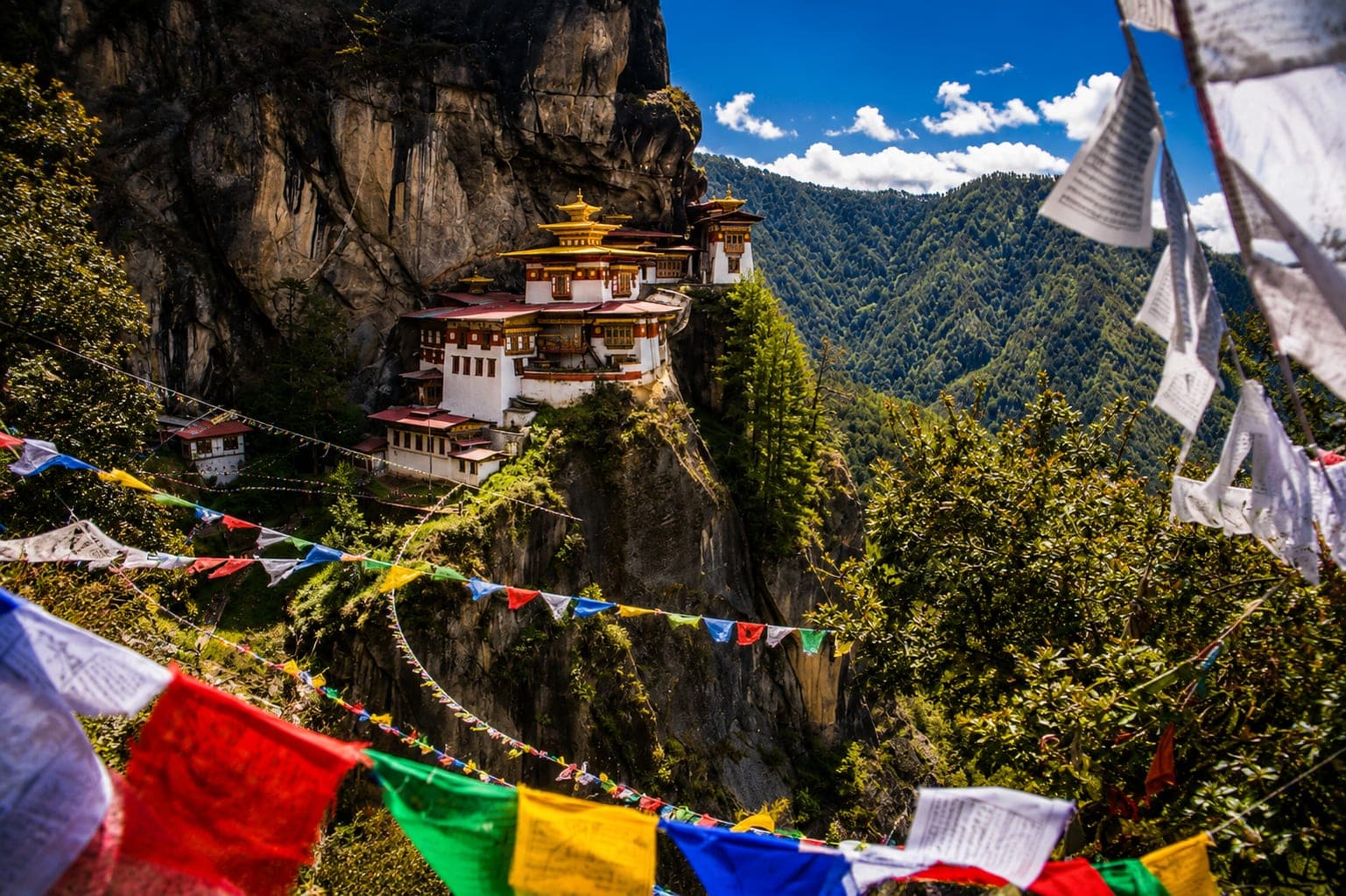
Paro Taktsang — the Tiger's Nest Monastery — is the single image most people associate with Bhutan: a cluster of white temple buildings clinging to a sheer cliff face, roughly 900 metres above the Paro valley floor. It's also the one part of a Bhutan trip that genuinely needs physical preparation, since there's no road, no cable car, and no way to see it up close without hiking (or riding a horse part of the way). Here's what the hike actually involves.
What Is Paro Taktsang, and Why Is It Built There?
According to Bhutanese tradition, Guru Rinpoche (Padmasambhava), the figure credited with bringing Buddhism to Bhutan, flew to this cliffside on the back of a tigress and meditated in a cave here — which gives the monastery both its English name and its sacred status. The current structure, rebuilt after a fire in 1998, houses several temples and meditation caves built directly into the rock face. It's one of the most photographed religious sites in the Himalayas, and for most visitors, the single must-see stop on a Bhutan itinerary.
How Far Is the Hike, and How Long Does It Take?
Sources genuinely differ here, so treat these as planning ranges rather than exact figures:
- Round-trip distance: commonly cited between 6 km and 9 km, depending on the exact route and how far up you go before descending into the gorge toward the monastery itself.
- Round-trip time: most visitors complete the full hike, including time inside the monastery, in 5 to 7 hours. A strong, acclimatised hiker moving quickly can do the climb itself in 2-3 hours one way; most people take longer, especially on the way up.
- Elevation gain: the monastery sits at roughly 3,120m, with the trailhead considerably lower — estimates for the actual climb range from about 600m to 900m of elevation gain.
- Difficulty: generally rated moderate to moderate-strenuous. It isn't a technical climb, but it's a sustained, fairly steep uphill walk at altitude, which catches out visitors who assume "monastery visit" means an easy stroll.
Still deciding if this fits your itinerary? Tell us your fitness level and how many Bhutan days you have, and we'll help you plan around it honestly.
The Horse Option
Horses can usually be hired for part of the route — typically as far as the viewpoint cafeteria roughly halfway up, not all the way to the monastery itself. The final stretch, which descends into the gorge and back up a long staircase to reach the monastery, is on foot only for everyone, horse or no horse. Confirm current horse availability and pricing with your guide on the day; it isn't guaranteed and depends on the operator.
The Halfway Cafeteria and Viewpoint
Most people stop at a cafeteria roughly halfway up the trail for tea and a breather — it also happens to be the classic photo spot, with the monastery visible across the gorge in the distance. This is a sensible place to assess how you're doing before committing to the steeper final section down into the gorge and back up to the monastery itself.
Does Your Bhutan Package Include the Hike?
Worth checking carefully, because "Tiger's Nest" appears on most Bhutan itineraries in two genuinely different forms. Our own Bhutan — Phuentsholing, Thimphu & Paro package includes the Tiger's Nest viewpoint in Paro as standard — a scenic stop with a clear view of the monastery — while the actual hike up to the monastery is arrangeable as an optional add-on. If reaching the monastery itself matters to you (rather than viewing it from a distance), say so explicitly when you enquire, so it's built into your itinerary and day plan rather than assumed.
Entry Rules and What to Bring
Bhutan requires foreign visitors to travel with a licensed local guide, which covers Taktsang as it does the rest of the country — you won't be doing this hike unescorted. An entry fee is reported for the monastery itself (figures we've seen cited are modest, in the single-digit-dollar range), but fees and rules can change, so confirm current details with your guide rather than relying on an old blog post. Photography isn't permitted inside the monastery's inner temples. Wear proper walking shoes (not sandals), carry water, dress in layers since temperatures shift with elevation, and start early — mornings are cooler and less crowded.
Best Time to Hike
Bhutan's main dry seasons — roughly March to May and September to November — give the clearest trails and views. Winter mornings can be cold at altitude but the trail itself stays open; the monsoon months (June-August) bring rain and slippery sections, worth avoiding if you can choose your dates.
Frequently Asked Questions
How long does the Tiger's Nest hike take? Most visitors complete the full round trip, including time at the monastery, in 5-7 hours. Fast, acclimatised hikers can do the one-way climb in 2-3 hours.
Is the Tiger's Nest hike difficult? Generally rated moderate to moderate-strenuous — a sustained uphill walk at altitude rather than a technical climb, but genuinely tiring if you're not used to hiking.
Can I ride a horse to Tiger's Nest? Horses are usually available for part of the route, typically to the halfway cafeteria — not all the way to the monastery. The final descent and climb into the gorge is on foot for everyone.
Does the standard Bhutan package include the Tiger's Nest hike? Our standard itinerary includes the Tiger's Nest viewpoint in Paro; the hike up to the monastery itself is an optional add-on — mention it when you enquire so it's built into your plan.
What should I wear and bring for the hike? Proper closed walking shoes, layered clothing, water, and sun protection. Mornings are cooler, so an early start is worth it.
Do I need a guide for the Tiger's Nest hike? Yes — Bhutan requires foreign visitors to travel with a licensed local guide throughout the country, Taktsang included.
Planning a Bhutan trip and want the Tiger's Nest hike built in? Tell us your dates and fitness level and we'll make sure it's on your itinerary properly, or WhatsApp us at +91 95990 67086 to talk it through. See our complete Bhutan travel guide for the rest of the trip.