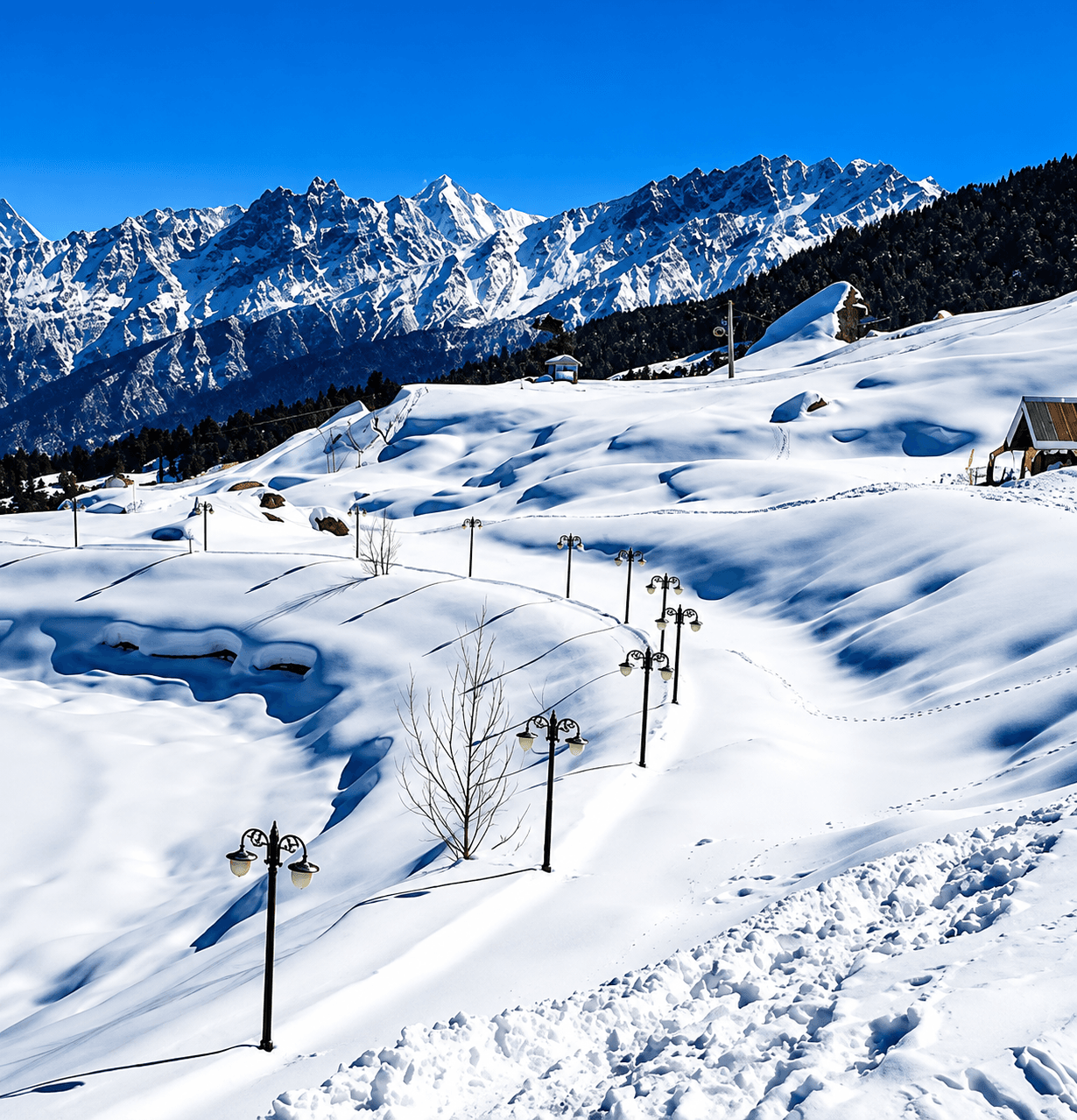
If you grew up in Delhi, Gurugram, Noida, Jaipur, Lucknow or pretty much any other tier-1 or tier-2 Indian city, there's a good chance snow is something you've only seen in photos, in movies, or — if you're lucky — once, a long time ago, on a single trip you still remember clearly. That's not a small thing. For a huge number of Indian families, "see real snow" sits on the same kind of mental list as a first flight or a first trip abroad — and unlike those, it's genuinely reachable in a weekend from Delhi, without a passport, without much planning lead time, and without a huge budget.
This guide is built around that specific goal: not "best hill stations of Uttarakhand" or "complete Himachal guide" (we've written those too, and link to them throughout), but a direct answer to "where do I actually go to see snow this winter, and how do I plan around a family that's never done this before."
Is Snow Guaranteed? Here's the Honest Answer
No — and we'd rather tell you that upfront than have you find out on the day. Snowfall on any specific date, at any specific hill station, depends on that year's weather, and even reliable winter destinations can have a dry patch in a given week. What we can tell you honestly, because it's based on genuine seasonal patterns rather than marketing: December through February is reliably the coldest, highest-snow-probability window across North India's hill stations, with January typically the strongest single month. Higher-altitude places (Auli, Gulmarg, Kufri) hold snow more consistently through the season than lower ones (Mussoorie, parts of Shimla town itself). If guaranteed snow on fixed dates is the goal, no honest operator can promise that — what we can do is put you in the destinations and months with the best realistic odds, and build in enough trip flexibility that a dry day in one spot doesn't ruin the whole trip.
Why So Many Families Make This Trip
The appeal isn't really about scenery — plenty of hill stations offer scenery without snow. It's the specific, physical experience: a kid's first snowball, a photo everyone will keep, a few hours that feel genuinely different from anything available near home. That's exactly why snow-focused trips skew heavily toward families and multi-generational groups rather than solo or backpacker travel, and why timing, comfort and manageability matter more here than in a typical hill-station trip.
Easy Snow Trips: Best for First-Timers and Families
These are the destinations we'd point a first-time, snow-curious family toward — reasonable drive times from Delhi, established infrastructure, and a genuine, well-documented chance of snow through peak winter.
| Destination | Distance from Delhi | Snow Reliability (Dec–Feb) | Why It Works for First-Timers |
|---|
| Shimla & Kufri | ~7–9 hours by road | Good, especially at Kufri | Established hotels, short drive, Kufri's slopes are gentle and family-friendly |
| Manali & Solang Valley | ~10–12 hours by road | Good | Wide activity range, well set up for families, Solang's snow-play area is beginner-friendly |
| Mussoorie | ~6–7 hours by road | Moderate — hit or miss some years | Shortest drive of the group, worth it for proximity even if snow isn't certain |
Our Shimla • Kufri • Chail package is built exactly around this — a 2-day/1-night format that's realistic for a family with limited leave days. Manali — A Gift of the Himalayas and Manali | Jana Village both cover Solang Valley. For the full seasonal breakdown behind these numbers, see our Best Time to Visit Shimla guide.
Serious Snow: Skiing and High-Altitude Experiences
For families who've already had their "first snow" trip and want the next level — or anyone specifically chasing skiing rather than just seeing snow — these destinations go further, at the cost of a longer journey.
| Destination | Distance from Delhi | What Makes It "Serious" | Best For |
|---|
| Auli | ~10–11 hours by road | Genuine skiing, Asia's second-longest ropeway, more reliable high-altitude snow | Families wanting skiing, repeat snow-trip travellers |
| Gulmarg (Kashmir) | Flight + onward drive | India's most serious ski destination, two-stage gondola to ~4,200 m | Travellers wanting the most reliable, highest-altitude snow experience |
| Chopta | ~9–10 hours by road | Snow trekking to Tungnath and Chandrashila, Swiss-tent winter camping | Families and groups comfortable with some walking, not just a drive-up view |
Our complete Auli travel guide covers skiing, the ropeway and trip planning in full depth, and our Gulmarg travel guide does the same for Kashmir's ski region as part of our Kashmir — Srinagar, Gulmarg, Sonmarg & Pahalgam package. Chopta, Tungnath & Deoria Tal runs as a weekend-format winter trek with Swiss-tent camping — if a genuine winter trekking expedition (not just a drive-up view) is what you're after, see our winter snow trek guide covering Chopta, Triund and Dayara Bugyal, including New Year trek options.
Where to See Snow in December
Early-to-mid December is more hit-or-miss than January — some years bring an early snowfall to Kufri, Auli and Gulmarg; others stay dry until closer to Christmas. Late December through the New Year window is more reliable, but also the single busiest, most expensive stretch of the entire winter at every destination in this guide — book hotels well ahead if these are your dates.
Where to See Snow in January
January is, across nearly every destination covered here, the single strongest month for snow — the coldest average temperatures, the most accumulated snow cover, and (for skiing specifically) the best slope conditions at Auli and Gulmarg. It's also meaningfully quieter and cheaper than the Christmas–New Year window, which makes it our default recommendation for a family whose dates are genuinely flexible.
Snow Trip Distances from Delhi at a Glance
| Destination | Road Distance | Typical Travel Time |
|---|
| Kufri (via Shimla) | ~340 km | 7–9 hours |
| Manali | ~530 km | 10–12 hours |
| Mussoorie | ~280 km | 6–7 hours |
| Auli | ~500 km | 10–11 hours |
| Chopta | ~450 km | 9–10 hours |
| Gulmarg | Not road-practical from Delhi — fly to Srinagar, then ~1.5 hours by road | Flight + transfer |
Planning a Snow Trip with Young Kids
Cold-weather layering matters more for children than adults, since kids lose heat faster and are less likely to tell you they're cold until it's already a problem — proper thermals, a windproof outer layer, waterproof gloves and boots aren't optional extras here. Keep daily plans flexible rather than packed, since young children tire faster in cold, high-altitude conditions than they would at sea level, and build in hotel downtime rather than back-to-back sightseeing. Kufri and Solang Valley's gentler, lower-effort snow-play areas are a better starting point for a first snow experience with young kids than Auli's skiing slopes or a Chopta trek.
Planning a Snow Trip with Elderly Parents
Altitude and cold both matter more for older travellers, particularly anyone with respiratory or cardiac conditions — Shimla and Kufri's lower elevation makes them a noticeably easier choice than Auli or Gulmarg for a multi-generational family trip. Icy, uneven ground is a genuine fall risk; proper grip-soled footwear matters as much as warmth. If anyone in the group has a pre-existing health condition, it's worth a quick check with their doctor before committing to a high-altitude itinerary specifically.
What to Pack for a Snow Trip
| Item | Why It Matters |
|---|
| Thermal base layers | The single biggest comfort factor — more useful than one heavy outer layer alone |
| Waterproof, insulated boots | Regular shoes soak through quickly in snow and lose insulation once wet |
| Waterproof gloves | Bare or poorly-gloved hands are usually the first thing people complain about |
| Sunglasses or snow goggles | Snow glare is genuinely intense at altitude, even on a cloudy day |
| Sunscreen | Easy to forget in cold weather, but UV exposure is higher at altitude |
| A change of dry clothes | For after snow play specifically — wet clothes get cold fast |
Common Snow-Trip Mistakes First-Timers Make
Booking a single fixed date and hoping for snow. Build 1–2 flexible days into your trip where possible, or pick a destination (Auli, Gulmarg, Kufri) with high enough elevation that snow is reliable through the full winter window rather than weather-dependent on any one day.
Underestimating how cold "cold" actually is. Delhi's winter, even at its coldest, doesn't prepare most families for what 0°C or below actually feels like at altitude with wind — proper gear isn't optional.
Packing light because "it's just a short trip." A 2-day snow trip still needs full cold-weather gear — the trip length doesn't reduce how cold it'll be.
Choosing a destination based on photos alone. A dramatic photo of Gulmarg's ski slopes doesn't mean it's the right choice for a family with young kids or elderly parents — match the destination to who's actually travelling, using the easy-vs-serious split above.
Sample Snow Trip Itineraries
| Trip Length | Suggested Route | Best For |
|---|
| 2 days/1 night | Shimla & Kufri | First-timers, limited leave days |
| 3 days/2 nights | Manali & Solang Valley | Families wanting a fuller single-destination trip |
| 3 days/2 nights | Auli | Travellers specifically wanting skiing |
| 3 days/2 nights | Chopta winter trek with Swiss-tent camping | Groups comfortable with some walking |
| 5 days/4 nights | Kashmir — Srinagar, Gulmarg & Sonmarg | The most complete, highest-altitude snow experience |
Frequently Asked Questions
Is snow guaranteed on a fixed date at any of these destinations? No — snowfall depends on that year's weather, even at reliable high-altitude destinations. December through February is the strongest general window, with January typically the single best month, but we won't promise a specific date will have snow.
Which snow destination is best for a family with young kids? Kufri and Solang Valley (near Manali) — both have gentler, lower-effort snow-play areas and are at a lower altitude than Auli or Gulmarg, making them easier on young children.
What is the closest place to Delhi to see real snow? Kufri, near Shimla, is generally the closest reliable option — roughly 7–9 hours by road, with good snow odds through December to February.
Is Auli or Gulmarg better for skiing? Gulmarg is India's most serious, highest-altitude ski destination, with a two-stage gondola reaching roughly 4,200 m. Auli is a strong, somewhat more accessible alternative if a flight to Srinagar isn't practical for your trip.
What month has the most snow near Delhi? January, across nearly every destination in this guide — the coldest average temperatures and the most reliable accumulated snow cover.
Is it safe to drive to hill stations in winter? Roads to Shimla, Manali and Mussoorie are well-maintained and regularly used in winter, though snowfall can cause short closures or slow traffic on specific stretches — this is exactly why we recommend building flexible days into winter trip plans.
Can elderly parents join a snow trip comfortably? Yes, with the right destination choice — Shimla and Kufri's lower elevation is noticeably easier than Auli or Gulmarg for older travellers, and proper grip-soled footwear matters for icy, uneven ground.
How many days do I need for a first snow trip? 2–3 days is enough for a focused single-destination trip like Shimla-Kufri or Manali — enough time to properly experience the snow without an overly long journey for a first attempt.
Do I need special gear, or can I rent it there? Basic cold-weather clothing (thermals, a warm jacket, gloves) is worth bringing from home, but ski-specific gear at Auli and Gulmarg is readily rentable on-site — no need to buy skiing equipment in advance.
What's the difference between "seeing snow" and "skiing"? Seeing snow just requires reaching an elevation where it's actually falling or has settled — Kufri, Shimla and Manali all offer this reliably in season. Skiing requires a destination with actual slope infrastructure and equipment — Auli and Gulmarg are the two genuine options covered in this guide.
Browse our full Snow Getaways collection for every package in this guide in one place, or get in touch and tell us who's travelling (ages, group size, how much cold-weather experience you have) — we'll help match you to the right destination rather than just the most photogenic one.