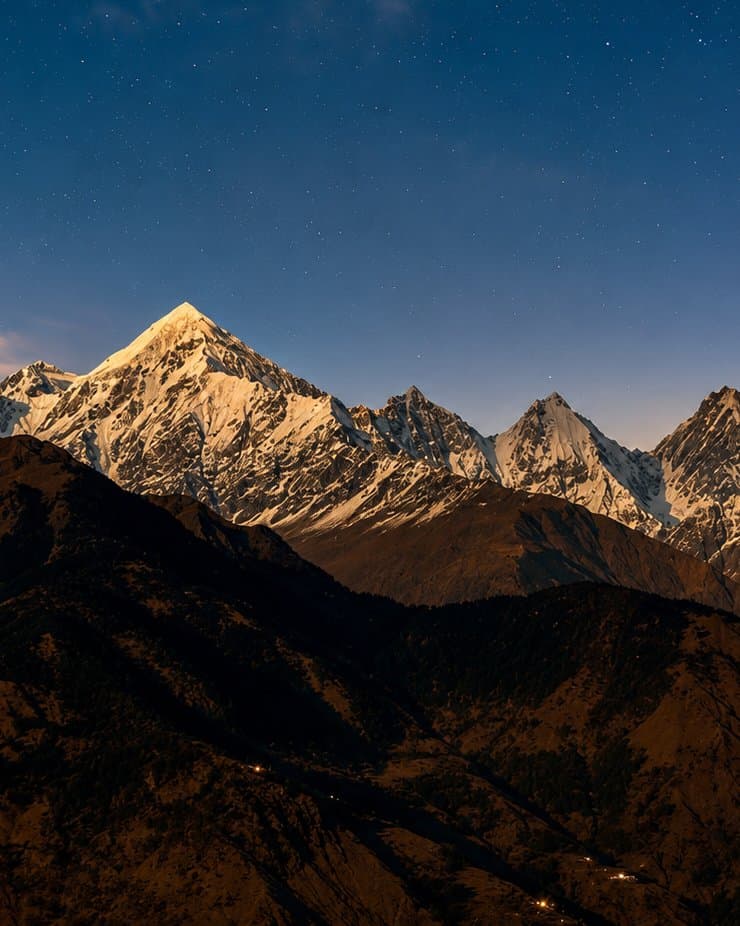
Uttarakhand is less one destination than several, loosely stitched together by mountain roads: the Kumaon lakes around Nainital, the Garhwal hill towns around Mussoorie, the Char Dham pilgrimage route into the high Himalaya, and the riverside energy of Rishikesh. A traveller who wants quiet lakeside mornings has a very different ideal itinerary from one chasing snow at Auli or darshan at Kedarnath — which is exactly why a generic, one-size-fits-all Uttarakhand package rarely works as well as one built around your actual dates, budget and interests.
This guide walks through how to think about that planning — which destinations genuinely combine well (and which don't), realistic sample itineraries from 2 to 7 days, honest budget ranges, and the seasonal and logistical details that make the difference between a relaxed trip and a rushed one.
Why Choose a Customised Uttarakhand Trip?
A fixed, generic itinerary has to work for an average traveller, which means it's rarely ideal for any specific one. Customising around a few key variables changes that:
- Trip duration — a 2-day weekend and a 7-day holiday shouldn't try to cover the same ground; the right destinations change with the time you actually have.
- Budget — accommodation standard, private versus shared transport, and activity choices all move the final cost significantly, and it's worth deciding this upfront rather than discovering it mid-trip.
- Group type — a family with young children, a couple wanting quiet, and a group of friends chasing adventure activities have different realistic paces and destination priorities.
- Hotel category — from budget guesthouses to premium mountain resorts, Uttarakhand's accommodation range is wide, and matching it to your actual preference (rather than defaulting to whatever a fixed package includes) changes the trip considerably.
- Private cab versus shared travel — private transport costs more but buys flexibility on mountain roads where shared buses run fixed schedules and routes.
- Interest — adventure, nature, wellness or spirituality — Uttarakhand genuinely supports all four, but rarely all at once in a short trip, so it's worth prioritising.
- Season — summer, monsoon, autumn and winter each change what's accessible and what the experience actually feels like, covered in detail further below.
Best Places to Include in Your Itinerary
We've grouped these by region, since that's what actually determines whether two destinations combine well — Uttarakhand's mountain roads mean "nearby on a map" doesn't always mean "a short drive."
### Kumaon Lakes and Nature Escapes
Bhimtal. A quieter, less crowded alternative to Nainital, built around its own lake with a small island aquarium. Worth visiting for the calm rather than a checklist of attractions. 2-3 days is enough on its own, best combined with Nainital or Mukteshwar. Reachable via Kathgodam railway station, about an hour further by road. Suits couples and travellers prioritising peace over sightseeing density.
Nainital. Uttarakhand's best-known lake town — Naini Lake, Mall Road, the Snow View cable car — genuinely busy in peak season (May-June, and around major holidays) but still worth it for first-time visitors. 2-3 days. Best time: March-June and September-November; monsoon brings landslide risk on approach roads. About 1 hour from Kathgodam by road. Suits families and first-time Uttarakhand visitors.
Sattal. A cluster of seven interconnected lakes near Bhimtal, popular for birdwatching and a genuinely quieter stay than Nainital itself. Usually visited as a day trip from Bhimtal or Nainital rather than a standalone base, given its small size. Best time: similar to Bhimtal, avoiding monsoon. *We don't currently have a dedicated Sattal package — a strong candidate for future content, and our team can still help plan a custom visit.*
Mukteshwar. Higher altitude than Bhimtal and Nainital, with genuinely dramatic Himalayan views on clear days and a growing number of boutique mountain stays. 2-3 days, or a shorter 1-2 day add-on to a Bhimtal/Nainital trip. Best time: October-June, with the clearest mountain views typically in winter and early spring. About 1.5-2 hours from Kathgodam by road. Suits couples and travellers wanting quiet with a view.
### Mountains and Scenic Getaways
Mussoorie. The most accessible hill station from Delhi NCR, with colonial-era charm, Mall Road and reliable mountain views. 2-3 days. Best time: March-June and September-November; winter (December-February) brings genuine cold and occasional snow, which some travellers specifically seek out. About 35 km (roughly 1.5 hours) from Dehradun, which is itself roughly 5-6 hours from Delhi by road. Suits families and short-weekend travellers.
Dhanaulti. A quieter, less commercial hill station near Mussoorie, popular for its deodar forests and the Eco Park. Usually combined with Mussoorie as a 1-day add-on rather than visited standalone, given how close the two are. *We don't currently have a dedicated Dhanaulti package — a genuine future content opportunity.*
Kanatal. Similar in character to Dhanaulti — quiet, forested, and typically combined with Mussoorie or Dhanaulti rather than visited alone. *No dedicated package currently — worth asking our team for a custom itinerary if this is a priority stop.*
Lansdowne. A well-preserved cantonment town that doesn't combine naturally with the Mussoorie or Kumaon clusters — it sits on a different road network, reached via Kotdwar rather than Dehradun or Kathgodam, which makes it better suited to a standalone weekend trip than an add-on to a longer itinerary. Best time: March-June and September-November. *No dedicated package currently — a genuine content and itinerary opportunity for a future trip.*
Chopta. Often called the "mini Switzerland of Uttarakhand," Chopta is the base for the Tungnath temple and Chandrashila summit trek. Best time for the full trek is April-June and October-early November, avoiding both monsoon landslide risk and the deep winter snow that makes the upper trail genuinely inaccessible without proper winter trekking gear (Tungnath temple itself typically closes for winter in early November, reopening around April-May — exact dates are set by the Badri Kedar Temple Committee and shift year to year, so confirm before planning a trip around the temple specifically). 2-3 days including the trek.
Auli. Uttarakhand's best-known ski destination, near Joshimath, reached via a ropeway or road. Peak snow and skiing season is roughly mid-January to February; October-November offers clear skies and pre-winter mountain views without snow. Road access can be disrupted by heavy snowfall in peak winter, so build in flexibility if travelling in that window. Because Joshimath is also the gateway town toward Badrinath, Auli can realistically combine with a Char Dham-adjacent itinerary for travellers with enough days. See our Auli travel guide and Auli vs Mussoorie winter comparison for more detail.
### Adventure and Riverside Experiences
Rishikesh. The Ganga-side base for yoga, the evening Ganga Aarti at Parmarth Niketan, and white-water rafting. 2-3 days. Best time: year-round for the Aarti and general sightseeing; rafting season typically runs September-June, pausing during peak monsoon when river levels and currents can be unsafe — confirm current rafting operator rules before planning around this specifically. About 230 km (roughly 5-6 hours) from Delhi by road, with no direct rail or air link into Rishikesh itself (Dehradun's Jolly Grant Airport, about 35 km away, is the nearest air option).
Jim Corbett National Park. India's oldest national park, built around the hope of a tiger sighting but genuinely rewarding even without one, given its forest, birdlife and riverine landscape. All safari bookings go through the official Corbett Tiger Reserve portal (corbettgov.org) — private vehicles aren't permitted inside the park, and advance booking (commonly cited as roughly 45-90 days ahead, though this is worth confirming on the official site rather than assumed) is strongly recommended in peak season. Some zones (Sonanadi, Pakhro) are seasonally restricted, typically open mid-November to mid-June, while others like Dhela and Jhirna tend to stay open through more of the year — zone-specific rules change, so confirm current status when booking. 3-4 days including travel and at least one safari. Best time: November-June, with the core zones generally closed through peak monsoon. Reached via Ramnagar, roughly 5-6 hours from Delhi by road.
Tehri Lake. A large reservoir formed by the Tehri Dam, increasingly popular for water sports and houseboat-style stays, usually visited as part of a wider Mussoorie/Dehradun-region trip rather than standalone. *We don't currently have a dedicated Tehri Lake package — a genuine future opportunity.*
### Spiritual and Cultural Destinations
Haridwar. The gateway city for the Char Dham Yatra, known for the evening Ganga Aarti at Har Ki Pauri. Often combined with Rishikesh as a single leg, or visited as a stop within a longer Char Dham circuit rather than a standalone multi-day destination. About 215-220 km (roughly 5-6 hours) from Delhi by road.
Kedarnath. One of the twelve Jyotirlingas and part of the Char Dham circuit, reached by trek or helicopter from Gaurikund. The yatra season runs roughly late April/May to early-mid November, with exact opening and closing (kapat) dates set annually by the temple committee — see our Char Dham 2026 closing dates guide for this season's specifics. Outside this window, the route is genuinely closed, not just quiet.
Badrinath. The fourth Char Dham shrine, reached by road via Joshimath, on a similar seasonal opening/closing cycle to Kedarnath. Often combined with Kedarnath in a single yatra, as covered in our Kedarnath-Badrinath Yatra package.
Jageshwar Dham. A cluster of ancient stone temples set in a deodar forest near Almora, dedicated to Shiva, with a genuinely different, quieter atmosphere than the high-altitude Char Dham shrines — accessible nearly year-round, unlike Kedarnath and Badrinath. Often combined with Kasar Devi, also near Almora, as in our Kasar Devi & Jageshwar package.
Choose Your Trip According to Your Travel Style
Couples: Mukteshwar or Bhimtal for quiet mountain/lake views, or Mussoorie for an easy, romantic short break — 2-3 days suits all three.
Family holiday: Nainital or the Bhimtal-Mukteshwar combination work well for families with a mix of ages — manageable pace, genuine variety, and not overly adventure-heavy. 3-4 days.
Friends' group trip: Rishikesh for rafting and nightlife-adjacent café culture, or Jim Corbett for a shared wildlife-safari experience — both suit a slightly faster pace and shared activity focus. 3-4 days.
Luxury getaway: Mukteshwar's boutique mountain resorts or a premium stay in the Mussoorie/Dehradun region offer the strongest luxury accommodation options on this list currently covered by our packages.
Peaceful nature and wellness retreat: Sattal or Bhimtal for genuine quiet, or Mukteshwar for altitude plus calm — avoid Nainital's Mall Road crowds if this is the priority.
Adventure holiday: Rishikesh for rafting, the Chopta-Tungnath-Chandrashila trek for hiking, or Auli for winter skiing, depending on season and fitness level.
Spiritual and pilgrimage trip: The full Char Dham circuit (Yamunotri, Gangotri, Kedarnath, Badrinath) for travellers with 9-10 days, or the shorter Kedarnath-Badrinath Yatra for 5-6 days — see our Char Dham Yatra planning guide for route and packing details.
Weekend trip from Delhi NCR: Mussoorie or Rishikesh, both realistically doable in 2-3 days including travel, without the longer journey required for Kumaon or Corbett.
Get in touch once you've narrowed down a travel style — that's usually the fastest way to turn this into an actual itinerary with real dates.
Ready-Made Sample Itineraries
These assume road travel from Delhi NCR and a realistic, unhurried pace — none of them backtrack or combine destinations that don't genuinely sit along the same route.
### 2 Days: Bhimtal & Nainital
- Day 1: Delhi to Bhimtal (overnight road travel or an early-morning departure), check in, evening lakeside walk. Overnight: Bhimtal.
- Day 2: Morning boating on Bhimtal Lake, transfer to Nainital (about 1 hour), Mall Road and Naini Lake in the afternoon, return journey to Delhi in the evening, or overnight in Nainital if your schedule allows a 3rd day.
- Pace: Relaxed, minimal driving beyond the Delhi-Bhimtal leg.
- Optional: Add Sattal as a short detour on Day 2 if time allows.
### 3 Days: Mussoorie Weekend
- Day 1: Delhi to Mussoorie via Dehradun (roughly 6-7 hours), check in, evening on Mall Road.
- Day 2: Gun Hill (cable car), Kempty Falls, Camel's Back Road in the evening.
- Day 3: Lal Tibba/Landour for a quieter morning, return journey to Delhi.
- Pace: Comfortable, with most of Day 1 and Day 3 given to travel.
- Optional: Add Dhanaulti as a half-day detour if arriving/departing with extra time.
### 4 Days: Kumaon Nature Circuit
- Day 1: Delhi to Bhimtal (via Kathgodam), check in, evening lakeside.
- Day 2: Bhimtal to Mukteshwar (about 1.5-2 hours), Himalayan viewpoint visits, boutique-stay evening.
- Day 3: Mukteshwar to Nainital (about 1.5-2 hours), Mall Road, Naini Lake boating.
- Day 4: Return journey to Delhi.
- Pace: Moderate, one travel-heavy day (Day 2-3 transition) balanced by quieter mornings.
### 5 Days: Garhwal — Rishikesh, Haridwar & Mussoorie
- Day 1: Delhi to Rishikesh (about 5-6 hours), check in, evening Ganga Aarti at Parmarth Niketan.
- Day 2: Rafting (season permitting) or a Neer Garh Waterfall hike, Laxman Jhula/Ram Jhula visit.
- Day 3: Transfer to Haridwar (short drive), Har Ki Pauri evening Aarti, then onward to Mussoorie via Dehradun.
- Day 4: Mussoorie sightseeing — Mall Road, Gun Hill, Kempty Falls.
- Day 5: Return journey to Delhi.
- Pace: Moderate, with Day 3 being the longest single travel day given the Haridwar-to-Mussoorie transfer.
### 6-7 Days: Kedarnath-Badrinath Yatra
- Days 1-2: Haridwar to Guptkashi, via Rudraprayag.
- Day 3: Kedarnath darshan (trek or helicopter from Gaurikund) and return to Guptkashi.
- Day 4: Guptkashi to Badrinath via Joshimath.
- Day 5: Badrinath darshan, Mana Village visit.
- Day 6-7: Return to Haridwar via Rudraprayag and Rishikesh, with a buffer day for weather or road delays, which are genuinely common on this high-altitude route.
- Pace: This genuinely needs the full 6-7 days given altitude, road conditions and darshan queues — see our Kedarnath-Badrinath Yatra package (from ₹24,000 per person) for the detailed day-by-day version of this exact circuit.
Get in touch if you'd like one of these adjusted for your exact dates and group size — minor tweaks (an extra night, a different starting point) are usually straightforward once we know your constraints.
Uttarakhand Trip Budget Breakdown
The figures below are rough, indicative per-person planning estimates, not live quotes — assume a group of 2-4 travelling together, double/twin-sharing accommodation, and a 3-4 day trip unless noted. Actual costs vary significantly with your exact dates, how far ahead you book, weekend versus weekday travel, and peak-season demand (May-June and major holiday weekends run noticeably higher than off-peak).
Budget travel (~₹6,000-10,000 per person): Shared or self-arranged road transport from Delhi NCR, standard/budget hotel accommodation, basic home-style meals, and limited paid activities (most sightseeing in destinations like Bhimtal or Mussoorie is free to walk around).
Mid-range travel (~₹10,000-18,000 per person): Private cab or AC Volvo from Delhi NCR, 3-star hotel accommodation, regular restaurant meals, and a few paid activities (boating, cable car, a Jim Corbett safari if included).
Premium travel (~₹18,000-30,000+ per person): Private vehicle throughout, boutique or premium resort accommodation (particularly relevant in Mukteshwar, where this category of stay is most developed), better dining options, and private guided activities.
What specifically moves the number:
- Jim Corbett safaris add a real, separate cost — zone entry and jeep/canter hire fees are set by the park authority and vary by zone and vehicle type; confirm current fees on corbettgov.org rather than relying on a quoted figure, since these are revised periodically.
- Group size — costs per person generally drop as group size grows, since vehicle and often accommodation costs are shared; solo or two-person trips typically pay a higher per-person rate.
- Weekends and peak season — Friday-Sunday travel and the May-June peak season both push hotel rates up noticeably compared to a weekday or shoulder-season trip.
- Private versus shared transport — a private cab for the whole trip costs more upfront but removes the schedule and route constraints of shared transport, which matters more on mountain roads than on flat highways.
Best Time to Plan a Uttarakhand Trip
Spring (March-May): Generally pleasant, with clearing winter snow at higher altitudes and blooming rhododendrons in the hills. A reliable window for most lower and mid-altitude destinations.
Summer (June-mid July): The most popular season, especially for Kumaon and Mussoorie, driven by school holidays — expect the heaviest domestic crowds and highest prices of the year, alongside generally reliable weather at lower altitudes.
Monsoon (mid July-September): Genuinely risky for hill roads — landslide risk is real and well-documented across Uttarakhand's mountain highways during this period, and several routes (particularly toward Kedarnath, Badrinath and other high-altitude areas) can see temporary closures. We'd generally steer travellers away from this window unless you're specifically prepared for schedule flexibility.
Autumn (October-November): Our pick for the best overall balance — clearing monsoon skies, good mountain visibility, and thinner crowds than summer, right up until the Char Dham shrines close for winter in early-mid November.
Winter (December-February): Cold, with snow likely at higher altitudes (Auli, Mukteshwar, parts of Mussoorie and Nainital on their higher points) but never guaranteed on any specific date — don't plan a trip around a promise of snow, since actual snowfall varies year to year and can shift by weeks. Kedarnath and Badrinath are closed entirely through this period. Auli's skiing season peaks here, and Mussoorie's winter cold draws its own crowd specifically chasing the possibility of snow.
How to Customise Your Uttarakhand Holiday
1. Choose your travel dates first — this immediately narrows what's realistically accessible (Char Dham, Auli's ski season, Corbett's open zones all depend on timing).
2. Set a total budget — deciding this upfront, rather than adjusting mid-trip, makes every other choice (hotel category, private versus shared transport) much easier.
3. Decide the number of days — be honest about this before picking destinations, not after, since it determines how many places you can realistically include.
4. Select destinations based on geography, not just a wish list — use the regional groupings above (Kumaon, Mussoorie-area, Rishikesh-Haridwar, Char Dham/Chopta/Auli) as your starting filter.
5. Choose accommodation that matches your actual priorities — proximity to activities often matters more than star rating for a short trip.
6. Decide between private transport and shared travel — private costs more but is usually worth it on mountain routes with limited public transport frequency.
7. Prioritise activities and sightseeing — pick 2-3 genuine priorities per destination rather than trying to fit in everything you've read about.
8. Check permits, opening schedules, weather and safety specific to your destinations and dates — particularly Corbett safari bookings, Char Dham opening/closing dates, and current road conditions for monsoon or winter travel.
9. Confirm bookings and keep contingency time, especially on any itinerary involving high-altitude or monsoon-adjacent travel, where weather delays are a real possibility rather than a remote one.
A travel company can help coordinate these pieces — route planning, accommodation matched to your budget, and current permit/seasonal information — once you've worked through the basics above; get in touch with your dates, group size and priorities and we'll help build out the specifics.
Common Planning Mistakes
- Trying to cover too many destinations. Uttarakhand's mountain roads are slower than they look on a map — fitting in one extra town usually means rushing two others, not adding a bonus stop.
- Underestimating mountain driving times. A distance that looks short on a map can take considerably longer on winding hill roads, especially with traffic on popular routes during peak season.
- Booking without checking seasonal access. Char Dham shrines, Auli's snow season, and even some Corbett safari zones are genuinely closed or restricted outside their specific windows — this isn't a minor inconvenience to work around, it can mean the destination simply isn't available.
- Ignoring weather and road conditions, particularly during monsoon, when landslide risk on hill roads is real and can cause genuine delays or route changes.
- Choosing accommodation too far from planned activities. A hotel that looks fine on a map can add significant daily transfer time if it's not actually close to what you plan to do.
- Forgetting to budget for meals, parking, permits and activities. These smaller costs add up across a multi-day trip and are easy to underestimate when budgeting mainly around transport and accommodation.
Frequently Asked Questions
How much does a customised Uttarakhand trip cost? It varies by travel style — budget trips run roughly ₹6,000-10,000 per person, mid-range ₹10,000-18,000, and premium ₹18,000-30,000+, depending on destinations, accommodation category and group size. See our budget breakdown above for what specifically drives the difference.
How many days are enough for Uttarakhand? It depends on which region — 2-3 days suits a single Kumaon lake cluster or Mussoorie weekend, 4-5 days allows a fuller Kumaon circuit or Rishikesh-Haridwar-Mussoorie combination, and 6-7 days is realistically needed for a Kedarnath-Badrinath yatra, given altitude and road conditions.
Which places are best for a first-time visit? Nainital or Mussoorie, both well-developed for tourism with reliable infrastructure and a manageable first-trip pace.
Can Uttarakhand be explored in three days? Yes, for a focused single-region trip — Mussoorie, or Bhimtal-Nainital together — but not for combining distant regions like Kumaon and Char Dham, which genuinely need separate trips or considerably more days.
Which destinations are suitable for families? Nainital, Bhimtal and Mukteshwar all offer a manageable pace with genuine variety, without requiring serious trekking fitness or very long travel days.
What are the best places for couples? Mukteshwar and Bhimtal for quiet, scenic settings; Mussoorie for an easy, accessible romantic short break.
Is a private cab worth it for a family trip? Generally yes — it removes the schedule constraints of shared transport on mountain routes and makes stops (viewpoints, meal breaks) much easier with children, though it does cost more than shared or self-driven options.
Which season is best for a Uttarakhand holiday? Autumn (October-November) for the best overall balance of weather, visibility and crowd levels; avoid the monsoon months (mid-July-September) given genuine landslide risk on hill roads.
Can Bhimtal and Nainital be covered together? Yes — they're about an hour apart by road and combine naturally in a single 2-3 day trip, as outlined in our 2-day sample itinerary above.
How can travellers request a customised itinerary? Share your preferred travel dates, number of travellers, trip duration and approximate budget with Shubh Mangal Yatra, and our team will work through an itinerary suited to your travel style.
Conclusion
The difference between a rushed Uttarakhand trip and a genuinely good one usually comes down to respecting its geography — Kumaon's lakes, the Mussoorie hills, the Rishikesh-Haridwar riverside, and the high-altitude Char Dham route are each their own region, and trying to force all of them into one short holiday is the single most common planning mistake we see. Pick a region that matches your actual days, interests and budget, and the rest of the planning gets considerably easier.
Planning a Uttarakhand getaway? Share your preferred travel dates, number of travellers, trip duration, and approximate budget with Shubh Mangal Yatra to explore an itinerary suited to your travel style.