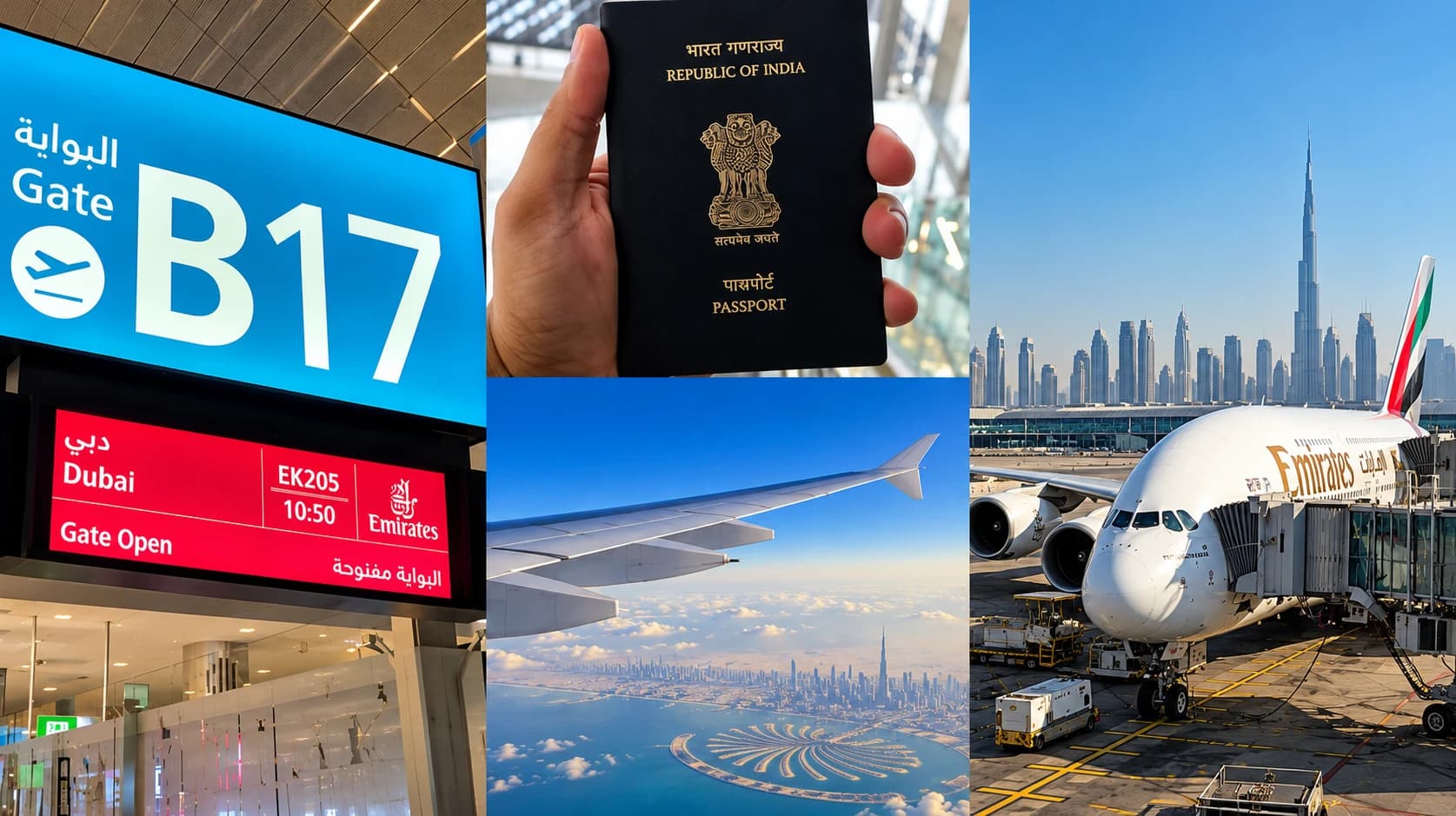
A first international trip comes with a specific kind of excitement mixed with a specific kind of worry — will the visa come through in time, is the budget realistic, will the food situation be fine, how do you even get from the airport to the hotel in a country where you don't speak the language. None of that is irrational. It's also, for most of the destinations in this guide, far less complicated than it feels before you've actually done it once.
The right first destination depends on four things more than anything else: your budget, the kind of experience you actually want (beaches, mountains, a city break, culture), how many days you genuinely have off, and how much "new" you want to take on at once. This guide compares seven of the most practical first international trips from India — Thailand, Malaysia, Dubai, Georgia, Azerbaijan (Baku), Nepal and Bhutan — each a genuinely different kind of holiday, so you can match the destination to what you're actually looking for rather than just picking the one everyone else seems to be going to.
The 7 Best International Destinations for First-Time Indian Travellers
### 1. Thailand
Thailand remains the default first international trip for a reason — it genuinely supports several very different holidays within one country. Bangkok gives you temples, malls, street food and a serious nightlife scene; Phuket and Krabi add island-hopping, beaches and resort time; Pattaya offers a closer, flight-free beach option roughly two hours from Bangkok by road.
- Beaches and islands: Phuket's Phi Phi Islands and James Bond Island, Krabi's Railay Beach, all reachable by short domestic flight or road from Bangkok.
- Shopping and street food: Bangkok alone covers everything from Chatuchak's market stalls to ICONSIAM's luxury floors, with street food that's genuinely a destination in itself.
- Nightlife: Among the most varied in Southeast Asia — rooftop bars, established clubs, and much quieter options if that's not your scene.
- Family-friendly attractions: Aquariums, parks and manageable half-day sightseeing blocks in Bangkok; resort infrastructure built for families in Phuket.
- Approximate trip budget: roughly ₹45,000–1,10,000 per person for 6–7 days, depending on category (see our full breakdown below).
- Recommended duration: 5–7 days for Bangkok plus one beach destination; 9–10 days to properly cover Bangkok, Phuket and Krabi without rushing.
- Travel requirements: Indian passport holders currently enter visa-free for tourism, with a permitted stay of 30 days for entries from 15 September 2026 onward (reduced from 60 days) — confirm current rules before booking, since this has changed more than once recently.
Who should choose Thailand: travellers wanting genuine variety in one country, first-timers who want an approachable entry into international travel, and groups or couples who want both city and beach chapters. Avoid the temptation to add a third or fourth city on a 5–6 day trip — Bangkok-plus-one-beach-destination is the realistic combination; see our complete Thailand guide, companion Thailand guide and Bangkok nightlife and city guide for the full planning detail.
### 2. Malaysia
Malaysia offers a gentler, often less crowded version of a Southeast Asian first trip. Kuala Lumpur anchors most itineraries with the Petronas Twin Towers, KLCC Park and a genuinely strong food scene blending Malay, Chinese and Indian influences; Langkawi adds an island-and-beach chapter with a cable car and duty-free shopping; Genting Highlands gives a cooler hill-station day trip from KL itself.
- City attractions: The Petronas Twin Towers (the Skybridge and observation deck are the main draws), Batu Caves, and KLCC's mix of park and mall.
- Shopping and food: Bukit Bintang for retail, hawker centres for genuinely excellent, affordable food with a lot of common ground for Indian palates given Malaysia's large Indian-origin population.
- Islands and beaches: Langkawi's beaches and the SkyCab cable car; Penang (further north) for a heritage-meets-beach combination on longer trips.
- Family attractions: KL's aquariums and theme parks, Genting Highlands' indoor and outdoor attractions.
- Approximate trip budget: roughly ₹55,000–1,20,000 per person for 6–7 days across KL and Langkawi.
- Recommended duration: 5–6 days for Kuala Lumpur and Langkawi together.
- Entry requirements: Indian passport holders currently enter visa-free for up to 30 days for tourism, under an arrangement in effect through 31 December 2026 — a defined end date worth reconfirming closer to your travel dates rather than assuming it continues indefinitely.
Who should choose Malaysia: families (the food familiarity and manageable pace help considerably with children), couples wanting a quieter alternative to Thailand's bigger tourist crowds, and groups who want city-plus-island without an especially packed schedule. See our complete Malaysia travel guide for the full itinerary and cost breakdown.
### 3. Dubai, United Arab Emirates
Dubai is arguably the most "landing-pad easy" first international trip on this list — short flight time, extremely well-developed tourist infrastructure, and a large resident Indian community that makes the whole experience feel less foreign than the distance might suggest.
- Burj Khalifa and Dubai Mall: The observation deck and the mall's sheer scale (plus the Dubai Aquarium inside it) typically anchor day one or two of any itinerary.
- Desert safari: Dune bashing, a BBQ dinner and cultural performances — genuinely one of the most-booked experiences for first-time visitors, best done in the cooler months.
- Beaches and waterfront: JBR (Jumeirah Beach Residence) and Dubai Marina give a genuine beach-and-promenade chapter alongside the city sightseeing.
- Shopping and dining: From the Gold Souk's traditional trading to Dubai Mall's luxury floors, plus a dining scene covering everything from Indian cuisine to fine dining.
- Rooftop venues and nightlife: A genuinely upscale rooftop-bar and lounge scene, more polished and less budget-friendly than Bangkok's equivalent.
- Approximate trip budget: roughly ₹55,000–1,30,000 per person for 4 days, depending on hotel category and how much premium experience (desert safari upgrades, rooftop dining) you add.
- Recommended duration: 4 days covers the core sightseeing comfortably; add a day for an Abu Dhabi excursion if you have it.
- Visa requirements: Indian passport holders typically need a UAE visa arranged in advance for tourism — some travellers holding a valid US, UK, Schengen or certain other visas may qualify for a conditional visa-on-arrival, while others apply for a standard e-visa online (commonly processed within a few days). Rules and eligibility have changed before, so confirm current requirements with an authorised visa service or UAE's official channels before booking flights.
Who should choose Dubai: families and first-timers who want maximum "everything works smoothly" reassurance, and travellers who want a mix of budget-friendly sightseeing (public attractions, Gold Souk browsing) and genuinely premium experiences (fine dining, rooftop lounges) within the same trip. See our Dubai tour package and our first-timer's Dubai visa and planning guide for more detail.
### 4. Georgia
Georgia is the pick on this list for travellers who want their first international trip to look genuinely different from the usual city-and-beach formula. Tbilisi gives you an Old Town, sulphur baths and a wine-bar culture built on an 8,000-year-old winemaking tradition; Kazbegi and Gudauri add real Caucasus Mountain scenery — a church on a mountain ridge, snow-capped peaks, a genuine alpine road trip — without requiring serious trekking experience.
- Historic streets and architecture: Tbilisi's Old Town, the Narikala Fortress and Abanotubani's sulphur bath district give the city genuine European-old-town character.
- Caucasus Mountain scenery: Kazbegi's Gergeti Trinity Church, set against Mount Kazbek, is one of the most striking road-accessible viewpoints covered in this entire guide.
- Snow experiences: Gudauri's ski season typically runs December to mid-April, though actual snow conditions and road access vary year to year — don't book purely on the promise of snow on a specific date.
- Food and culture: Khachapuri, khinkali and genuinely distinctive Georgian wine give the trip its own culinary identity.
- Approximate trip budget: roughly ₹60,000–1,35,000 per person for 6–7 days.
- Recommended duration: 6–7 days to properly cover Tbilisi, Mtskheta and the Kazbegi/Gudauri mountain circuit.
- Visa requirements: Indian passport holders generally need Georgia's e-Visa, applied for online via evisa.gov.ge — there's no visa-free entry and no visa on arrival for Indians under standard rules. A reported new travel-insurance requirement for foreign visitors adds another reason to check the official portal directly before applying.
Who should choose Georgia: travellers who specifically want mountain landscapes and scenic drives as part of a first international trip, and anyone who'd rather their first trip not look like everyone else's Instagram feed. See our Georgia travel guide for Indians and Georgia nightlife guide for the full planning detail, or our fixed Georgia tour package — Tbilisi & Batumi if you're ready to book.
### 5. Azerbaijan — Baku
Baku suits a specific kind of first-timer: someone who wants a short, genuinely distinctive city break without the logistics of a multi-region trip. The contrast between Icherisheher (Baku's 12th-century walled Old City) and the ultra-modern Flame Towers a short walk away is the city's defining feature.
- Baku Boulevard: A roughly 3.5km Caspian Sea waterfront promenade that functions as the city's evening living room — restaurants, walking paths and the Flame Towers lit up across the water after dark.
- Icherisheher (Old City): A UNESCO World Heritage site with the Maiden Tower and the Palace of the Shirvanshahs as its anchors.
- Flame Towers viewpoints: Best seen after dark from Highland Park or across the Boulevard, when their LED façades put on a synchronised light display.
- Modern architecture and shopping: The Zaha Hadid-designed Heydar Aliyev Center alongside Nizami Street's shopping and café scene.
- Local food and culture: Plov, dolma and a genuine tea culture, drawing on Turkish, Persian and Central Asian influences.
- Approximate trip budget: roughly ₹55,000–1,20,000 per person for 4–5 days.
- Recommended duration: 3–4 days for Baku itself; add a day for a Gabala mountain-resort extension on longer trips.
- Visa requirements: Indian passport holders need a visa, with the standard route being Azerbaijan's ASAN e-Visa via evisa.gov.az — a single-entry tourist visa typically processed in around 3 business days, not requiring an embassy visit.
Who should choose Baku: travellers with a shorter holiday window who still want a genuinely international, culturally distinctive city break, and couples wanting a city-focused (rather than beach-focused) short trip. See our Baku travel guide, our Azerbaijan visa and route guide and our Baku, Azerbaijan package for the full detail.
Still deciding between these options? Share your budget, available days and the kind of trip you want, and our team can help narrow it down to one or two genuinely good fits rather than all seven.
### 6. Nepal
For many Indian travellers, Nepal is genuinely the simplest possible international trip — not just because of proximity, but because of one specific fact: Indian citizens don't need a visa or even a passport to enter Nepal, provided they carry a valid alternative photo ID (a voter ID or Aadhaar card, though a passport remains the more reliable option, especially for flights). This is a travel arrangement specific to Indian nationals and doesn't apply to other nationalities, who do need a visa.
- Himalayan scenery: Pokhara's lakeside setting with the Annapurna range as a backdrop is one of the most accessible genuine Himalayan views on any international trip from India.
- Temples and cultural heritage: Kathmandu's Durbar Square, Pashupatinath Temple and Boudhanath Stupa give the capital genuine historical and religious depth.
- Lakes and viewpoints: Phewa Lake in Pokhara, and Sarangkot's sunrise viewpoint over the Annapurna range, are among the trip's highlights.
- Adventure and nature: Paragliding over Pokhara, a Chitwan National Park jungle safari, and genuine trekking access for travellers who want to go further.
- Approximate trip budget: roughly ₹30,000–65,000 per person for 6–7 days — among the more affordable options on this list.
- Recommended duration: 6–7 days to cover Kathmandu, Pokhara and a Chitwan safari without rushing; 4–5 days if you skip Chitwan.
- Travel and identification requirements: No visa or passport required for Indian nationals specifically (a valid photo ID suffices, though carrying a passport is recommended for air travel) — this is distinct from the standard visa process other nationalities must follow.
Who should choose Nepal: genuinely budget-conscious first-timers, travellers who want real Himalayan scenery without the logistics of a longer-haul mountain trip, and anyone who wants the lowest-friction possible entry process for their first international holiday. See our Nepal trip guide from Delhi and our Nepal package for the full itinerary.
### 7. Bhutan
Bhutan is the pick for travellers who want a genuinely peaceful, culturally immersive first international trip rather than a packed sightseeing list. Thimphu (the capital) and Paro (home to the iconic Tiger's Nest Monastery) anchor most itineraries, with Bhutan's "high value, low volume" tourism model shaping the whole experience.
- Monasteries and cultural heritage: Paro Taktsang (the Tiger's Nest Monastery), perched dramatically on a cliffside, is Bhutan's single most recognisable sight, reached via a genuine uphill hike.
- Himalayan landscapes: Dochula Pass's 108 chortens against a Himalayan backdrop, and the wider Paro and Thimphu valleys, give the trip real mountain scenery without extreme altitude.
- Scenic valleys and viewpoints: The Phobjikha Valley (on longer itineraries extending into central Bhutan) adds a quieter, wildlife-focused stop.
- Local culture: Traditional dzong (fortress-monastery) architecture, a mandatory-by-custom dress code for locals that gives the country a visibly distinct character, and a genuinely unhurried pace compared to most international trips.
- Approximate trip budget: roughly ₹55,000–1,15,000 per person for 6–7 days, with Bhutan's tourism model bundling the Sustainable Development Fee, permits and typically accommodation/meals into your operator's package — making the upfront cost more predictable than many destinations, even if the headline number looks higher.
- Recommended duration: 6–7 days for Thimphu and Paro together; longer trips can extend into central Bhutan.
- Entry procedures for Indian citizens: Indian, Bangladeshi and Maldivian nationals have simplified entry arrangements compared to other foreign tourists, via a permit rather than a full visa process. Most tourists, including Indians, travel through a licensed Bhutanese tour operator (or an agent working with one), who handles the permit and routing as part of the package. A Sustainable Development Fee applies per day of the visit, charged at a reduced rate for Indian nationals compared to other foreign tourists — rates have changed in recent years, so confirm the current amount directly with your operator at the time of booking.
Who should choose Bhutan: travellers seeking nature, culture and a relatively peaceful pace over a packed sightseeing list, and anyone who wants their first international trip to feel genuinely unlike a typical holiday. See our complete Bhutan travel guide, Bhutan permits and SDF guide, Bhutan vs Nepal comparison and our Bhutan package for the full detail.
Comparison Table: Which Destination Should You Choose?
The budget figures below are illustrative per-person planning ranges, not live quotes — they assume travel from Delhi, a shoulder-season departure, two travellers sharing a twin room, mid-range accommodation unless noted, and standard inclusions (flights/transport, accommodation, most meals, core sightseeing). Actual costs depend heavily on exact dates, hotel category, group size and how far ahead you book.
| Destination | Ideal Duration | Indicative Budget (per person) | Best Experiences | Best Suited For | Planning Complexity | Entry Considerations |
|---|
| Thailand | 5–10 days | ₹45,000–1,10,000 | Beaches, nightlife, shopping, temples | Groups, couples, first-timers wanting variety | Low | Visa-free, 30-day tourist stay (from 15 Sep 2026) |
| Malaysia | 5–6 days | ₹55,000–1,20,000 | City + island, food, family attractions | Families, couples wanting a quieter alternative | Low | Visa-free, 30 days (through 31 Dec 2026) |
| Dubai | 4–5 days | ₹55,000–1,30,000 | Burj Khalifa, desert safari, premium shopping | Families, first-timers wanting ease | Low–Moderate | Visa generally required in advance; conditional VOA for some visa holders |
| Georgia | 6–7 days | ₹60,000–1,35,000 | Mountain scenery, Old Town, wine culture | Mountain/nature lovers, distinctive-trip seekers | Moderate | e-Visa required (evisa.gov.ge); no visa-free entry |
| Azerbaijan (Baku) | 3–5 days | ₹55,000–1,20,000 | Old City, Flame Towers, short city break | Short-holiday travellers, city-break couples | Moderate | e-Visa required (evisa.gov.az), ~3 business days |
| Nepal | 4–7 days | ₹30,000–65,000 | Himalayan views, temples, budget-friendly | Budget travellers, first-timers wanting ease | Lowest | No visa/passport needed for Indians (valid photo ID) |
| Bhutan | 6–7 days | ₹55,000–1,15,000 | Monasteries, Himalayan culture, peaceful pace | Nature/culture seekers, slower-paced travel | Low (via licensed operator) | Permit-based entry for Indians, SDF applies |
Which Destination Is Best for Your Travel Style?
First-time travellers on a limited budget: Nepal is the clear starting point — no visa cost, no passport dependency, and the most affordable overall budget on this list. Thailand's lower tier (Bangkok plus Pattaya, no internal flight) is a close second.
Couples seeking a romantic holiday: Georgia (mountain views, wine-cellar evenings, Tbilisi's Old Town) and Baku (Flame Towers at night, Boulevard evenings) both offer genuinely romantic city-and-scenery combinations; Thailand's Phuket/Krabi beach resorts suit a more classic honeymoon mood.
Groups of friends interested in nightlife and entertainment: Thailand, specifically Bangkok, offers by far the most varied nightlife scene on this list — see our Bangkok nightlife guide. Dubai's rooftop-lounge scene suits a more polished, premium group night out.
Families travelling with children: Dubai and Malaysia both offer the most "everything works smoothly" experience — strong tourist infrastructure, familiar food options, and attractions genuinely built for a range of ages.
Travellers interested in mountains and nature: Nepal and Bhutan both deliver genuine Himalayan scenery, with Bhutan offering a more structured, culturally immersive version and Nepal a more flexible, budget-friendly one; Georgia adds Caucasus Mountain scenery as a genuinely different (non-Himalayan) alternative.
Travellers who prefer city sightseeing and shopping: Dubai and Bangkok both offer serious shopping-mall culture alongside major city sights; Kuala Lumpur (Malaysia) is a strong, less crowded alternative.
People planning a short 4–5 day holiday: Baku and Dubai both work well as compact city breaks without feeling rushed; Nepal's Kathmandu-only or Kathmandu-Pokhara-without-Chitwan version also fits comfortably into 4–5 days.
How Much Does Your First International Trip Cost?
Every international trip from India breaks down into the same major categories, even though the actual numbers vary considerably by destination:
- Flights or other transport: Usually the single largest or second-largest line item; booking 2–3 months ahead generally helps more than almost any other single decision.
- Accommodation: Varies enormously by category — a 2–3 star hotel versus a resort or boutique stay can roughly double this line alone.
- Meals: Street food and local eateries versus restaurant dining makes a genuine difference across a multi-day trip.
- Local transfers: Airport pickup, inter-city transport (domestic flights for Thailand's islands, for instance) and day-to-day local travel.
- Sightseeing and activities: Entry tickets, tours and experiences — genuinely worth deciding in advance which ones matter to you rather than adding everything on offer once you're there.
- Visa, permit or entry-related costs: From Nepal's zero cost to Bhutan's bundled SDF to Georgia and Azerbaijan's e-visa fees — this varies more by destination than almost any other category.
- Travel insurance: Worth having for every destination on this list, regardless of whether it's a visa requirement.
- Shopping and miscellaneous spending: Genuinely flexible, and one of the easier categories to adjust if your budget is tight.
Indicative total per-person budgets for a typical first trip to each destination (assumptions as stated in the comparison table above): Nepal ₹30,000–65,000; Thailand ₹45,000–1,10,000; Malaysia ₹55,000–1,20,000; Baku ₹55,000–1,20,000; Dubai ₹55,000–1,30,000; Bhutan ₹55,000–1,15,000; Georgia ₹60,000–1,35,000. These are planning ranges built from stated assumptions, not verified live prices — we haven't invented a specific flight fare, hotel rate or package cost for any of these.
Practical ways to manage your budget: book flights and any visa processing early rather than close to travel, compare accommodation categories honestly against what you'll actually use (a pool you won't swim in isn't worth the premium), travel during a destination's shoulder season rather than peak dates where possible, and resist the urge to pack every attraction into a short trip — a less rushed itinerary with fewer, better-chosen experiences is nearly always the better use of a limited budget.
Best Time to Visit Each Destination
| Destination | Best Time | Why |
|---|
| Thailand | November–February | Coolest, driest conditions across most regions; busiest and priciest too. Andaman coast (Phuket, Krabi) and Gulf coast (Koh Samui) have different rainfall calendars. |
| Malaysia | December–February | Lowest rainfall on the west coast (KL, Langkawi, Penang); the country stays hot and humid year-round given its equatorial position. |
| Dubai | October–April | Pleasant outdoor temperatures for sightseeing and the desert safari; May–September brings extreme heat that limits outdoor activity. |
| Georgia | May–June, September–October | Mild weather for both Tbilisi and the mountain region; December–February suits Gudauri's ski season specifically, with snow conditions varying by year. |
| Azerbaijan (Baku) | April–June, September–October | Mild enough for extended Old City walking and day trips; summer is hot, winter is cold and notably windy. |
| Nepal | October–December, March–April | Clear mountain views and comfortable trekking/sightseeing weather; monsoon (June–September) brings regular rain and reduced visibility. |
| Bhutan | March–May, September–November | Clearest mountain views and most comfortable valley weather; monsoon months bring rain and landslide risk on mountain roads. |
None of these windows guarantee specific weather on specific dates — they're general seasonal patterns, and actual conditions vary year to year. Outdoor-heavy plans (desert safaris, mountain drives, island-hopping) are more weather-sensitive than city sightseeing, so build flexibility into those parts of your itinerary specifically.
Visa and Entry Requirements: What Indians Should Know
A few distinctions worth understanding before you compare destinations:
- Visa-free entry (Thailand, Malaysia) means no advance application or embassy visit for a permitted tourist stay — but these arrangements have defined conditions and end dates that can change, so "visa-free" isn't a permanent guarantee.
- Visa-exemption via alternative ID (Nepal, for Indian nationals specifically) means no visa or passport is strictly required, though a passport remains the more practical choice for air travel.
- Electronic visas (Georgia, Azerbaijan) require an online application in advance, typically processed within a few days, without needing to visit an embassy in person.
- Conditional visa-on-arrival or standard e-visa (Dubai) depends on whether you hold a qualifying visa from certain other countries — eligibility rules have changed before and vary by traveller.
- Permits and Sustainable Development Fee (Bhutan, for Indian nationals) involve a licensed-operator-managed process rather than a traditional visa, with a daily fee bundled into your trip cost.
Across all seven destinations: check passport validity requirements (commonly six months from your travel date), confirm whether supporting documents (return tickets, hotel bookings, proof of funds) are needed, and verify current rules through official government, immigration or embassy sources rather than relying on older articles or informal advice — including this one. We are not able to guarantee visa approval or entry for any applicant; that decision rests entirely with each destination's authorities.
Common Mistakes First-Time International Travellers Should Avoid
- Booking flights before checking entry requirements. Confirm visa eligibility and processing time first — a non-refundable flight booked around an assumption that turns out wrong is an expensive mistake.
- Choosing a destination on price alone, without totalling the real cost. A "cheap flight" destination can still end up expensive once visa fees, local transport and activities are added in.
- Planning too many cities in a short holiday. Three destinations in five days usually means more time in transit than actually experiencing any of them — this is the single most common first-timer mistake on this list of destinations.
- Ignoring baggage restrictions, particularly on budget airlines with stricter weight limits than full-service carriers — check before you pack, not at the check-in counter.
- Underestimating airport transfer times, especially in cities with heavy traffic (Bangkok, Dubai) — build in more buffer than the map distance suggests.
- Not purchasing suitable travel insurance, even for destinations where it isn't a visa requirement — medical costs abroad can be genuinely significant.
- Failing to check weather conditions for activity-heavy plans — a desert safari, mountain drive or island-hopping day can all be disrupted by conditions you'd have known about with a quick check.
- Carrying insufficient payment options. A mix of cards and local currency cash works better than relying on either exclusively, especially outside major tourist areas.
- Overlooking local customs and regulations. Dress codes at religious sites, alcohol laws, and simple etiquette (what's considered respectful dress or behaviour) vary meaningfully across these seven destinations.
How to Choose the Right International Holiday Package
Before booking any package, check specifically:
- Flight arrangements and baggage allowance — confirm what's included and what you'd need to book or pay for separately.
- Hotel location and category — a hotel's star rating matters less than whether it's actually near what you want to do.
- Airport transfers — confirm whether pickup and drop are included, especially for late-arrival flights.
- Sightseeing inclusions — know exactly what's covered versus optional/self-paid before you compare prices across operators.
- Meals and exclusions — breakfast-only versus half-board versus full-board changes your daily food budget significantly.
- Visa or permit assistance — some packages help with this, others don't; confirm which applies to the one you're considering.
- Travel insurance — check whether it's included or needs to be arranged separately.
- Cancellation and payment conditions — read these before booking, not after something changes.
- Group versus private travel — a shared-group package costs less but runs on a fixed schedule; a private itinerary costs more but moves at your pace.
A well-planned itinerary — one that accounts for realistic travel times, doesn't overpack the schedule, and has visa and documentation sorted well in advance — removes most of the genuine uncertainty that makes a first international trip feel daunting.
Frequently Asked Questions
Which country is best for an Indian's first international trip? It depends on your priorities — Nepal for the simplest, most affordable entry; Thailand for genuine variety; Dubai for maximum ease and infrastructure; Bhutan or Georgia for a more distinctive, nature-focused first trip.
Which international destination is most affordable from India? Nepal, generally — no visa cost, relatively short flights, and a lower overall daily budget than the other six destinations covered here.
Which countries can Indians visit with relatively simple entry procedures? Nepal (no visa or passport required, just valid photo ID), Thailand and Malaysia (visa-free tourist stays, subject to current conditions) are the most straightforward from a documentation standpoint.
How much does a first international trip cost from India? It varies considerably by destination — our illustrative per-person ranges run from roughly ₹30,000–65,000 for Nepal up to ₹60,000–1,35,000 for Georgia; see our full comparison table above for all seven destinations.
Which destination is best for a 4–5 day holiday? Baku and Dubai both work well as compact city breaks within this timeframe; a Kathmandu-focused Nepal trip (without Chitwan) also fits comfortably.
Is Thailand a good choice for first-time international travellers? Yes — visa-free entry, direct flights from several Indian cities, and genuine variety (city, beach, nightlife) within one country make it one of the more approachable first trips.
Is Dubai suitable for families travelling abroad for the first time? Yes — strong tourist infrastructure, familiar food options and attractions built for a range of ages make it one of the lower-friction choices on this list for families specifically.
Is Georgia a good option for a mountain holiday? Yes — Kazbegi and Gudauri offer genuine Caucasus Mountain scenery reachable by road, without needing serious trekking experience; just confirm the e-visa process in advance, since Georgia doesn't offer visa-free entry to Indians.
Should first-time travellers choose Baku or Dubai? It depends on priorities — Dubai offers more infrastructure, shopping scale and family-friendly attractions; Baku offers a more compact, culturally distinctive city break at a comparable budget for a shorter trip.
Are Nepal and Bhutan convenient for Indian travellers? Yes, in different ways — Nepal has the simplest possible entry process (no visa or passport needed), while Bhutan has a structured but genuinely manageable permit process specifically simplified for Indian nationals compared to other foreign tourists.
How far in advance should an international trip be planned? Generally 2–3 months ahead for destinations with straightforward visa-free or e-visa processes (Thailand, Malaysia, Georgia, Azerbaijan), and similarly or slightly earlier for Dubai and Bhutan given their respective visa/permit processes — Nepal is the exception, genuinely workable with much shorter notice given its visa-free arrangement for Indians.
What documents should Indians check before travelling abroad? Passport validity (commonly six months from your travel date), current visa or entry requirements for your specific destination, return or onward travel proof where required, confirmed accommodation details, and travel insurance — verify all of these against official sources for your specific destination rather than assuming they're the same as another country on this list.
Plan Your First International Trip with Shubh Mangal Yatra
Choosing between seven genuinely different destinations isn't something you need to figure out alone. Whether you're drawn to Thailand's variety, Dubai's ease, Georgia's mountains, Baku's compact city break, Nepal's simplicity, Bhutan's peaceful pace, or Malaysia's family-friendly balance, the right choice comes down to your budget, your available days and what you actually want from the trip.
Share your preferred travel dates, number of travellers, approximate budget and the kind of experience you're after with our team, and we'll help you compare these options and put together a realistic itinerary and quotation for whichever destination fits best. Explore our international tour packages for current options across these destinations, or visit our Nepal, Bhutan, Dubai and Baku package pages directly. Call or WhatsApp us at +91 95990 67086, or talk to our travel team through our enquiry form.