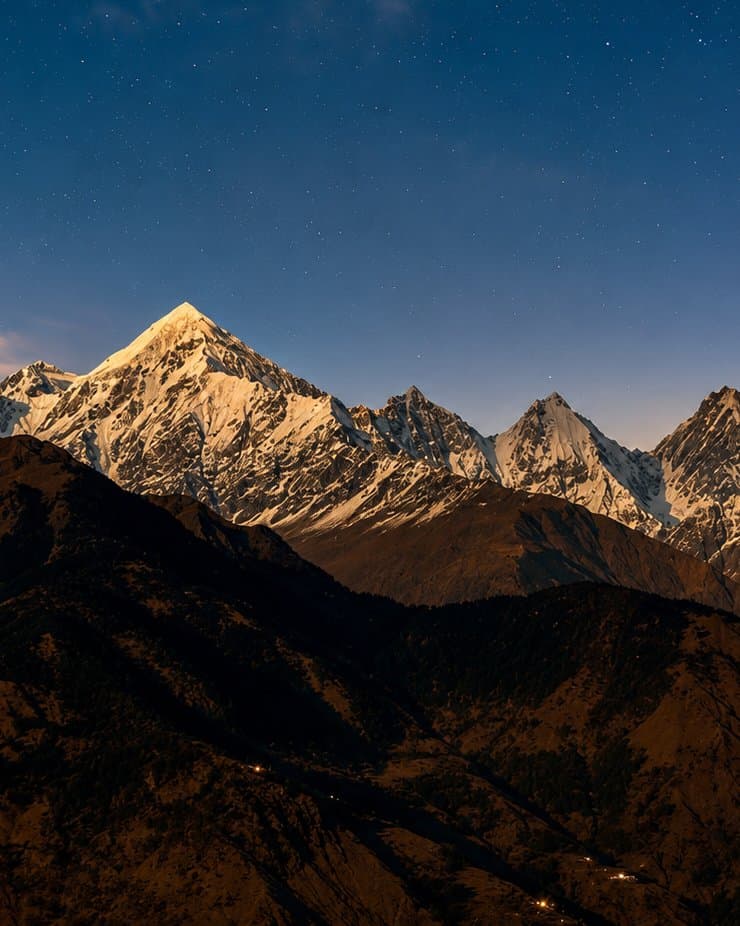
Uttarakhand carries more weight per square kilometre than almost any other Indian state on a travel itinerary — it's simultaneously home to the Char Dham, some of the Himalayas' most accessible treks, India's yoga capital, a major wildlife reserve, and two genuinely distinct hill-station regions that get lumped together far too often. Understanding how its pieces actually fit together matters more here than almost anywhere else in this guide series.
This guide works through Uttarakhand region by region — Garhwal and Kumaon first, then each destination within them — covering what each place actually offers, how long it deserves, when to go, and which of our itineraries covers it. Wherever a dedicated guide already exists for a specific destination, we've linked to it rather than repeating it at length here.
Understanding Uttarakhand's Two Regions: Garhwal and Kumaon
Uttarakhand splits into two historically and culturally distinct regions, and knowing which one you're planning for changes almost every other decision in your trip.
Garhwal, the western and northern part of the state, is home to the Char Dham shrines (Yamunotri, Gangotri, Kedarnath, Badrinath), Rishikesh and Haridwar on the Ganga, Mussoorie, Auli, and the Chopta-Tungnath trekking belt. It's the more pilgrimage-and-trekking-oriented half of the state, with road access generally running up river valleys toward high-altitude shrines and passes.
Kumaon, the eastern part, is built around Nainital's lake-district hill stations, Jim Corbett National Park, and a string of quieter towns — Almora, Kausani, Kasar Devi, Binsar and Munsiyari — with a noticeably different, more laid-back character than Garhwal's pilgrimage circuits. Our own complete Kumaon guide covers this region in full depth if you already know Kumaon is your focus.
| Garhwal | Kumaon |
|---|
| Character | Pilgrimage and trekking-oriented | Laid-back hill-station and wildlife-oriented |
| Signature destinations | Char Dham, Rishikesh, Haridwar, Auli, Chopta | Nainital, Jim Corbett, Almora, Kausani |
| Typical traveller | Pilgrims, trekkers, wellness travellers | Families, wildlife enthusiasts, quiet-trip seekers |
| Access point from Delhi | Haridwar, Dehradun, Rishikesh | Kathgodam, Ramnagar, Haldwani |
| Best combined with | Higher-altitude treks, Himachal's Spiti | Jim Corbett, Delhi-NCR weekend trips |
Uttarakhand at a Glance
| Region | Known For | Ideal Trip Length | Distance from Delhi |
|---|
| Rishikesh & Haridwar | Yoga, river rafting, Ganga Aarti | 2–3 days | ~5–6 hours by road |
| Mussoorie | Classic hill-station sightseeing, Kempty Falls | 2–3 days | ~6–7 hours by road |
| Auli | Skiing, cable car, Himalayan panorama | 3 days | ~10–11 hours by road |
| Char Dham Yatra | Yamunotri, Gangotri, Kedarnath, Badrinath | 6–10 days | Starts from Haridwar |
| Chopta & Tungnath | Trekking, Chandrashila summit, Deoria Tal | 3–5 days | ~9–10 hours by road |
| Nainital & Kumaon lakes | Boating, colonial hill-station charm | 2–5 days | ~7–8 hours by road |
| Jim Corbett | Tiger safaris, jungle sightseeing | 3–4 days | ~6 hours by road |
| Almora, Kausani, Binsar | Quiet hill towns, Himalayan views, temples | 4–7 days | ~9–10 hours by road |
| Munsiyari & Adi Kailash | Far-Himalaya landscapes, high-altitude treks | 6–8 days | ~12–14 hours by road |
Which Region Fits Your Travel Style
Pilgrims and spiritual travellers are naturally drawn to Garhwal — the Char Dham circuit, the shorter Kedarnath-Badrinath yatra, and Rishikesh-Haridwar's Ganga Aarti all sit in this half of the state.
First-time weekend travellers from Delhi are generally best served by Rishikesh, Mussoorie or Nainital — all close enough for a genuine 2–3 day trip without excessive travel time eating into the weekend.
Trekkers have real choice across both regions — Chopta-Tungnath-Chandrashila and the Valley of Flowers in Garhwal, Dayara Bugyal further toward the Gangotri side, and more remote options near Munsiyari in Kumaon.
Wildlife enthusiasts should prioritise Jim Corbett, India's oldest national park and Kumaon's signature destination, often combined with Nainital or Mukteshwar.
Travellers wanting a slower, less commercial pace are better served by Kumaon's quieter towns — Kasar Devi, Jageshwar, Binsar and Kausani — than by Garhwal's more pilgrimage-traffic-heavy routes.
Travellers with genuine extra time and an appetite for remote travel should look toward Munsiyari and the Adi Kailash & Om Parvat circuit — Uttarakhand's most far-flung, least-visited region.
Best Time to Visit Uttarakhand
| Season | Months | What to Expect | Best For |
|---|
| Spring | March–April | Mild weather, clearing mountain roads | Lower-altitude sightseeing, Rishikesh, Nainital |
| Summer | May–June | Warm days, Char Dham Yatra season begins | Char Dham, hill-station heat escapes |
| Monsoon | July–August | Heavy rain, landslide risk on hill roads | Best avoided across most of the state |
| Early Autumn | September | Clearing skies, Char Dham's final weeks | Trekking, photography, pilgrimage |
| Late Autumn | October–November | Crisp, clear, cold nights | Quiet sightseeing, Kumaon's hill towns |
| Winter | December–February | Snow in Auli, Mussoorie, Chopta; Char Dham closed | Snow experiences, skiing at Auli |
As a general pattern, the Char Dham Yatra runs roughly May to October, weather and shrine-opening dates permitting, and closes entirely through winter. Monsoon (July–August) is worth actively avoiding across most of the state given real landslide risk on mountain roads — this applies even more strongly in Uttarakhand than in Himachal, given how many of its roads run directly along river valleys.
How to Reach Uttarakhand from Delhi
| Mode | Route | Approx. Duration | Best For |
|---|
| Overnight road/private vehicle | Delhi → Haridwar/Rishikesh/Kathgodam, onward by road | 5–11 hours depending on destination | Most of our itineraries |
| Train | Delhi → Haridwar, Dehradun, Kathgodam or Ramnagar | 4–7 hours, plus onward transfer | Travellers who'd rather not drive the full distance |
| Flight | Delhi → Dehradun (Jolly Grant Airport) | ~1 hour, plus onward transfer | Garhwal-bound trips with limited time |
Overnight road transport or an early train to Haridwar, Kathgodam or Ramnagar followed by a private vehicle transfer is the most common route used across our own itineraries — which station you aim for depends entirely on which half of the state (Garhwal or Kumaon) you're heading into.
Rishikesh and Haridwar: The Yoga Capital and the Ganga Aarti
Rishikesh has built a genuine international reputation as a yoga and wellness destination, alongside river rafting on the Ganga and the evening Ganga Aarti at Parmarth Niketan and Triveni Ghat — widely considered one of the single most memorable experiences in this part of the state. Haridwar, a short distance downstream, centres on Har Ki Pauri and its own Ganga Aarti, with a more overtly pilgrimage-focused character than Rishikesh's wellness-and-adventure mix. Our Rishikesh weekend package covers a waterfall hike, nature walk and Ganga Aarti, while Rishikesh & Mussoorie combines both towns over 5 days. See our Rishikesh places-to-visit guide and Rishikesh weekend rafting/yoga/Ganga Aarti guide for deeper planning detail, or our Ganga Dussehra guide if you're timing a trip around that specific festival.
Mussoorie: The Queen of Hills
Mussoorie, Uttarakhand's best-known colonial-era hill station, offers Mall Road sightseeing, cable-car rides, and Kempty Falls as its signature stop — a reliable, well-connected pick for travellers wanting classic hill-station charm without Garhwal's longer pilgrimage-route travel times. Our Rishikesh & Mussoorie package combines the two over 5 days/4 nights.
Auli: Skiing and Himalayan Views
Auli, a high-altitude meadow and ski slope above Joshimath, is Uttarakhand's answer to Gulmarg — genuine skiing in winter, and one of the more accessible Himalayan panoramas reachable by road the rest of the year. Our complete Auli travel guide covers snowfall timing, skiing, the ropeway and full trip planning in depth.
Auli vs Mussoorie: Choosing Your Winter Weekend
Both are strong winter-weekend picks from Delhi, but they reward different priorities — Auli for genuine snow and skiing at altitude, Mussoorie for easier access and classic hill-station sightseeing. See our Auli vs Mussoorie comparison for the full breakdown if you're deciding between the two.
The Char Dham Yatra
The Char Dham — Yamunotri, Gangotri, Kedarnath and Badrinath — is Uttarakhand's most significant pilgrimage circuit, and genuinely one of the most logistically complex trips covered in this guide, given the altitude, shrine-specific access rules and weather-dependent opening dates. Each of the four shrines has a distinct character and approach:
Yamunotri, the source of the Yamuna river, is typically the circuit's first stop and involves a trek or pony/palanquin ride from Janki Chatti to reach the shrine itself.
Gangotri, the source of the Ganga, is more directly road-accessible than Yamunotri, with the shrine a short walk from the main road.
Kedarnath, dedicated to Shiva and the most-visited of the four, requires either a trek from Gaurikund or a helicopter transfer — see the dedicated comparison linked below.
Badrinath, dedicated to Vishnu, is the most accessible of the four by road, with the temple itself close to the parking and market area.
Our Char Dham Yatra — Haridwar to Haridwar package covers the full 10-day, 9-night circuit with Innova transport for the entire loop. See our Char Dham Yatra planning guide for best time, route sequencing and packing detail.
Kedarnath and Badrinath: The Shorter Pilgrimage
For travellers who can't commit to the full 10-day Char Dham circuit, our Kedarnath–Badrinath Yatra package covers the two most-visited of the four shrines over 6 days/5 nights, ex-Haridwar. Kedarnath specifically can be reached by trek or helicopter — see our Kedarnath trek vs helicopter guide for how to decide between the two.
Chopta, Tungnath and Chandrashila
Chopta, often called "Mini Switzerland" in Uttarakhand tourism circles, is the base for the Tungnath Temple (the highest Shiva temple in the world) and the Chandrashila summit trek beyond it, with sweeping Himalayan views from the top. Deoria Tal, a reflective lake near Sari village, is commonly paired with the same trip. Our Chopta | Tungnath package (5 days/4 nights) includes a Haridwar Ganga Aarti stop, while the shorter Chopta, Tungnath & Deoria Tal Trek weekend format (3 days/2 nights) uses Swiss-tent camping. See our best time to visit Chopta guide for season-specific planning.
Harsil and Gartang Gali
Harsil, a quiet Garhwal valley town near Gangotri, is the base for the historic Gartang Gali — a centuries-old wooden trail built into a cliff face, once part of the Indo-Tibet trade route and now a genuinely distinctive trekking destination. Our Harsil & Gartang Gali package (3 days/2 nights) combines the trail with a Gangotri Dham visit and the Lama Top viewpoint.
Valley of Flowers and Hemkund Sahib
The Valley of Flowers, a UNESCO World Heritage alpine meadow bursting with wildflowers in its brief summer season, is paired on most itineraries with Hemkund Sahib, a Sikh pilgrimage site at a glacial lake nearby. Both require genuine trekking fitness and fall within a narrow seasonal window. See our Valley of Flowers & Hemkund Sahib trek guide for season and permit specifics.
Dayara Bugyal
Dayara Bugyal, a high-altitude meadow above Barsu village, is widely considered one of the most beginner-friendly treks in the state — moderate gradient, a shorter overall distance than most comparable Garhwal treks, and genuinely rewarding in both its late-spring bloom season and its winter snow-trekking season. See our Dayara Bugyal trek guide for the full route breakdown.
Rudraprayag and the Kartik Swami Trek
Rudraprayag, at the confluence of the Alaknanda and Mandakini rivers, is the gateway to the Kartik Swami Temple trek — a short but genuinely rewarding ridge walk with wide Himalayan views, popular as a single-weekend reset trip from Delhi given its relatively short overall distance. Our Rudraprayag & Kartik Swami Trek package runs this as a compact 2-day/1-night itinerary.
Nainital and Its Lakes
Nainital, Kumaon's best-known hill station, centres on Naini Lake boating, Mall Road and the Naina Devi Temple, with Bhimtal and Naukuchiatal as its quieter lake-town neighbours a short drive away. See our 10 best things to do in Nainital for the full sightseeing breakdown. Our Jim Corbett & Nainital package combines the two over 4 days, while Bhimtal | Almora and the longer Nainital, Almora, Kausani & Corbett circuit extend further into Kumaon.
Jim Corbett National Park
Jim Corbett, India's oldest national park, anchors most Kumaon wildlife itineraries with jeep safaris, temple and riverside sightseeing near Ramnagar, and evening bonfires at resort stays. Our Jim Corbett Wildlife Experience (3 days/2 nights) is a compact standalone trip, Jim Corbett National Park is our weekend-format version with a 4-star resort stay, and Healing Trip to Corbett & Mukteshwar pairs Corbett with Mukteshwar's Shiva temple and Chauli ki Jali viewpoint for a more wellness-oriented combination. Longer circuits like Corbett • Chaukori • Patal Bhuvaneshwar and the 8-day Corbett • Kausani • Munsiyari — our longest domestic itinerary — extend Corbett into a much wider Kumaon circuit.
Almora, Kasar Devi and Jageshwar
Almora, one of Kumaon's older hill towns, anchors a cluster of spiritually significant stops — Kasar Devi Temple (known for its meditation-retreat history and reputed geomagnetic properties) and Jageshwar's cluster of ancient Shiva temples among them. Our Kasar Devi & Jageshwar package (3 days/2 nights) covers both plus a Binsar Wildlife Sanctuary trek, and our Kasar Devi places-to-visit guide goes deeper into the town itself. The Kumaon Self-Discovery (5 days/4 nights) is a curated, wellness-themed version of this circuit — Bhimtal, Nainital, Kainchi Dham, Jageshwar, Kasar Devi and Binsar's Zero Point, with yoga, sound healing and stargazing built in.
Binsar Wildlife Sanctuary
Binsar, a forested wildlife sanctuary with the Zero Point viewpoint as its headline stop, offers some of Kumaon's clearest wide-angle Himalayan panoramas and is commonly folded into Almora-area itineraries rather than visited as a standalone destination.
Kausani and Chaukori
Kausani, sometimes called the "Switzerland of India" in Kumaon tourism material, is known for its tea gardens, sweeping Himalayan sunrise views and a genuinely peaceful pace compared to Nainital's crowds. Chaukori, further east, adds a Musk Deer Sanctuary trek and the Patal Bhuvaneshwar limestone cave as its distinctive stops. Our Refresh & Rejuvenate at Kausani package (5 days/4 nights) combines Corbett with Kausani, a shawl factory and tea garden visit, and a Rudradhari waterfall trek.
Munsiyari: The Gateway to the Far Himalayas
Munsiyari, deep in eastern Kumaon near the Pithoragarh border, is genuinely one of the most remote, least-commercially-developed destinations covered in this guide — a base for views of the Panchachuli peaks and treks further into the high Himalayas, reachable as part of our 8-day Corbett • Kausani • Munsiyari circuit, including a Darkot village visit.
Adi Kailash and Om Parvat
Adi Kailash and Om Parvat, further still into this remote corner of Kumaon near the Nepal and Tibet borders, offer a genuinely soulful, high-altitude pilgrimage-and-landscape experience via Jageshwar Dham and Dharchula. Our Adi Kailash & Om Parvat package (6 days/5 nights) covers the full route with a Bhimtal return leg.
Trekking in Uttarakhand
| Trek | Region | Altitude | Difficulty | Best Season |
|---|
| Kartik Swami Trek | Rudraprayag (Garhwal) | Moderate | Easy | Year-round, best March–June, Sept–Nov |
| Chandrashila (via Tungnath) | Chopta (Garhwal) | ~4,000 m | Easy-to-moderate | March–June, Sept–Dec |
| Dayara Bugyal | Near Uttarkashi (Garhwal) | ~3,700 m | Easy (beginner-friendly) | Late April–June, Dec–Feb (snow trek) |
| Valley of Flowers | Chamoli (Garhwal) | ~3,600 m | Moderate | July–September (narrow bloom season) |
| Gartang Gali | Harsil (Garhwal) | High-altitude cliff trail | Moderate | May–June, Sept–Oct |
| Adi Kailash & Om Parvat | Pithoragarh (Kumaon) | High-altitude | Moderate-to-difficult | May–June, Sept–Oct |
Uttarakhand Food: What to Actually Eat
| Dish | What It Is | Best Found In |
|---|
| Kumaoni dal (bhatt ki churkani) | A black soybean-based lentil preparation, distinctly Kumaoni | Nainital, Almora, Kausani |
| Aloo ke gutke | Spiced, pan-fried potato preparation, a Garhwal-Kumaon staple | Statewide, especially hill-town dhabas |
| Baadi | A buckwheat/finger-millet flour dish, often paired with dal | Kumaon's hill towns |
| Jhangora ki kheer | A barnyard-millet pudding, a traditional festive dessert | Statewide |
| Garhwali chainsoo | A roasted-and-ground black gram preparation | Garhwal region, Rishikesh to Chopta |
| Ganga Aarti-side street food | Chaat, kachori and other North Indian staples by the ghats | Rishikesh and Haridwar |
What to Pack for Uttarakhand
| Region / Season | Essentials |
|---|
| Rishikesh, Haridwar, Mussoorie (spring/autumn) | Light layers, a medium jacket for evenings, comfortable walking shoes |
| Char Dham Yatra (May–October) | Layered clothing, a rain layer, sturdy walking shoes, any personal medication given the altitude and exertion involved |
| Auli, Chopta, Mussoorie (winter) | Heavy insulated jacket, thermal layers, waterproof boots with grip, gloves, warm cap |
| Nainital, Kumaon hill towns | Similar to the relevant season above, with a warm layer for evenings |
| Jim Corbett (any season) | Neutral-coloured clothing for safaris, a light jacket for early-morning game drives, insect repellent |
| Trekking (any route in this guide) | Proper trekking shoes with ankle support, a rated sleeping bag if camping, a headlamp, layered clothing |
Weekend Trips from Delhi within Uttarakhand
A large share of Uttarakhand's destinations — Rishikesh, Mussoorie, Nainital's lake district, Rudraprayag's Kartik Swami trek — double as genuine weekend trips from Delhi, short enough to fit a Saturday-Sunday without losing extra leave. Our broader weekend getaways from Delhi guide, hill stations near Delhi guide and places to visit near Delhi within 200 km guide all cover a wider mix of destinations across several states, with a meaningful share of Uttarakhand options among them — worth a look if you're specifically working with a 2-day window rather than planning a longer regional circuit.
Sample Uttarakhand Itineraries
| Trip Length | Suggested Route | Best For |
|---|
| 2 days/1 night | Rudraprayag & Kartik Swami Trek | A single-weekend reset trip |
| 3 days/2 nights | Rishikesh — Ganga Aarti, waterfall hike, rafting | A quick Garhwal weekend |
| 3 days/2 nights | Jim Corbett — jeep safari, jungle sightseeing | A focused wildlife trip |
| 5 days/4 nights | Rishikesh & Mussoorie, or Kausani with Corbett | A fuller single-region circuit |
| 6 days/5 nights | Kedarnath–Badrinath Yatra | The shorter twin-shrine pilgrimage |
| 7 days/6 nights | Nainital, Almora, Kausani & Corbett | A complete Kumaon circuit |
| 10 days/9 nights | Full Char Dham Yatra | The complete four-shrine pilgrimage |
Uttarakhand for Honeymoons and Couples
Mussoorie and Nainital remain Uttarakhand's most-booked honeymoon destinations — established infrastructure, scenic lake and Mall Road sightseeing, and an easy balance of activity and relaxation. Couples wanting more privacy and a slower pace are generally better served by Kausani, Kasar Devi or the Tirthan-style riverside quiet of Harsil, all of which stay noticeably less crowded than Mussoorie or Nainital through peak season.
Uttarakhand with Family and Kids
Rishikesh, Mussoorie and Nainital form the easiest family-friendly base combination — established infrastructure, shorter travel days, and activities (lake boating, Mall Road, gentler riverside walks) that work across age groups. Jim Corbett is a strong addition for families with children old enough to sit through a jeep safari. The Char Dham Yatra and the more remote Kumaon circuits (Munsiyari, Adi Kailash) are better suited to families with older children or teenagers comfortable with longer travel days and, for Char Dham specifically, genuine altitude and physical demands.
What an Uttarakhand Trip Costs
Cost depends on transport mode, trip length, season and whether your trip is pilgrimage-focused (Char Dham) or sightseeing/trekking-focused — pilgrimage circuits tend to run longer and cover more ground, which raises the total even though per-day costs aren't dramatically different from a comparable Kumaon or Garhwal sightseeing trip.
| Cost Driver | Lower-Cost Choice | Higher-Cost Choice |
|---|
| Transport | Overnight road/train + transfer | Flight to Dehradun + private onward transfers |
| Season | Shoulder months (March–April, Sept–Oct) | Peak Char Dham/summer (May–June) |
| Trip scope | Single-region trip (e.g. Nainital only) | Full Char Dham or multi-region Kumaon circuit |
| Kedarnath access | Trek from Gaurikund | Helicopter transfer |
| Stay category | Twin/triple-sharing standard hotels | Resort-category or boutique stays |
Peak Char Dham season (May–June) and the main Kumaon/Garhwal summer window both carry higher hotel and transport demand than the shoulder months of March, April, September and October. Every price on our site is a starting-from figure — share your dates, group size and preferred region through our Custom Quote form for an exact number.
Common Mistakes to Avoid in Uttarakhand
Confusing Garhwal and Kumaon logistics. The two regions aren't quick to combine in a short trip — check which half of the state your chosen destinations are actually in before assuming they're a reasonable add-on to each other.
Underestimating Char Dham's physical and logistical demands. Altitude, shrine-specific access windows and weather delays are all genuinely significant — this isn't a standard sightseeing circuit, and it's worth planning with real buffer time.
Ignoring monsoon road risk. July and August bring real landslide risk across most of Uttarakhand's mountain roads — a bigger factor here than in most other Indian hill states given how many routes run directly along river valleys.
Treating the Valley of Flowers as a flexible-dates trek. Its bloom season is genuinely narrow (July–September) — travelling outside this window means missing the entire point of the trek.
Skipping Kumaon because Garhwal gets more attention. Nainital, Kausani, Almora and Munsiyari are each genuinely worth a dedicated trip, not just an afterthought to a Char Dham or Rishikesh itinerary.
Frequently Asked Questions
What is the difference between Garhwal and Kumaon? Garhwal, in the west and north, is home to the Char Dham shrines, Rishikesh, Haridwar, Mussoorie and Auli — more pilgrimage-and-trekking-oriented. Kumaon, in the east, is built around Nainital, Jim Corbett and quieter towns like Almora, Kausani and Munsiyari.
What is the best time to visit Uttarakhand? March to June and September to November are the two strongest general windows. The Char Dham Yatra specifically runs May to October, weather permitting. Winter (December–February) is strong for snow at Auli, Mussoorie and Chopta.
How many days do I need for the Char Dham Yatra? Our full circuit runs 10 days, 9 nights, covering all four shrines. A shorter 6-day, 5-night option covering just Kedarnath and Badrinath is available for travellers who can't commit to the full pilgrimage.
Is Kedarnath reachable without trekking? Yes — helicopter services operate to Kedarnath as an alternative to the trek. See our dedicated Kedarnath trek vs helicopter guide for how to decide between the two.
What is the best trek for a beginner in Uttarakhand? Dayara Bugyal and the Kartik Swami Trek are both genuinely beginner-friendly, with moderate gradients and shorter overall distances than most comparable Himalayan treks.
When does the Valley of Flowers bloom? Roughly July through September — a genuinely narrow window, so travel dates need to align specifically with this season rather than general Uttarakhand trip planning.
Can I combine Nainital with Jim Corbett? Yes — this is one of the most common Kumaon combinations, and our Jim Corbett & Nainital package runs exactly this over 4 days.
What is Munsiyari known for? Views of the Panchachuli peaks and access to treks further into the high Himalayas — it's genuinely one of the most remote destinations in this guide, reachable as part of our longer Kumaon circuits.
Is Auli or Mussoorie better for a winter trip? Auli for genuine snow and skiing at altitude, Mussoorie for easier access and classic hill-station sightseeing — see our dedicated Auli vs Mussoorie comparison for the full trade-off.
What is Rishikesh known for besides rafting? Yoga and wellness retreats, the evening Ganga Aarti at Parmarth Niketan and Triveni Ghat, and a genuinely international backpacker-and-wellness-traveller scene alongside the adventure-sports side.
Is Jim Corbett good for a weekend trip? Yes — our Jim Corbett Wildlife Experience and weekend-format Jim Corbett package are both built as compact 3-day/2-night trips from Delhi.
What is the Adi Kailash and Om Parvat circuit? A high-altitude pilgrimage-and-landscape route in far eastern Kumaon near the Nepal and Tibet borders, reached via Jageshwar Dham and Dharchula — one of the most remote, soulful trips covered in this guide.
Which Kumaon town is best for a quiet, non-touristy trip? Kasar Devi, Jageshwar and Binsar are the quietest options in this guide, genuinely less commercially developed than Nainital.
What should I pack for the Char Dham Yatra? Layered clothing, a rain layer, sturdy walking shoes and any personal medication given the altitude and physical exertion involved — see the packing section above for full detail.
Is Chopta the same as Tungnath? No — Chopta is the base town, while Tungnath (the highest Shiva temple in the world) and the Chandrashila summit are treks/destinations reached from Chopta.
What's the easiest way to reach Uttarakhand from Delhi? Overnight road transport or an early train to Haridwar, Kathgodam or Ramnagar followed by a private vehicle transfer, depending on whether you're headed to Garhwal or Kumaon.
Is Harsil worth visiting on its own? It works well as a quieter alternative base near Gangotri, built specifically around the historic Gartang Gali wooden trail — a genuinely distinctive stop most Char Dham-only itineraries skip entirely.
What is Kausani known as? The "Switzerland of India" in Kumaon tourism material, for its tea gardens and sweeping Himalayan sunrise views.
Can I do a short weekend trip within Uttarakhand from Delhi? Yes — Rishikesh, Mussoorie, Nainital's lake district and the Rudraprayag-Kartik Swami Trek are all realistic 2–3 day trips from Delhi without excessive travel time.
How many Char Dham shrines are there, and in what order should I visit them? There are four: Yamunotri, Gangotri, Kedarnath and Badrinath. Most itineraries, including ours, follow this same west-to-east sequence, since it matches the natural road route through the region.
Is tiger sighting guaranteed on a Jim Corbett safari? No — Corbett is genuine wild habitat, not an enclosure, so sightings depend on the day and zone. The park still offers a strong overall wildlife experience (deer, elephants, birdlife) even on a safari without a tiger sighting.
Is Nainital crowded in summer? Yes — May and June are Nainital's busiest months, given the heat-escape demand from the plains. September-October and the post-monsoon weeks offer a noticeably calmer alternative with similarly good weather.
What is the best month to see the Valley of Flowers at its peak bloom? Late July through August typically shows the most varied, dense bloom, though the trek is open from roughly July through September overall.
Our Uttarakhand packages cover Rishikesh, Rishikesh & Mussoorie, the Char Dham Yatra, Kedarnath–Badrinath, Chopta & Tungnath, Harsil & Gartang Gali, Rudraprayag & Kartik Swami, Jim Corbett, Jim Corbett & Nainital, Kasar Devi & Jageshwar, The Kumaon Self-Discovery, Kausani, Corbett • Kausani • Munsiyari, and Adi Kailash & Om Parvat, among others. If you'd rather have an itinerary built around your specific dates and the regions that interest you, get in touch and we'll help you plan it.